





Hungry?
Swarthmore international students Nayla Punjabi ’26, Aashish Panta ’26, Steven Mukum ’26 and Mya Chuluundorj ’26 on campus this spring. See p. 32.
Photo by Laurence Kesterson
Masthead

Send address changes to records@swarthmore.edu
Please recycle after reading.
©2026 Swarthmore College
Printed in USA.

The Broader Ecosystem
t’s hard to throw a birthday party when everyone’s fighting. But the United States finds itself, uneasily, here. At Swarthmore, the exhibition American Communities 1776-2026, marking the historic milestone for the country, captured some threads on the discourse of democracy. The exhibition, on display through Sept. 3, is curated by Caitlin Goodman, an archivist at the Friends Historical Library, and Laura Melbourne, public service archivist of the Peace Collection (p.12).
Swarthmore’s global community is a snapshot of everything that lends to the cause of celebration in the U.S. — our diversity and our commitment to social equity and the pursuit of and access to knowledge. This unfolds in landscapes near and far, as well as in ones more nebulous and evolving, like harnessing rules for AI.

We explore a project that traces the history of Swarthmore’s international students and how that cohort enriches the fabric of the College (p.32).
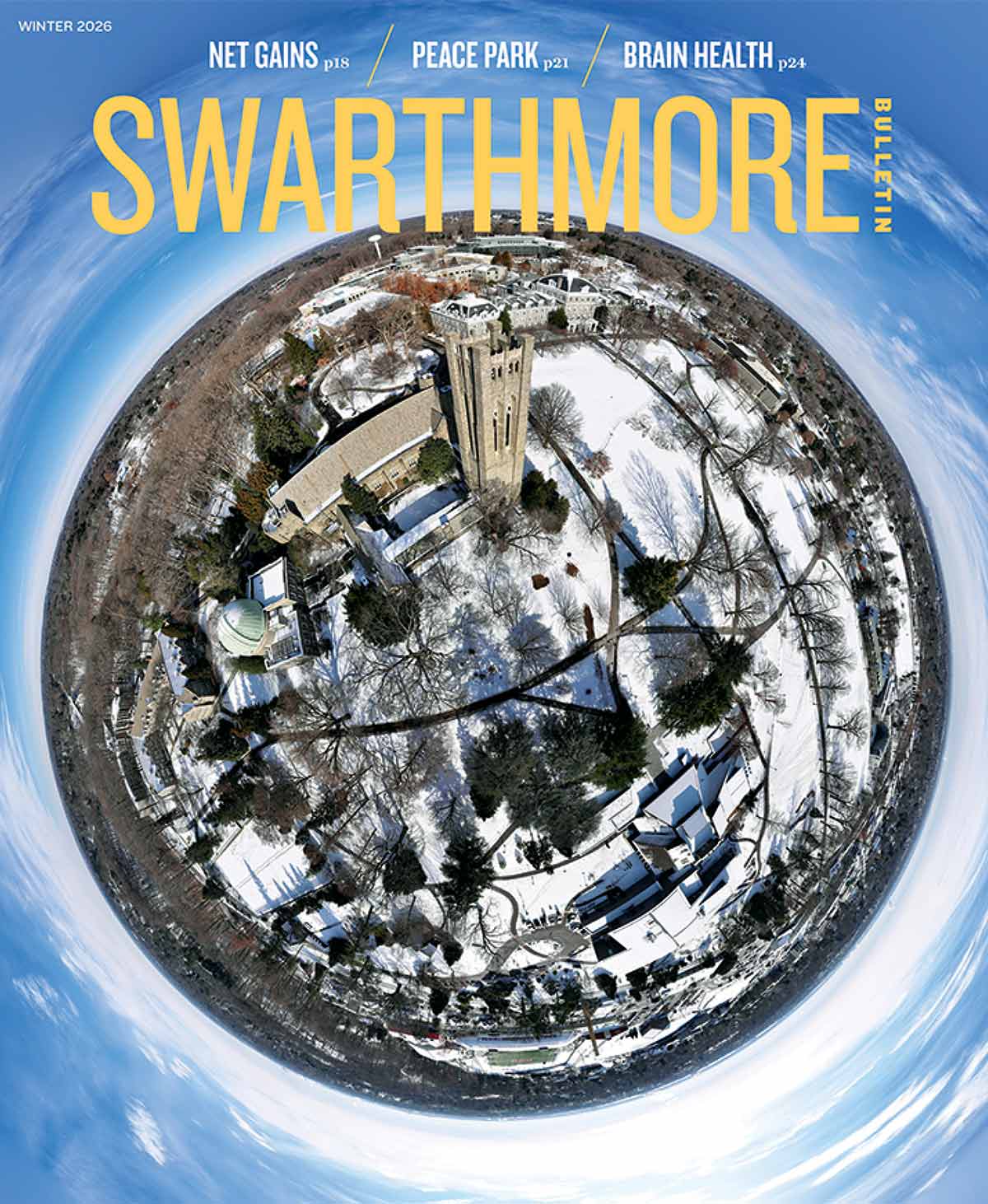
And lastly, the beautiful Crum photographed here by newly graduated Howard Wang ’26. Shaping and reshaping the edges of its banks, the waterway meanders through just a 0.3-square-mile portion of the 38-square-mile Crum Creek watershed.
This spring, staff, students, faculty, and citizens volunteered to clean it, amassing approximately 80 bags of garbage and invasive plant species.
“The annual Crum Creek Cleanup is critical to protecting not only Swarthmore College’s portion of the Crum Creek watershed, but also the broader ecosystem downstream,” says Beck Armstrong, assistant horticulture supervisor. By removing pollution, reducing harm to wildlife, and helping preserve the largest cold water fishery and native trout population among three local creeks, this effort has a lasting environmental impact and contributes to the health of our local waterways, she says.
All of our efforts can have an impact, often unseen. In these pages, be inspired by how Swarthmore takes on that challenge daily. That is also a milestone worth celebrating.
On Our Radar
the highest ideals
—ADELE DIAMOND ’74 H’20 Vancouver, BC
“Use Thy Gumption”
— JUNE ROTHMAN SCOTT ’61 Atlanta, Ga.
A Different Mindset
—MATT COLEMAN ’71 Talking Rock, Ga.
Sticking Together
We’ve Got You Covered
— WILLIAM R. KENNEDY ’70 Teaneck, N.J.
You Have a Brain and a Heart, Use Both
—KATHIE KERTESZ ’63 Fairfax, Calif.
You Listened!
— MONICA PANNWITT BRADSHER ’63 Baton Rouge, La.


A Burst of Visual Energy
he history of artists creating with and within books is rich and varied, and Colette Fu brings the form into the 21st century — and the third dimension — in a dynamic way.
Fu creates pop-up books using arresting photo collages of her culture and heritage that expand into layered, sculptural tableaux.
Born in Princeton, N.J., Fu is the daughter of Chinese immigrants, and her Nuosu Yi ancestry as well as the history of other minority groups in China — such as the Miao, Yi, Mongolians, and Tibetans — are central to her work. Her show at the List Gallery, Paper Journeys, displayed some of her creations since 2014, which explore her own and her family’s history.
“Paper Journeys brings together work I’ve created over the past decade, including pieces from my We Are Tiger Dragon series and more recent books inspired by my parents’ journey to the United States,” Fu says. “What began as a personal effort to understand my own cultural roots grew into a way to share these stories with others through a medium I taught myself, photo-based pop-up books. I want to showcase the diversity of the people who inspire my work and the expansive possibilities of the book as an art form.”
Paper Journeys was co-curated by Andrea Packard ’85, who retired this spring after 30 years as director of the Swarthmore Art Collection and curator of the List Gallery, and Susan Eberhard, visiting assistant professor of art history.
The exhibition was installed concurrently with Views of Travel, Reverie, and Repose: Selected East Asian Works from the Swarthmore College Art Collection. Based in Philadelphia, Fu has received numerous recognitions for her art, including a Fulbright Research Fellowship to China, the Meggendorfer Prize, and a grant from the Joan Mitchell Foundation.
Fu’s work has been acquired by the Getty Research Institute, the Metropolitan Museum of Art, and other prominent collections. Her expanding books burst with visual energy, and also provide ample grist for cultural and historical meditations.
“Fu’s images literally unfold and invite us to interact with them over time,” says Packard. “She not only highlights cultural festivals and traditions that deepen community bonds; she also calls attention to oppressive stereotypes and aesthetic traditions that have exoticized and oppressed Chinese women and immigrants, among others.”
Hot Type

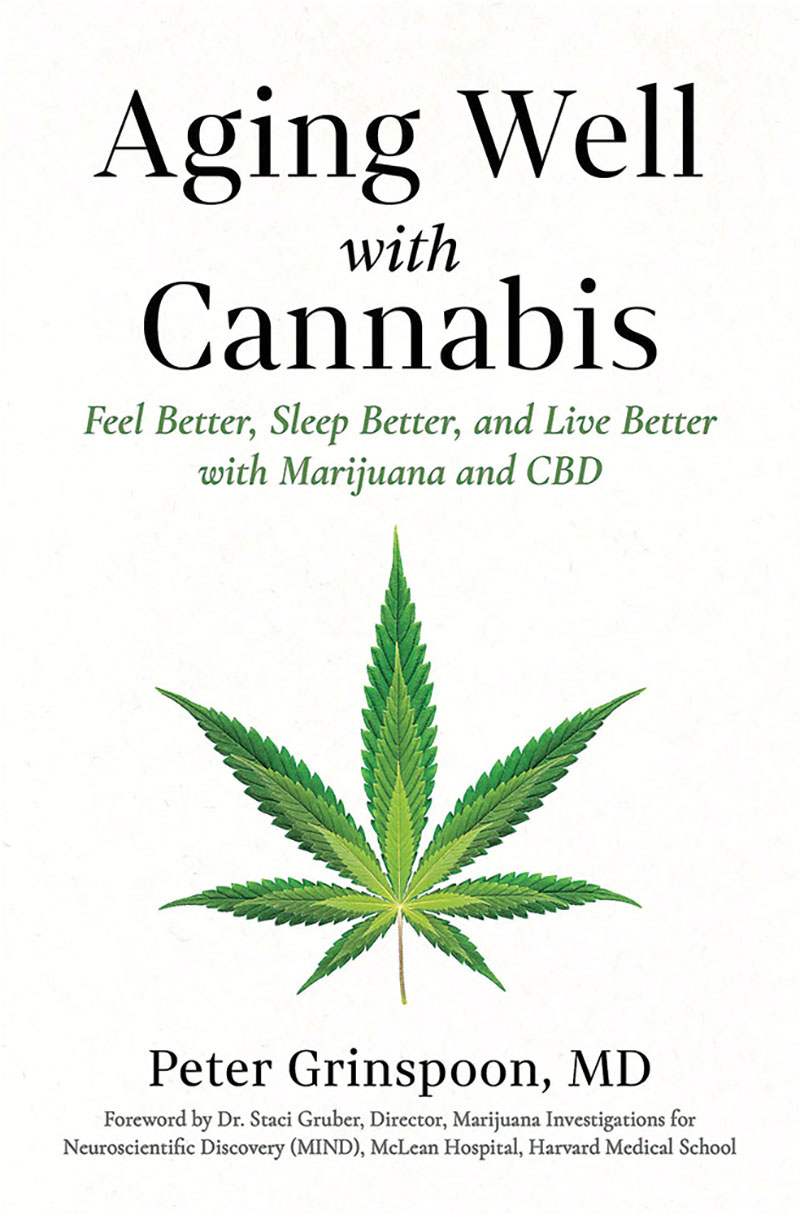
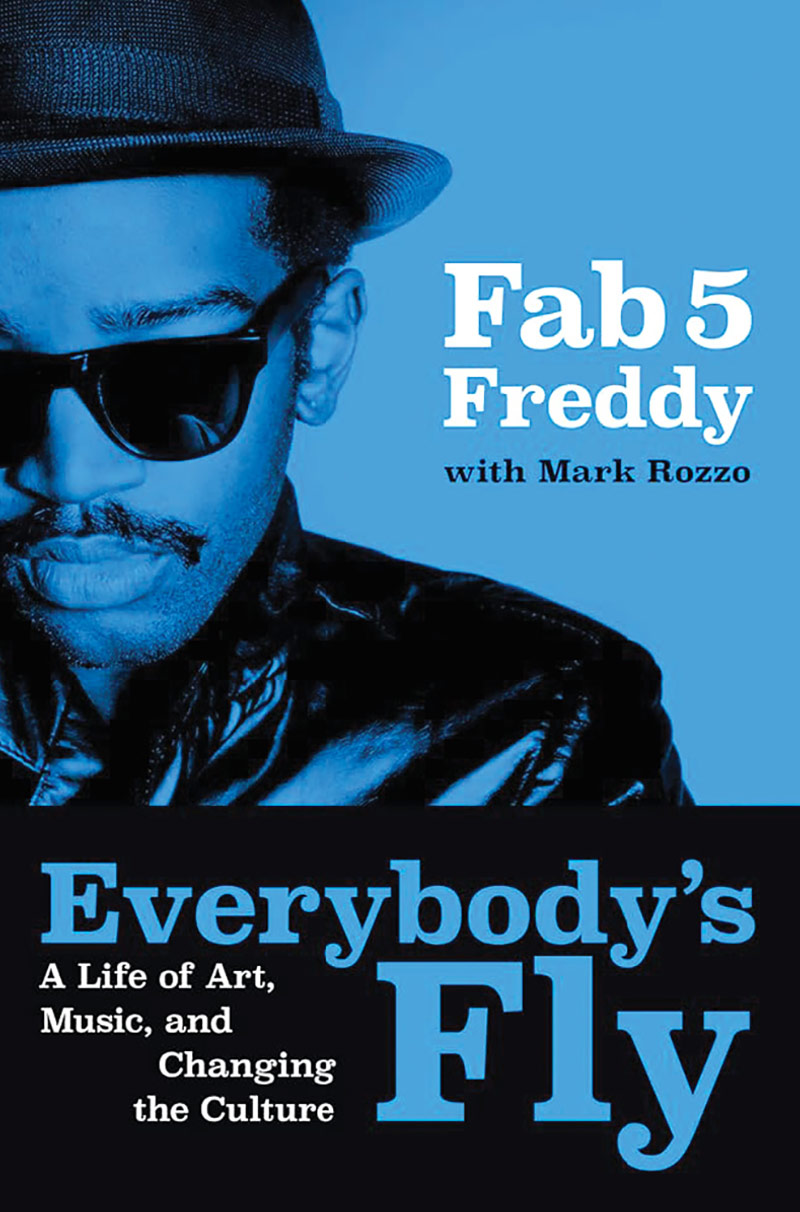

More Than a Milestone
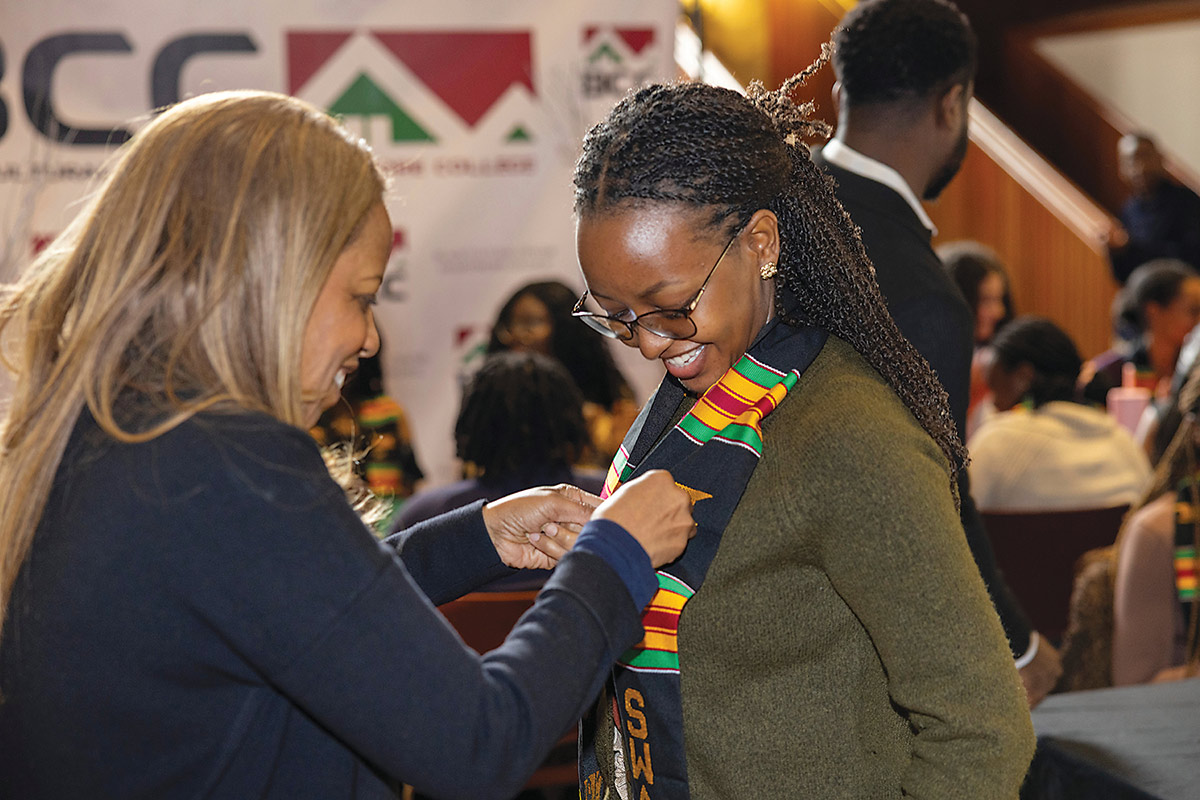
t the Black Cultural Center’s senior banquet and pinning ceremony luncheon this April, there was much to celebrate. “Our annual Black Cultural Center Awards Banquet honors graduating seniors and members of the Swarthmore community for their achievements, leadership, and contributions,” says Walton Program Coordinator of the Black Cultural Center Simone Hayes.
“Pinning the seniors was such a joy — it’s about more than ceremony, it’s about support and connection,” says Nicole O’Dell Odim ’88. “They’ve already shown us who they are — resilient, brilliant. What a privilege to welcome these distinguished graduates into the Swarthmore Black Alumni Network. We’ve been where they are, and now we get to walk alongside them as alumni. That connection across generations is what keeps this community strong.”

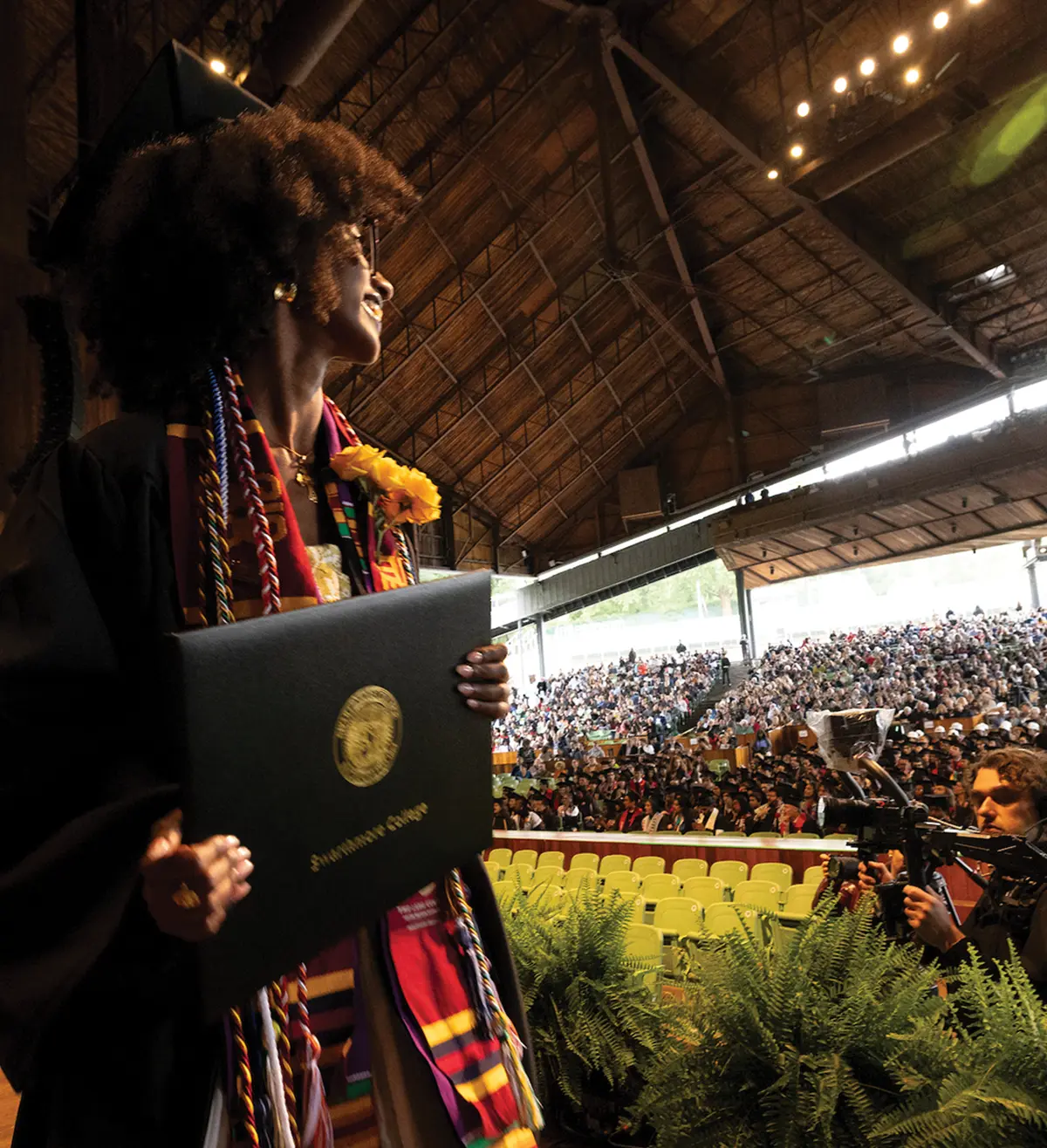
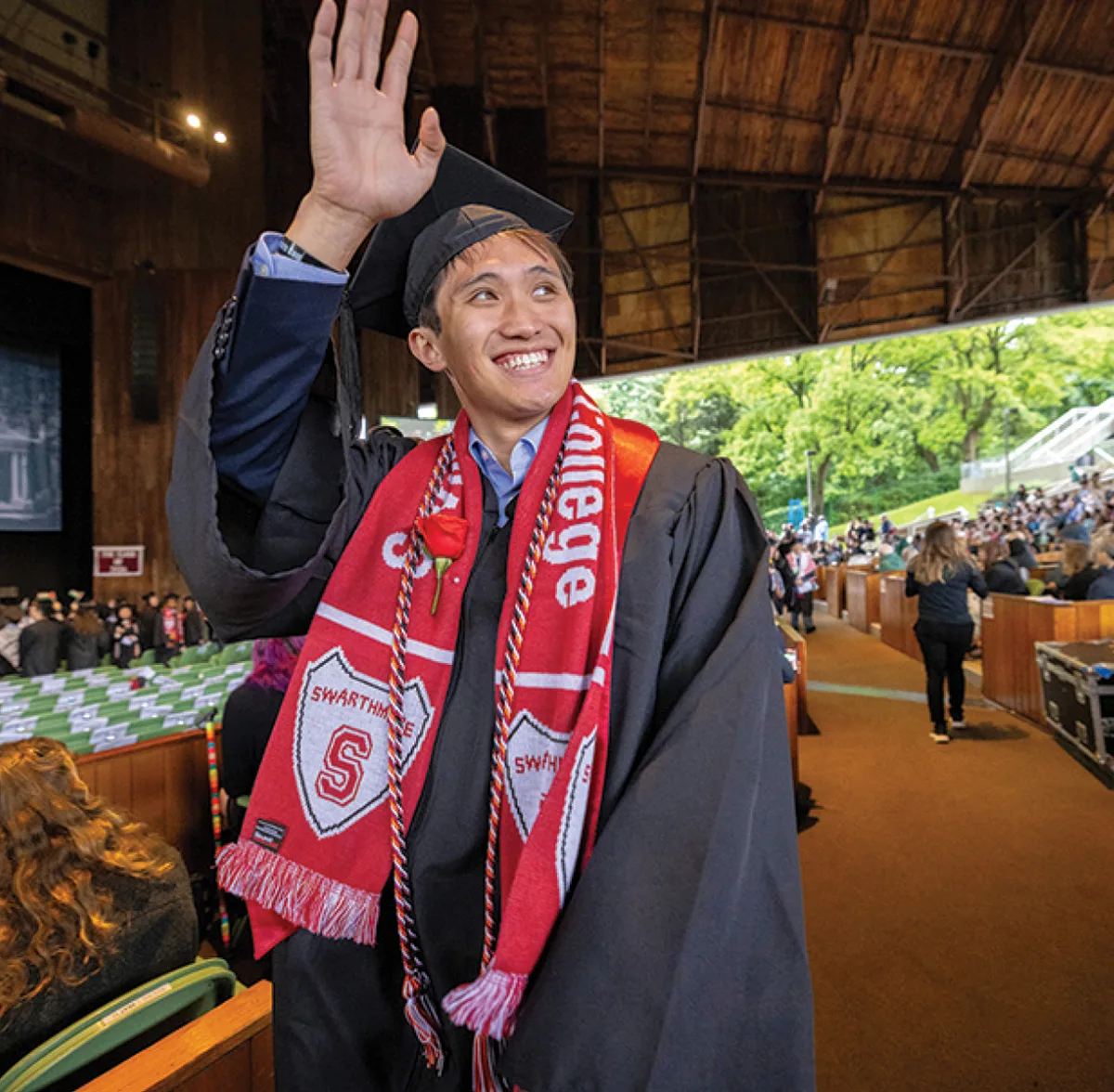
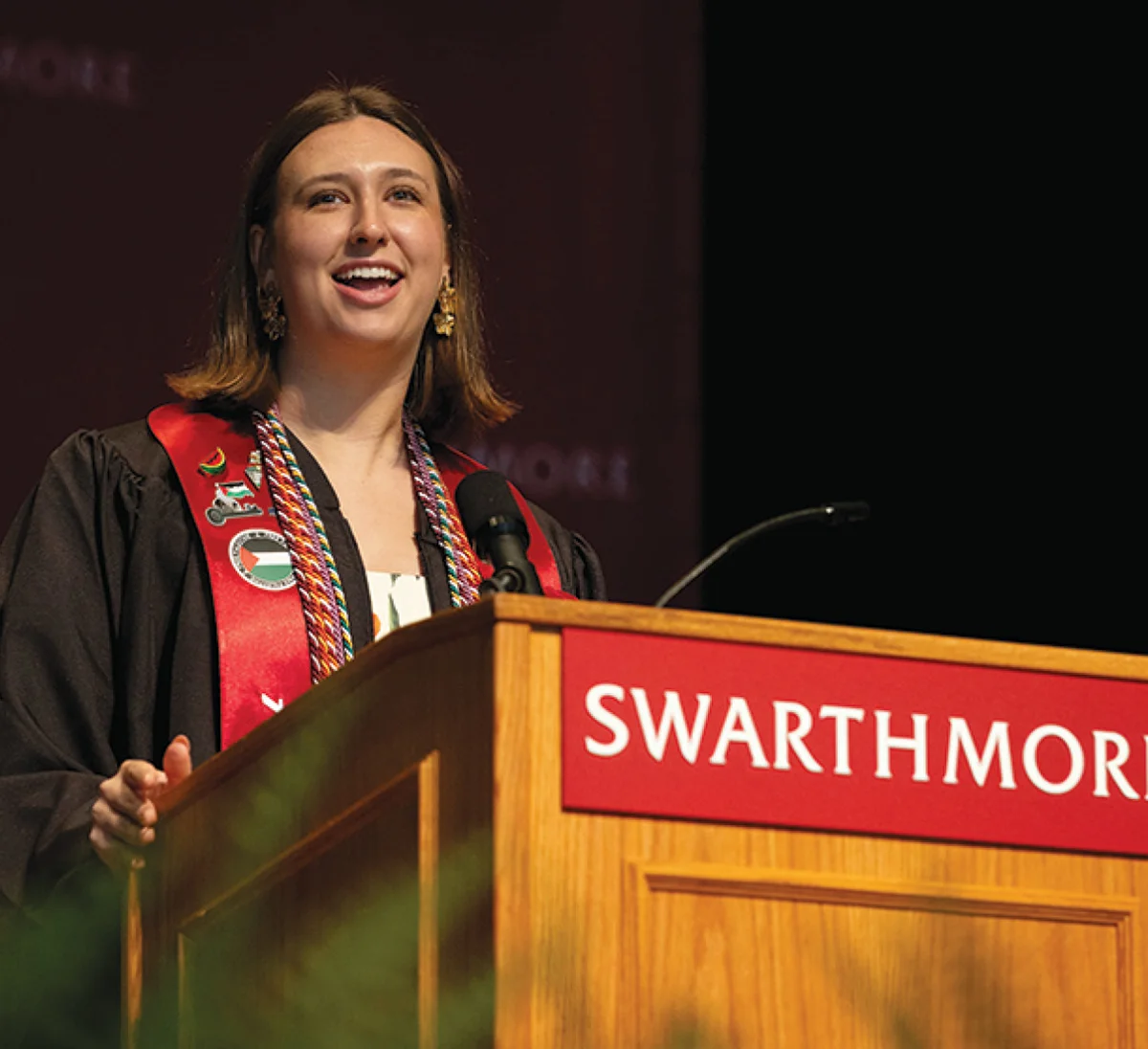
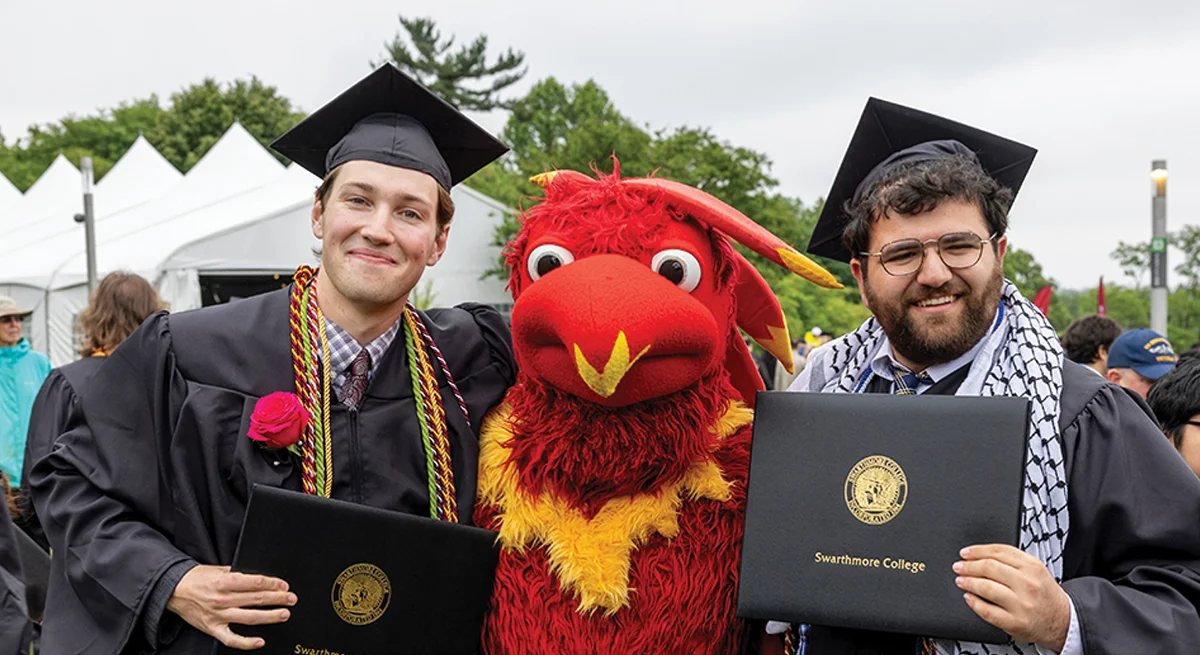
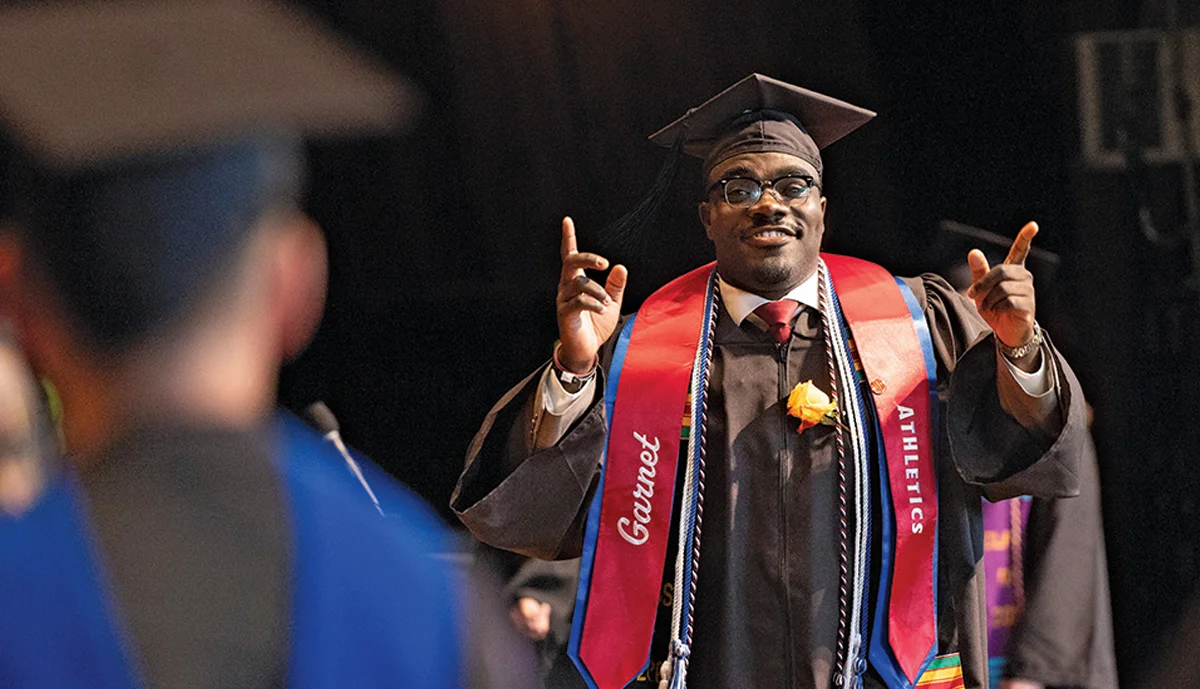
Commencement 2026
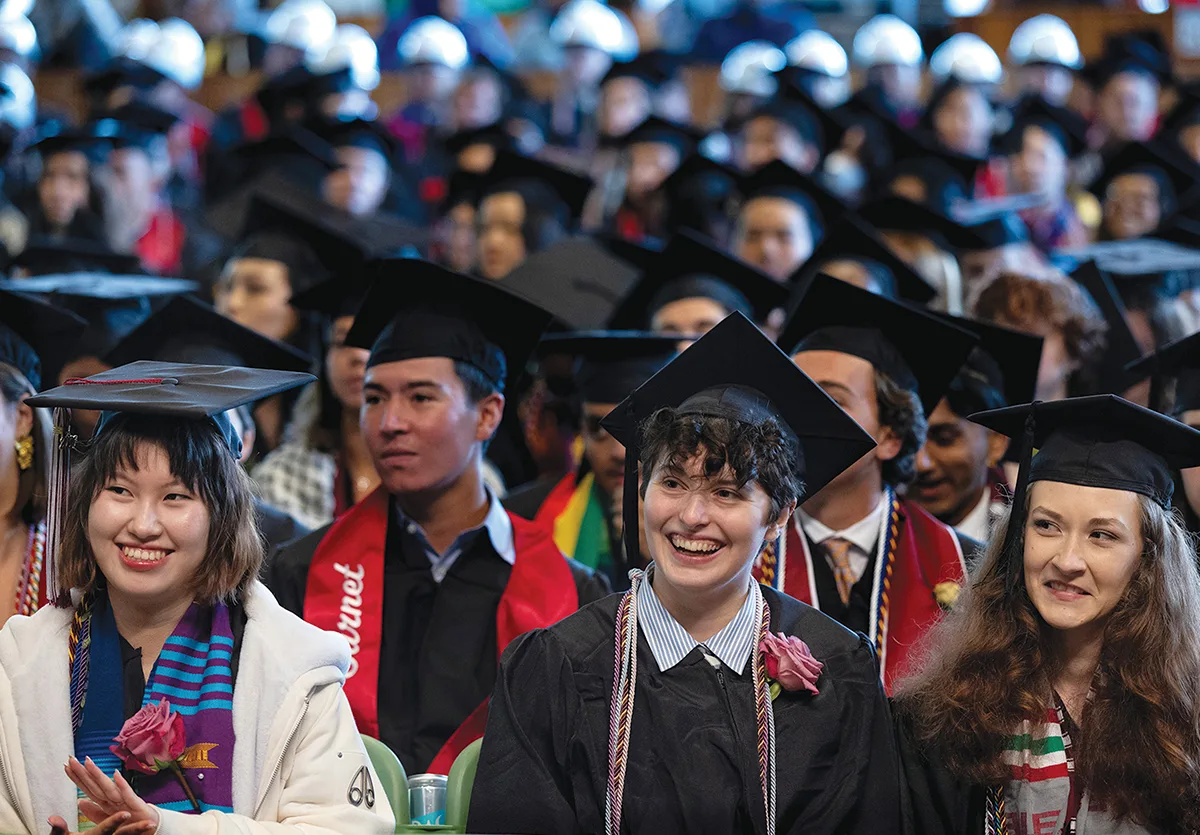
Of the 428 graduates, 401 received the Bachelor of Arts degree and 51 the Bachelor of Science in engineering degree. Twenty-four received dual degrees. A total of 71 students received a level of Honors. Sophia Cáceres ’26 offered remarks as the senior class speaker.
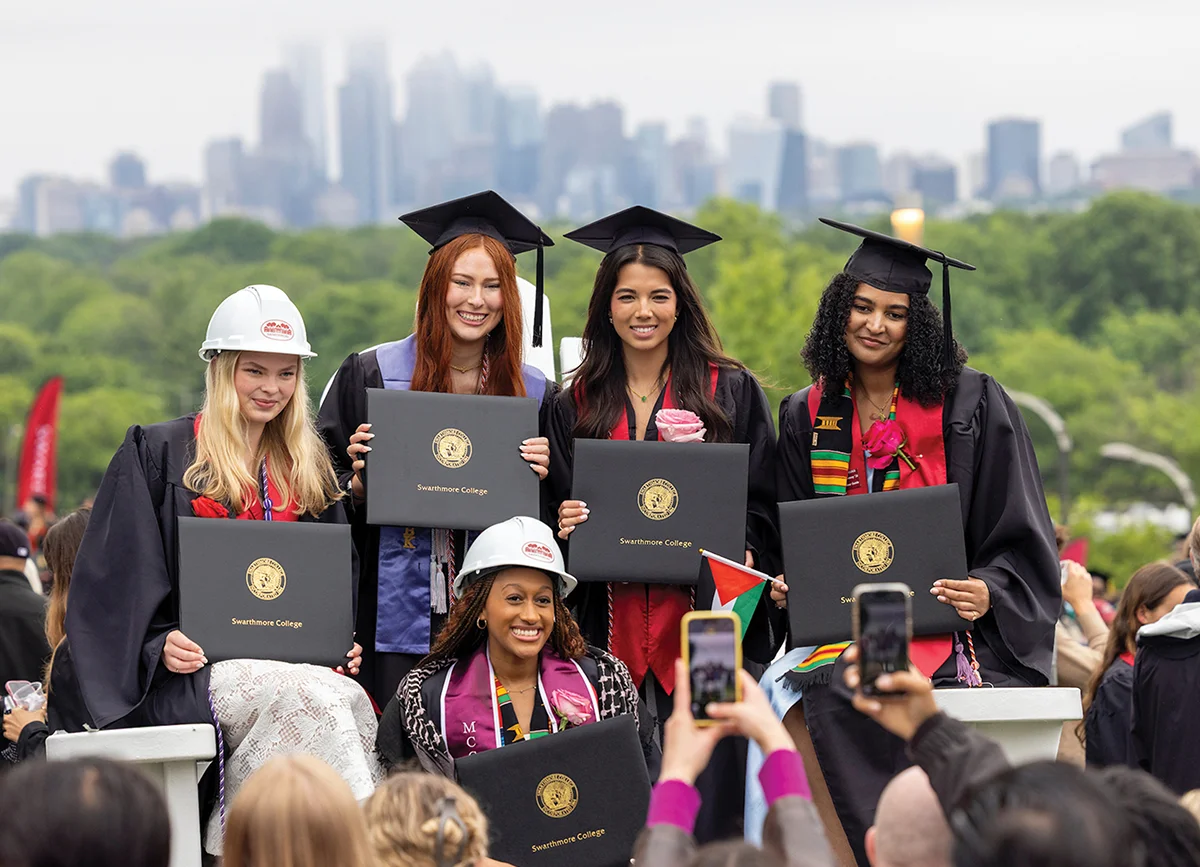
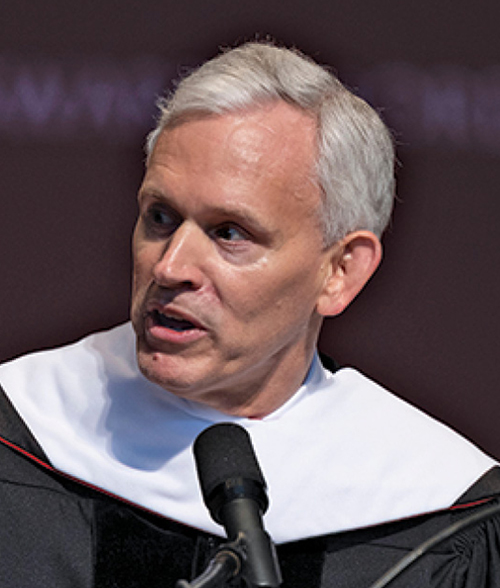
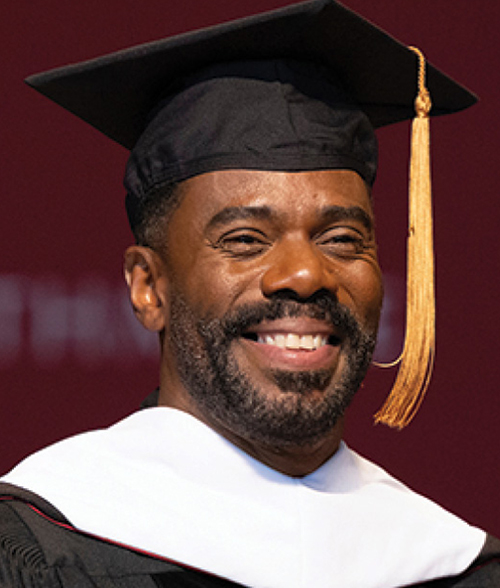
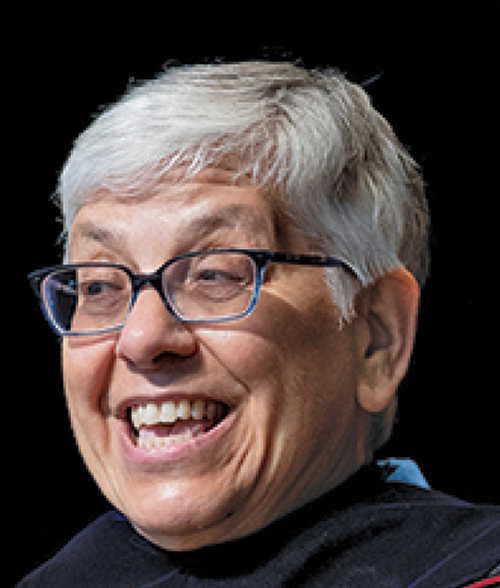
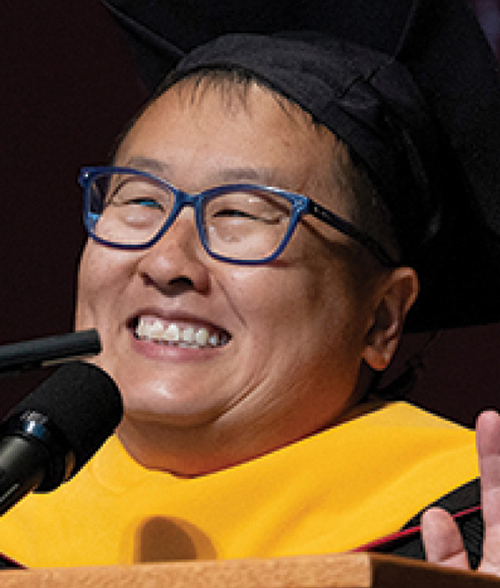
Honorary Degree Recipients 2026
Sticking Together
In the fall of 2002, then-Associate Dean Myrt Westphal assigned Nelson and Zummo, and Goddard and Muller, as roommates in side-by-side rooms. The four clicked right away — not that they were going in cold.
Nelson had already tracked down Zummo, calling the self-described “socially inept” teenager on her father’s business line from Minnesota to introduce herself before move-in. Zummo wasn’t quite sure what to make of the bold gesture.
Democracy’s Scholar
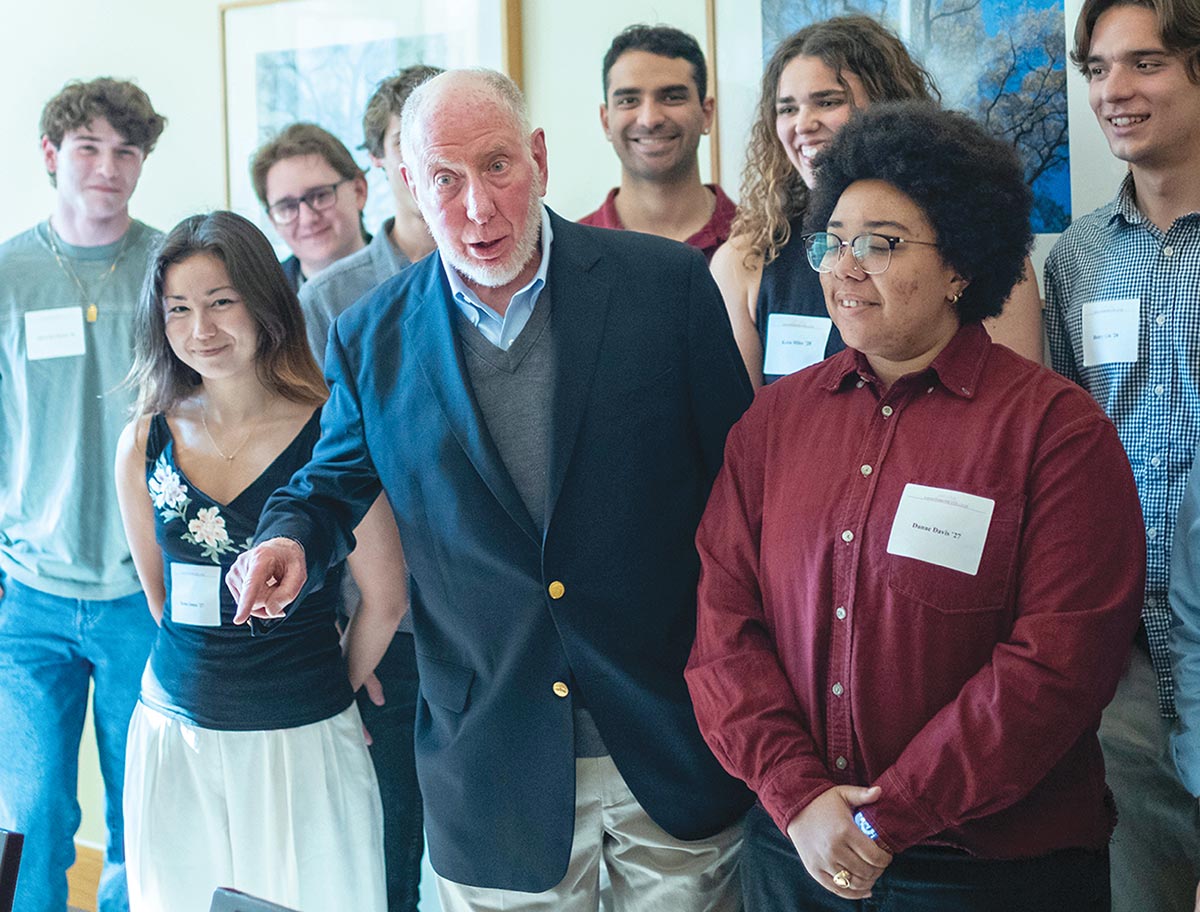
The award, presented to Putnam by the American Philosophical Society, is in recognition of his “rigorous empirical research to identify and analyze central challenges facing democracy in the 21st century.” The Thomas Jefferson Medal is the Society’s highest award for the arts, humanities, and social sciences.
“To be put in the same class as Toni Morrison, I.M. Pei, Albert Hirschman, Daniel Patrick Moynihan, and George Kennan is not merely an honor, but a surprise almost as great as having been admitted to Swarthmore 67 years ago,” says Putnam.
News to know
Campus Vandalism
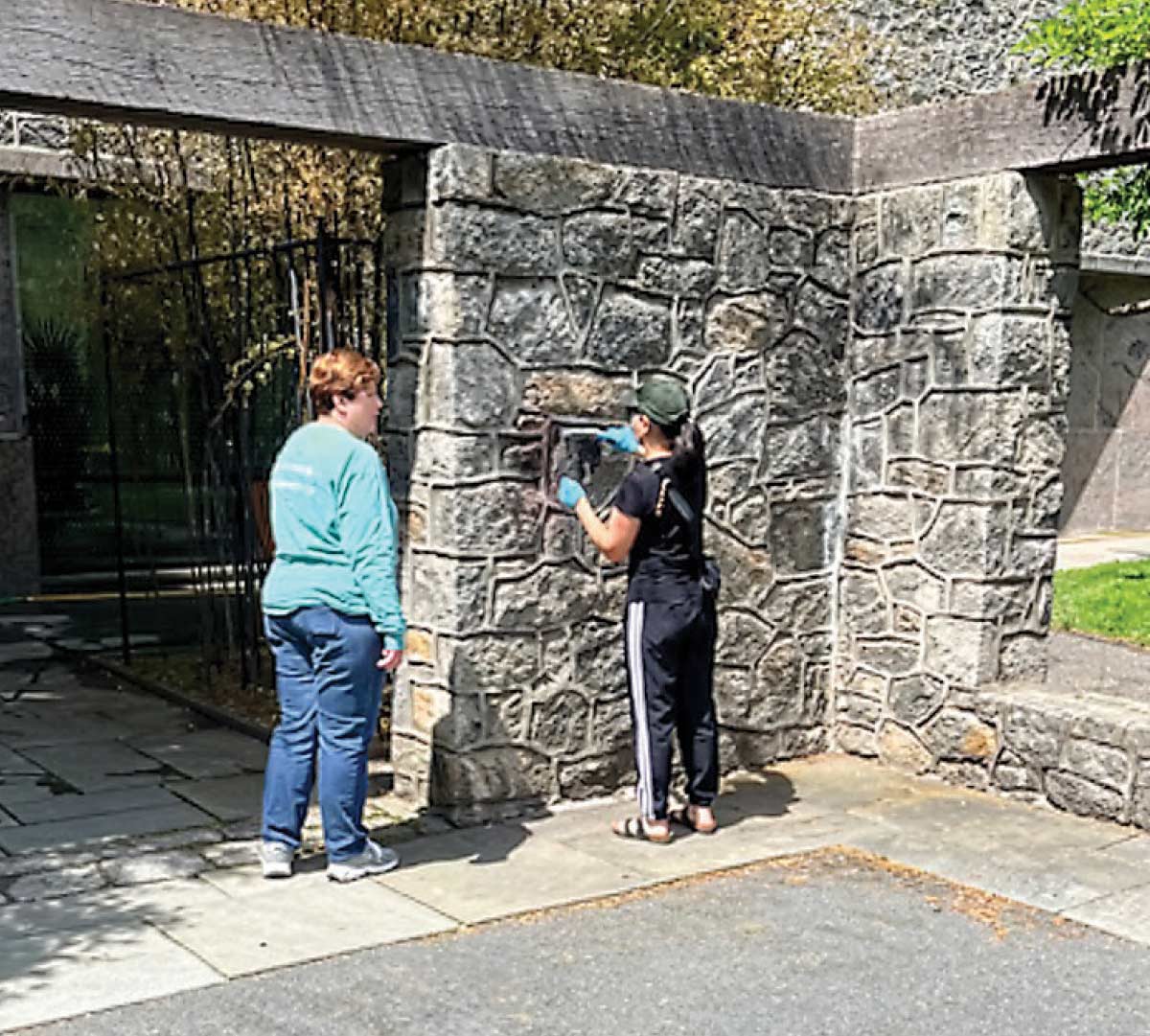
The spray-painted messages were discovered on buildings, trees, fences, walkways, and other areas of campus.
Staff members in Environmental Services, Grounds, and Facilities completed the widespread cleanup.
They were joined by members of the Swarthmore community who volunteered to work together to clean the campus.
“I am as disappointed as I am angry at these criminal acts of cowardice,” Smith wrote. The individuals made their way across campus in the dead of night fully disguised, she said. “[They] chose to violate not just our policies and the law, but our sense of community.”
“We Are So Insanely Proud of Alan!”
Baker is the second philosopher from the College to receive this distinguished honor, and the first in over 75 years. In 1950, Monroe Beardsley, who taught philosophy at the College for more than two decades, received a Guggenheim for philosophical and literary inquiry into the use of metaphor in the English language.
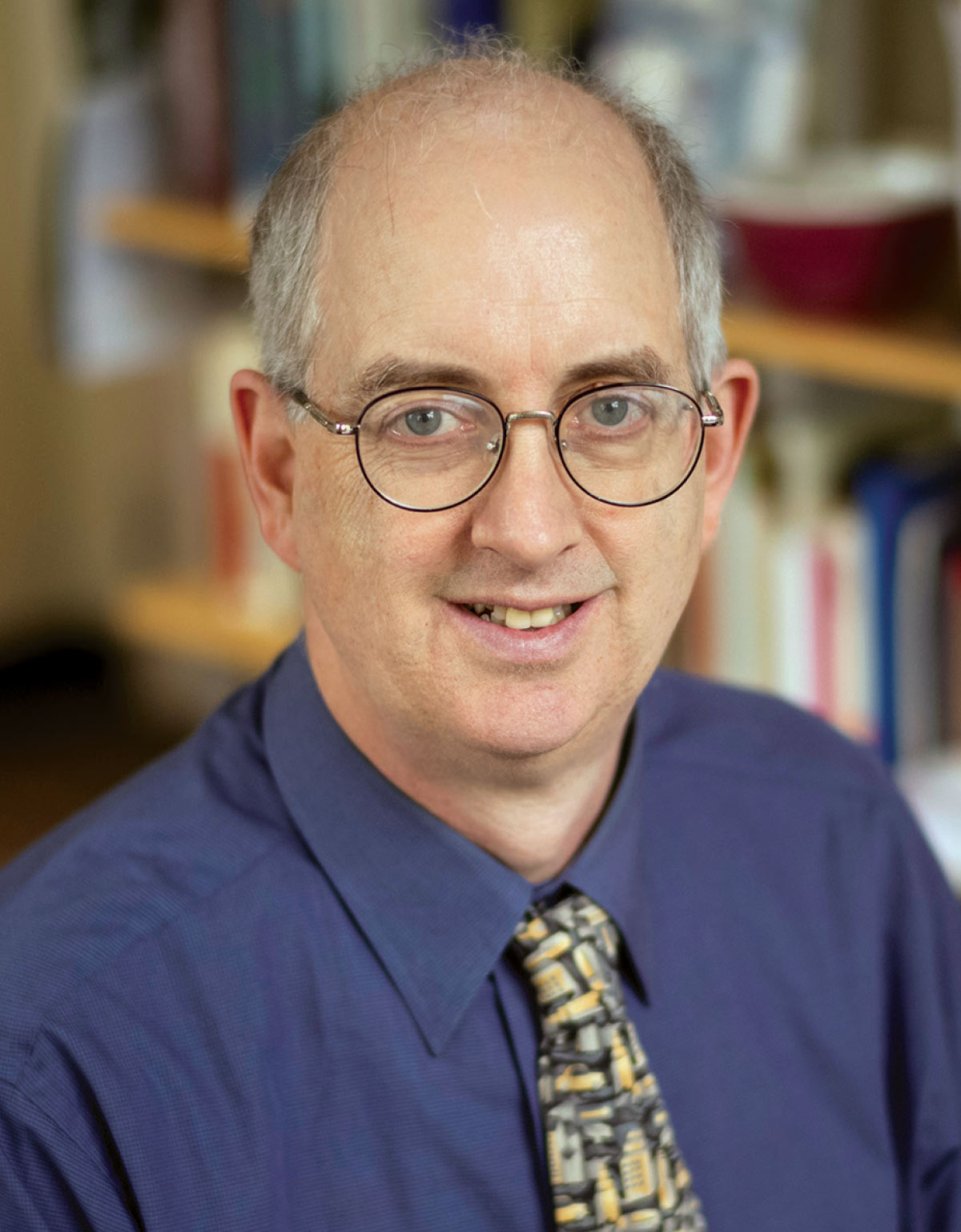
Baker’s research lies at the intersection between philosophy of mathematics and philosophy of science. As a Platonist, he defends the position that mathematical entities, such as numbers, sets, and functions, really exist, and that the aim of mathematics is to truly describe this realm of abstract objects. He explores case studies where mathematics is used to explain physical phenomena and argues that these applications of mathematics establish that the mathematical entities are real.
The fellowship represents two decades of Baker’s work in developing and defending philosophical arguments for Platonism, in particular the so-called Enhanced Indispensability Argument. He presents the EIA in his co-authored book Indispensability (Cambridge, 2023) and in various articles in peer-reviewed philosophy journals.
An important part of EIA rests on case studies from science, such as explaining why 13-year and 17-year periodical cicadas emerge at prime intervals. In his Mind Journal articles “Are There Genuine Mathematical Explanations in Science?” (2005) and “Science-Driven Mathematical Explanation” (2012), Baker discusses a possible mathematical explanation for this phenomenon, based on the way prime period lengths minimize the frequency of intersection with periodical predators. Baker says he is appreciative of the way Swarthmore values both teaching and research.
“I enjoy being immersed in the liberal arts college environment,” he says. “However, this balance between teaching and research can make it challenging when competing for awards such as the Guggenheim with peers from more research-focused institutions.” Baker intends to complete his first single-authored book project, whose working title is Mathematical Explanation in Science.
“We are so insanely proud of Alan,” says Associate Professor and Chair of Philosophy Krista Thomason. “It’s rare that you get to have a colleague who is a wonderful human and a rock star scholar at the same time. We in the department have always known that his philosophical work is of the highest quality, and that he’s one of the leading experts in his field. Now with the Guggenheim, the outside world knows it, too. We’re so glad he’s getting the recognition he deserves.”

— LUCY TOBIER ’26
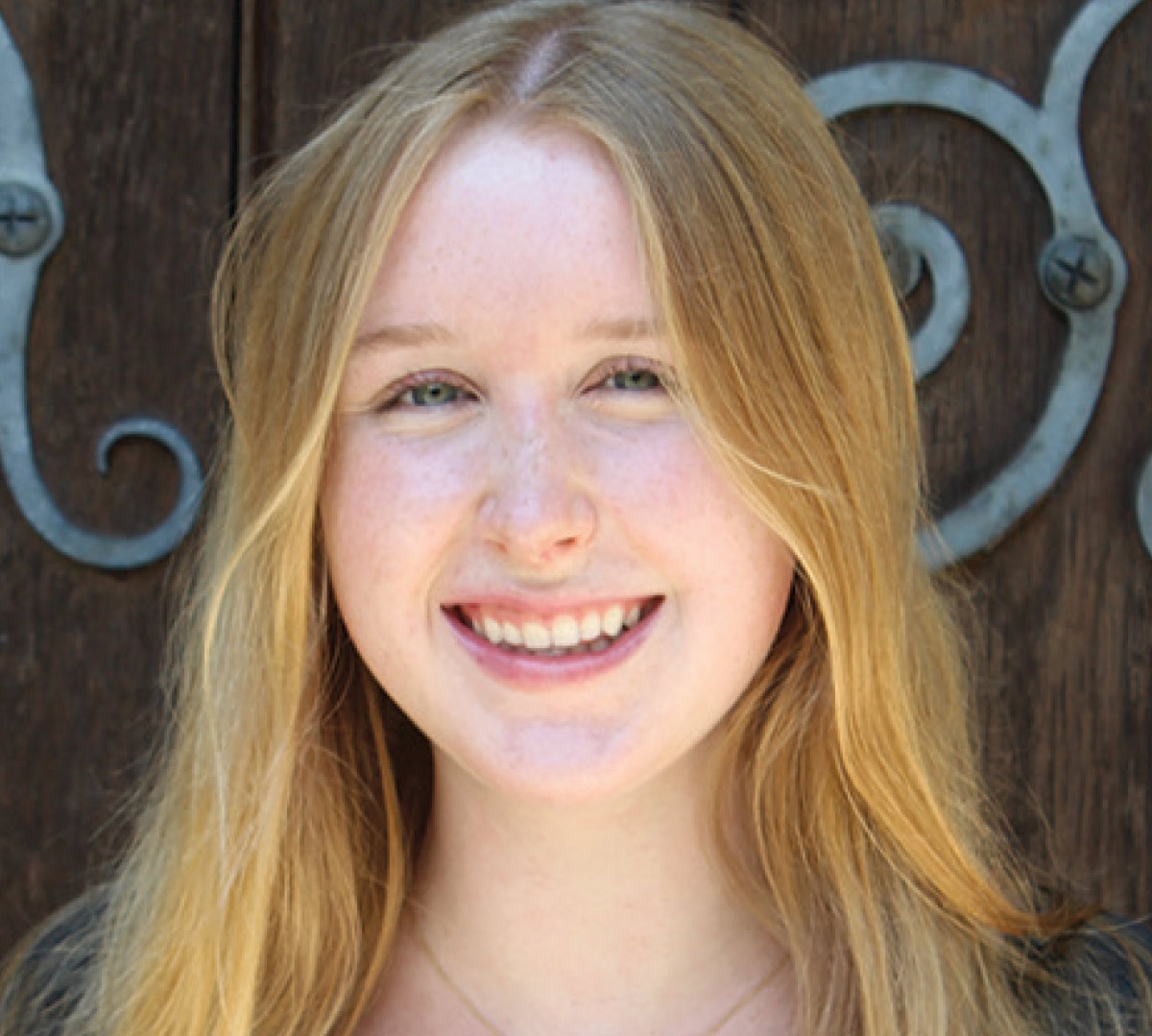
—RYAN DOUGHERTY
Stroke of Genius
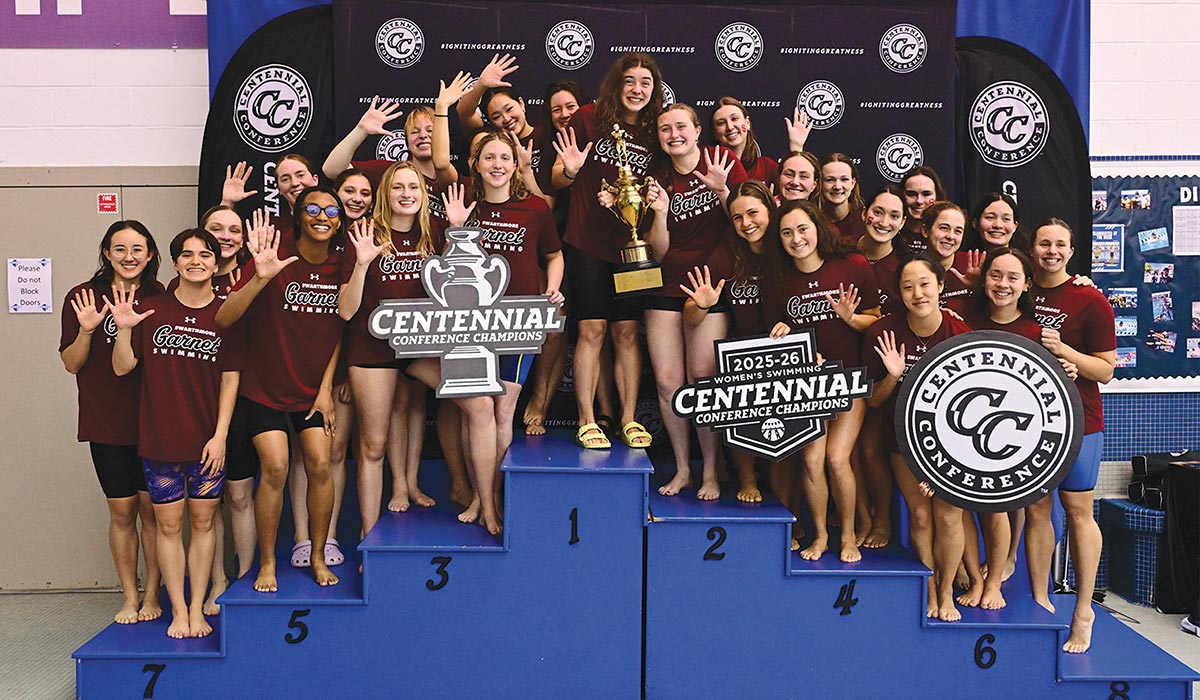
or the swarthmore women’s swimming program, Sunday, Feb. 22, 2026 was business as usual: during the final day of the Centennial Conference (CC) Championships, the Garnet claimed their fifth straight CC crown with record-shattering performances and NCAA qualifying times. Quinn Weygandt ’26 was named Most Outstanding Performer for the third season in a row.
Zooming out shows a different picture, one that illustrates how the Garnet have developed the team depth and mental resilience characteristic of a top Division III program.
A blizzard forecasted to bring over a foot of snow to the region forced the conference to compress the preliminary and final swims for each event into one single final.
Measuring is Believing: A Chance to Co-Author Biology Education Activity
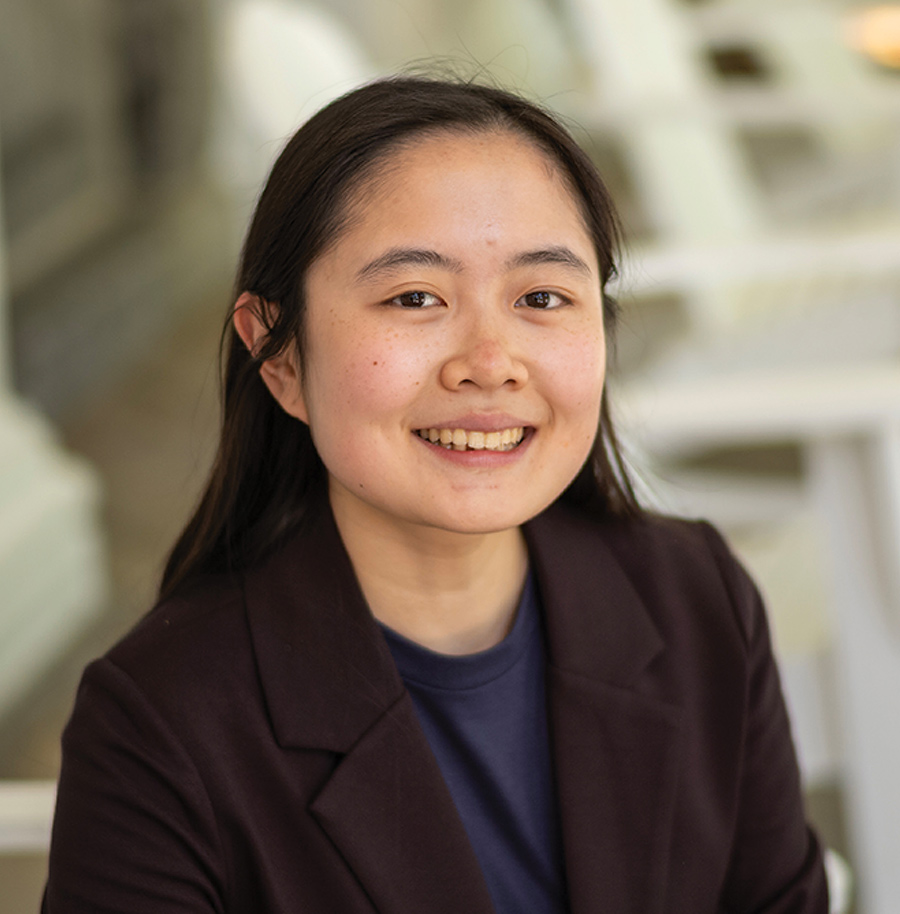
That possibility has since become a published article: “Measuring is believing: quantifying adaptation behaviour of Hydra,” co-authored with Associate Professor of Biology Eva-Maria Collins and recently published in Science in School, a nonprofit journal dedicated to supporting teachers in delivering STEM curricula and encouraging students to pursue careers in science.

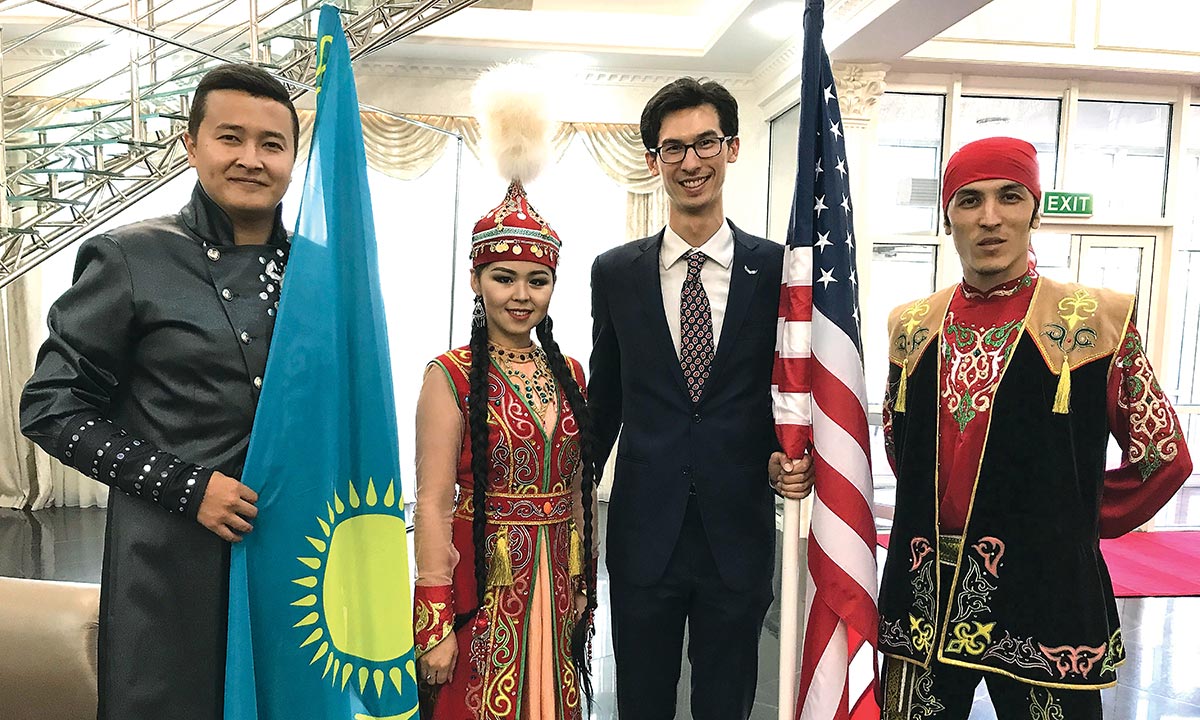
Public Service in a New Way
N JULY 11, 2025, Wren Elhai ’08 found himself out of a job.
Along with more than 1,300 other State Department employees, Elhai was summarily dismissed in a Friday purge that made national headlines.
It was a shock and disappointment to Elhai, as he was preparing to take a position as the public affairs officer in Senegal, which would have been his most senior post to date. Elhai had worked in the Foreign Service at the State Department since shortly after graduating from Swarthmore with a degree in political science and Russian studies.
Serving the nation, he says, was a job he truly loved.
Elhai is now looking to channel his devotion to public service in a new way, meditating on how he might put his talents best to work in a fraught moment in national politics.
Learning on Makeshift Diamonds
n the home city of soccer, cricket, and tennis, pitching a baseball is an esoteric skill — a little like calligraphy or lockpicking.
That didn’t stop Matteo Sollecito ’23, who learned to fire a pitch on makeshift diamonds in muddy London parks in a country where the sport is all but invisible.

“I was named captain my senior year, which was an honor for some of those achievements and work I put in that 2022 year,” he says.
In 2025, Sollecito won the Laureate Award, given by the nationwide engineering honor society Tau Beta Pi to students who exemplify a “spirit of liberal culture” and excel beyond academics. For Sollecito, the distinction stemmed from representing Great Britain at the 2023 World Baseball Classic.
“I wanted to prove myself,” says Sollecito, whose American father introduced him to the sport in the U.K. “I wanted to show that a British boy can succeed in baseball in the U.S.”

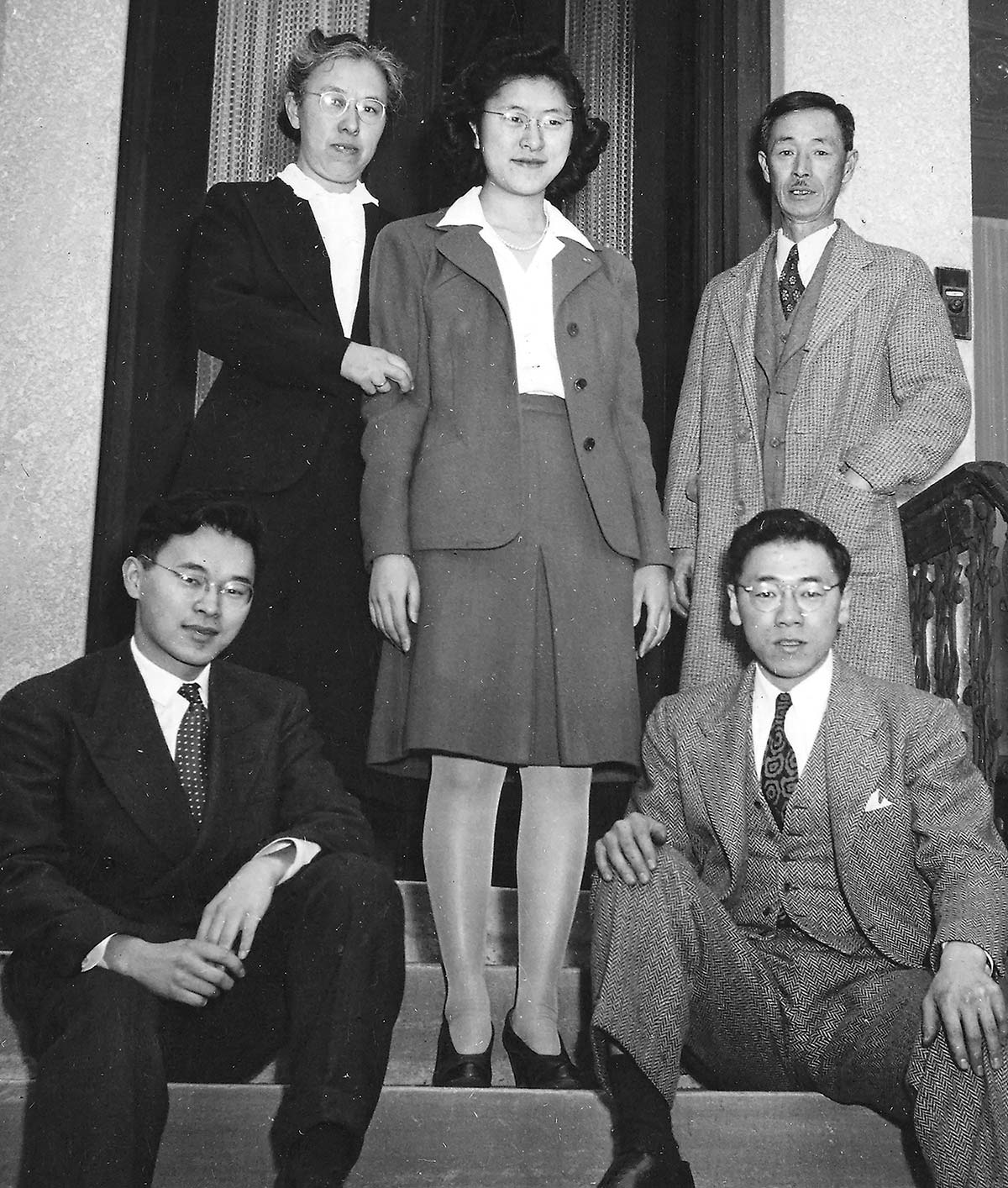
A Story
of Welcome
This Chestnut Street hostel has deep ties to Swarthmore, Quaker activism, World War II, and three generations of alumni.
A Story
of Welcome
This Chestnut Street hostel has deep ties to Swarthmore, Quaker activism, World War II, and three generations of alumni.
“People have no idea,” says Celia Caust-Ellenbogen ’09, a curator at the Friends Historical Library who initiated the College’s support for the effort to recognize the site with a state historical marker.
Today on the 3200 block of Chestnut Street stands a glass and concrete landscape. A massive building, housing a student center and a series of storefronts, dominates the block. It’s the type of place Penn and Drexel students go for a hamburger or a haircut. The new historical plaque soon will make clear there’s more to the story.

The
1875:
150 Years of International Students at Swarthmore

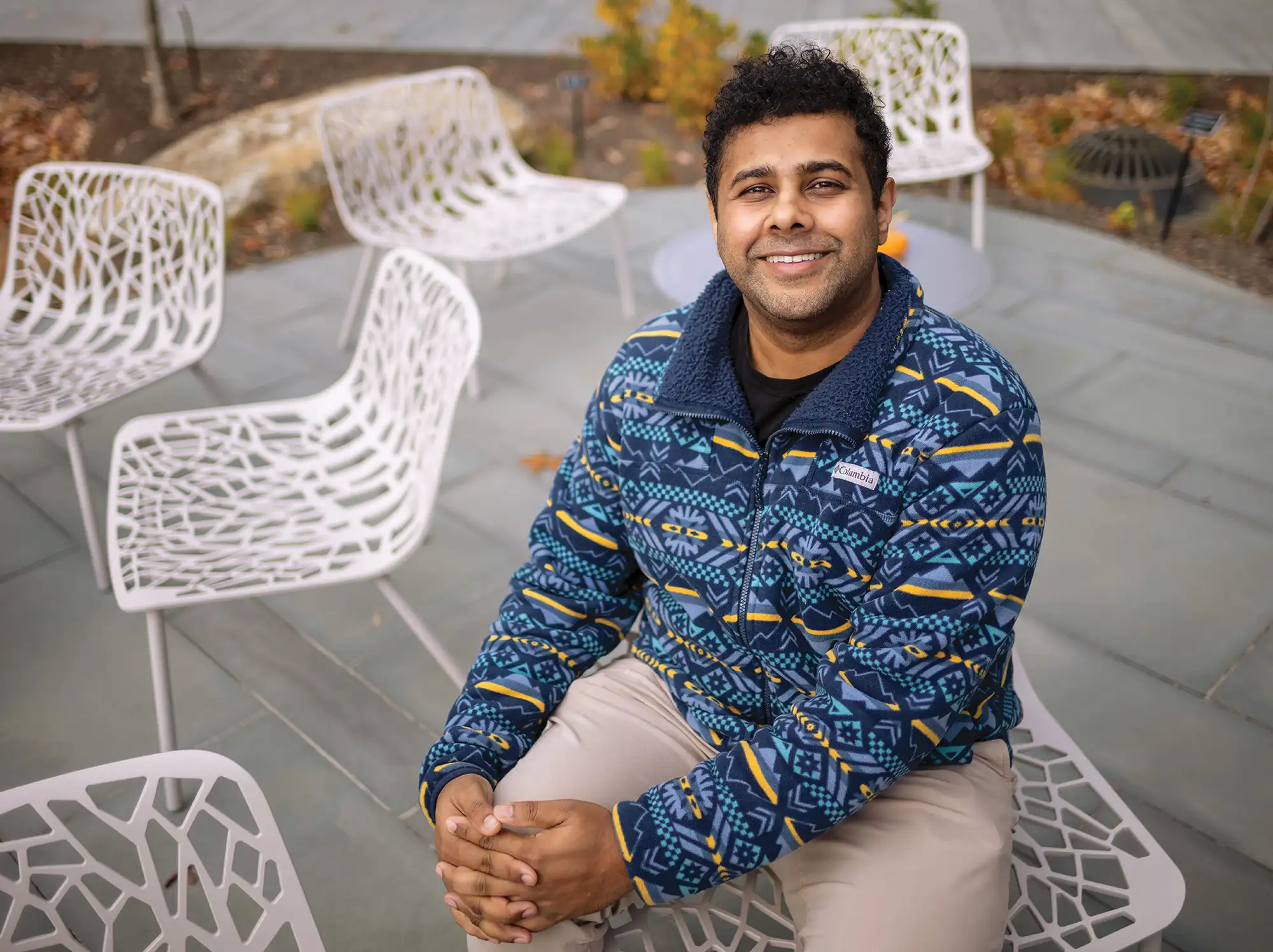
Michael Ugwe ’25 tells this story about himself with a smile. The sweltering heat for which he was unprepared prefigured deeper questions about the international student experience that he went on to explore through a collaborative storytelling project — one to which he hopes many international Swarthmore alumni will contribute.
When Kathryn Melvin came to Swarthmore in 2022 to take on the role of international student coordinator (she is now the College’s student and scholar immigration specialist) she was curious about the history of international students at Swarthmore. Melvin wondered whether their stories might serve as a bridge to strengthen connections between past, present, and future students.

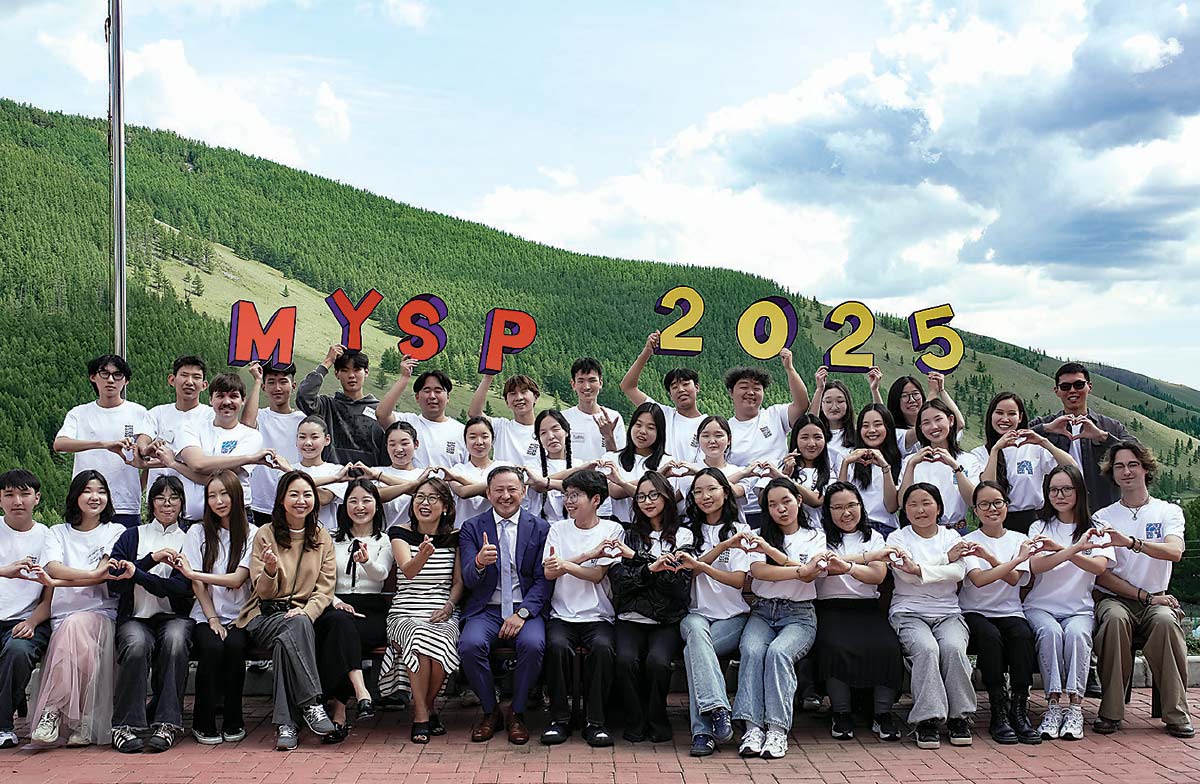
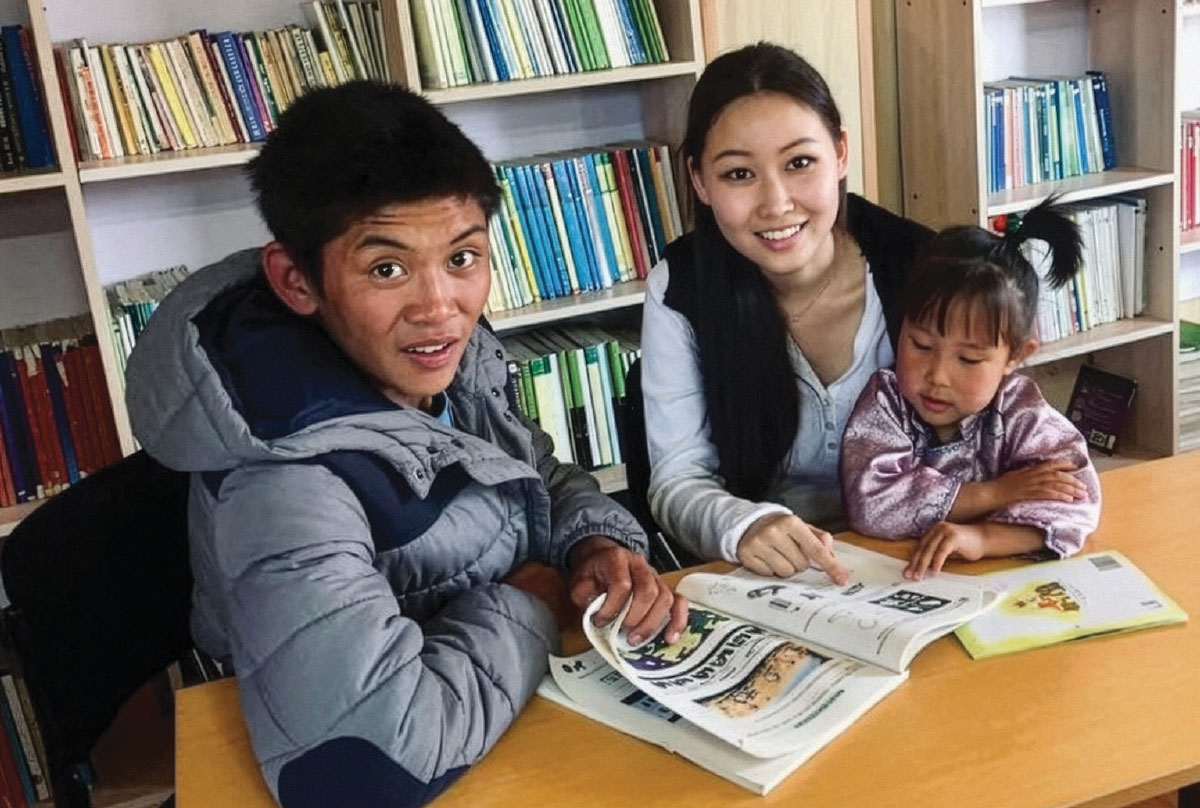
A Full Circle Moment
“It feels surreal,” says Enkhtaivan, who goes by Nara to her American friends. In Mongolia, Enkhtaivan would refer to Nara’a father. “It’s such a full circle moment. Inside I’m still that 18-year-old girl who just got accepted to Swarthmore.”
Nara is the first Mongolian student from a public high school ever to be accepted into Harvard. She chose Swarthmore instead, drawn by its Educational Studies Department. She grew up in Mongolia’s capital city, Ulaanbaatar, and lives there today.
Can Technology Help to Regulate Itself?
magine this: A realistic AI-generated video appears online of the president announcing a military strike on a nuclear-armed adversary. It circulates on fringe accounts, but then it’s reposted by influencers with millions of followers. Cable news speculates. Stock markets crash. Russia and China raise their military readiness. By the time the White House denies the video’s authenticity, the damage has been done. Conspiracy theories abound. Many suspect a cover-up.
Not long ago, this scenario might have been dismissed as science fiction. But it’s now plausible — and one of many deepfake risks that concern computer scientist Sukrit Venkatagiri.
A panicked voice on the phone that sounds like your brother asks for thousands of dollars. A fake sexually explicit video of a public official is posted on X. A Fortune 500 CEO announces she is resigning in disgrace, tanking the stock price. In a society already weakened by distrust, deepfakes threaten to tip the balance.
coda
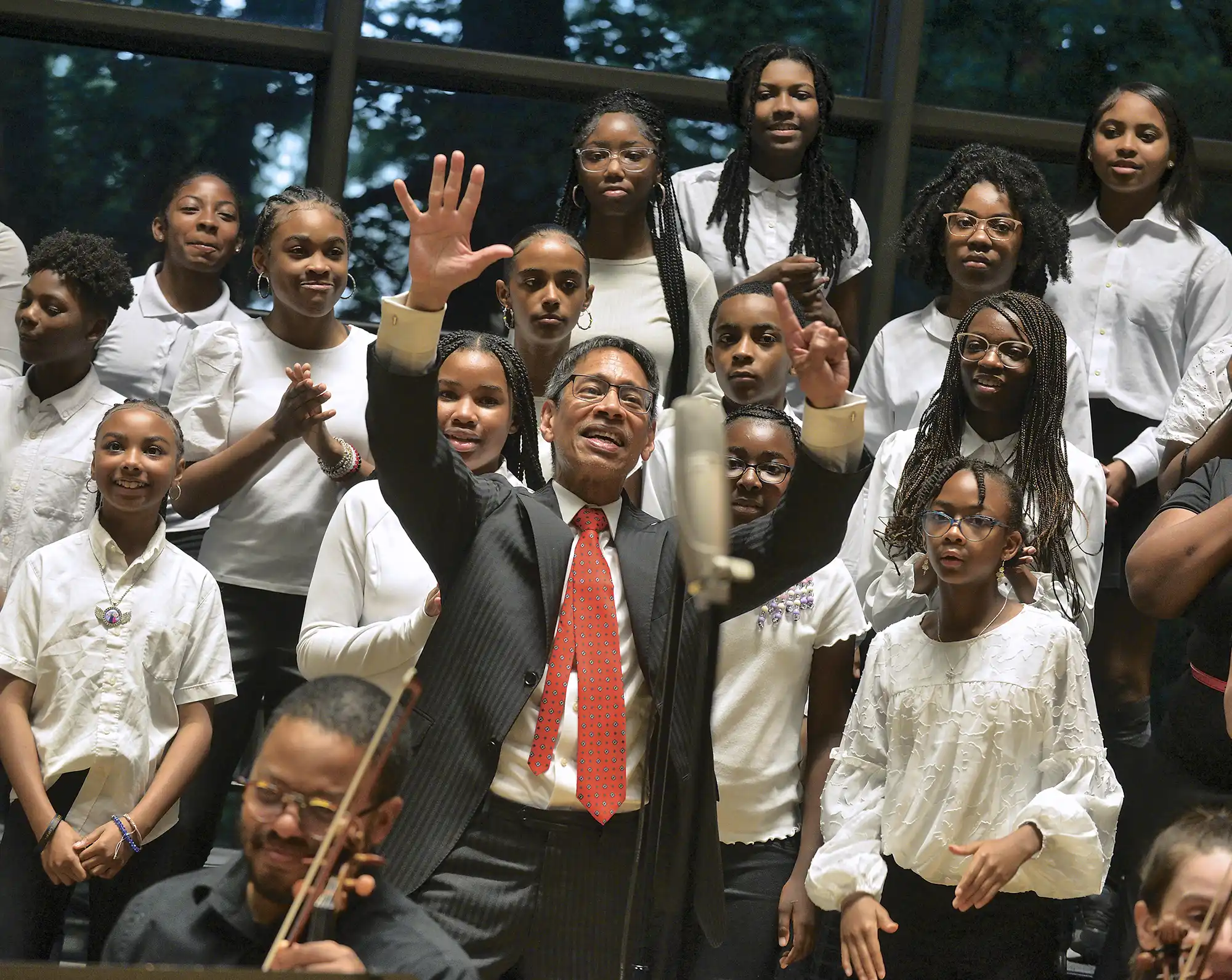
Sitting in the familiar rehearsal space on the second floor of 715 Harvard Ave on a recent spring day, Alston was focused less on endings than on the three spring performances that remained, before his final concert on Alumni Weekend. What matters most to him now is the music itself — making these last performances worthy of the children’s efforts, and of the program he built.
“I want these shows to be the best shows ever,” he says, “and for me to be the best musician I’ve ever been at my last show.” That focus on craft over ceremony feels characteristic of Alston, whose career has been defined less by sentimentality than by steady, relentless work. Even as retirement approaches for him this summer, he speaks less about legacy than momentum.

Class Notes
alumni council:
swat talks
In 2025-26, SwatTalks included such diverse topics as:
Poetry, Black Mental Health, and Therapy as Reparations with Assistant Professor of English Literature Morgan Parker in conversation with Adam Dalva ’08, president of the National Book Critics Circle
Politics and Political Science in a Changing World with Peter Katzenstein ’67 and David Laitin ’67 (onetime roommates in the Mary Lyons dormitory) in conversation with Political Science Professor Ayse Kaya
Higher Education at a Crossroads: A President’s View from the Nation’s Capital with American University President Jonathan Alger ’86 in conversation with Margaret Huang ’87
Registration information for upcoming SwatTalks, along with links to recordings of most past talks, can be found at swarthmore.edu/alumni-resources-events/swattalks.
The Alumni Council is always on the lookout for alumni who are interested in presenting a SwatTalk. If you are interested or would like to suggest a speaker, please reach out via email to swattalk@swarthmore.edu.
Your support makes a Swarthmore education extraordinary and accessible.

Your support makes a Swarthmore education extraordinary and accessible.

Sylvia, an artist who loved gardening, tennis, and skiing, died Jan. 12, 2026.
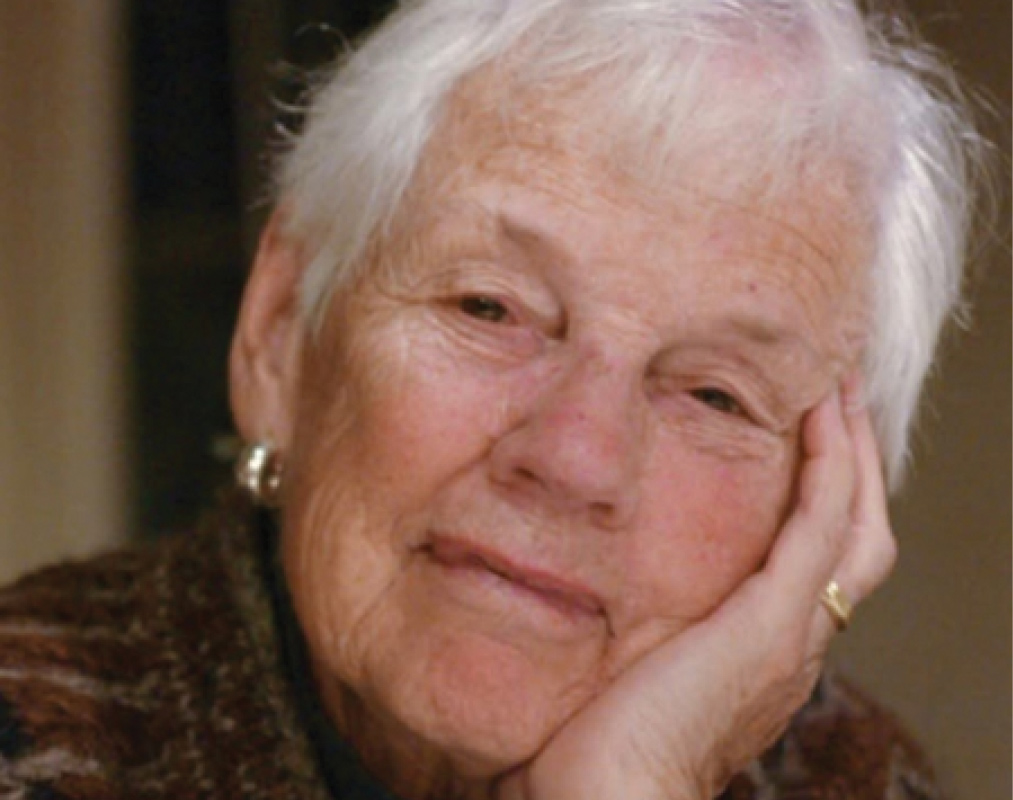
She earned a bachelor’s in psychology at the College and was married to the late Robert Agler ’46 for 66 years. The couple raised their children in Hingham, Mass., before moving to Amherst, N.H., where she continued to garden and was a bookkeeper for the local library. An artist at heart, she took art lessons and produced many paintings. After moving to Linden Ponds, she was an active member of the community garden.
Ted, an athlete who worked at Reader’s Digest, died Feb. 28, 2025.
He earned a bachelor’s in economics at the College, where he was a member of Delta Upsilon, the Drama Board, the Phoenix, and the varsity cross country and track & field teams. Ted attended Columbia University; was retired as promotion director at the Reader’s Digest Association; and had three children.
Thomas, a physician who helped modernize the field of cardiology, died Sept. 8, 2024.
He earned a bachelor’s in biology at the College and an M.D. at Cornell University. He joined Beth Israel Medical Center in 1984 as director of the Department of Medicine, and over 21 years became executive vice president for Medical Affairs, director of the Heart Institute, and interim president and chief executive officer. Thomas was a principal investigator of a coronary artery surgery study, and a developer of the coronary care unit and of the Killip classification of myocardial infarction. He published more than 100 original papers and contributed chapters to major textbooks.
Marge, a Board of Managers member, died Feb. 21, 2026.
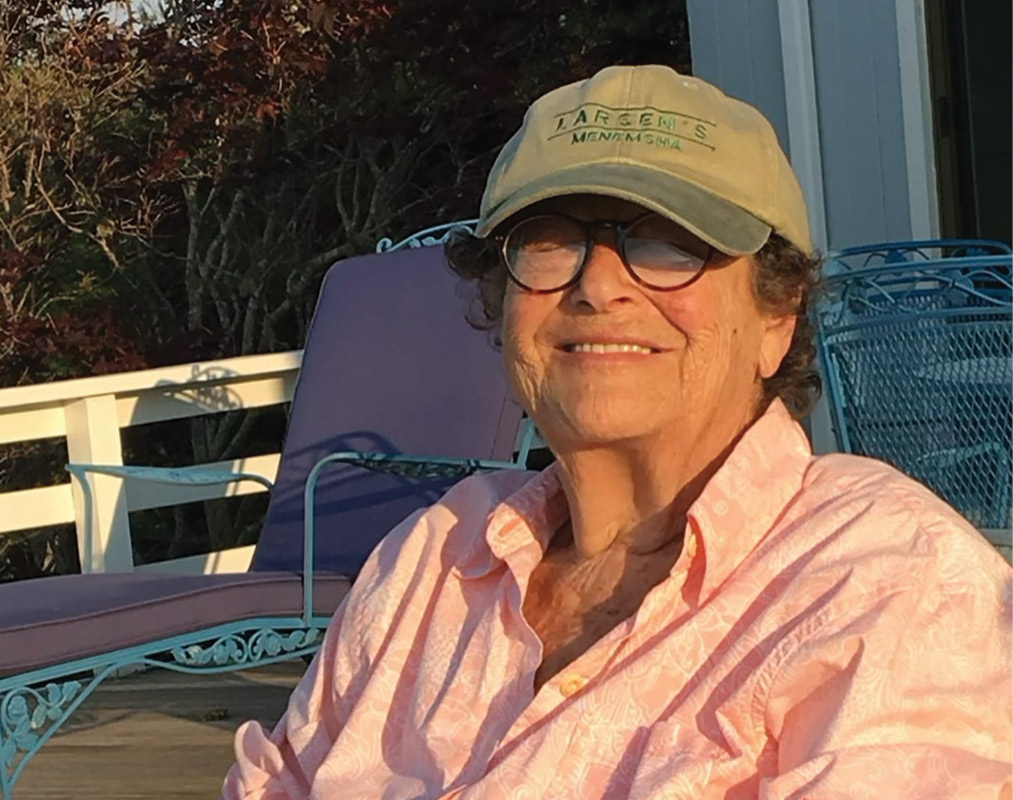
She earned a bachelor’s with High Honors in economics at the College, where she met late husband Walter Scheuer ’48, and received a master’s in international affairs from Columbia University. In addition to raising four children, Marge served as president of the Citizens Committee for Children in New York; was a member of the College’s Board of Managers; and managed the Henry and Rose Pearlman Foundation, which owned her father’s art collection.
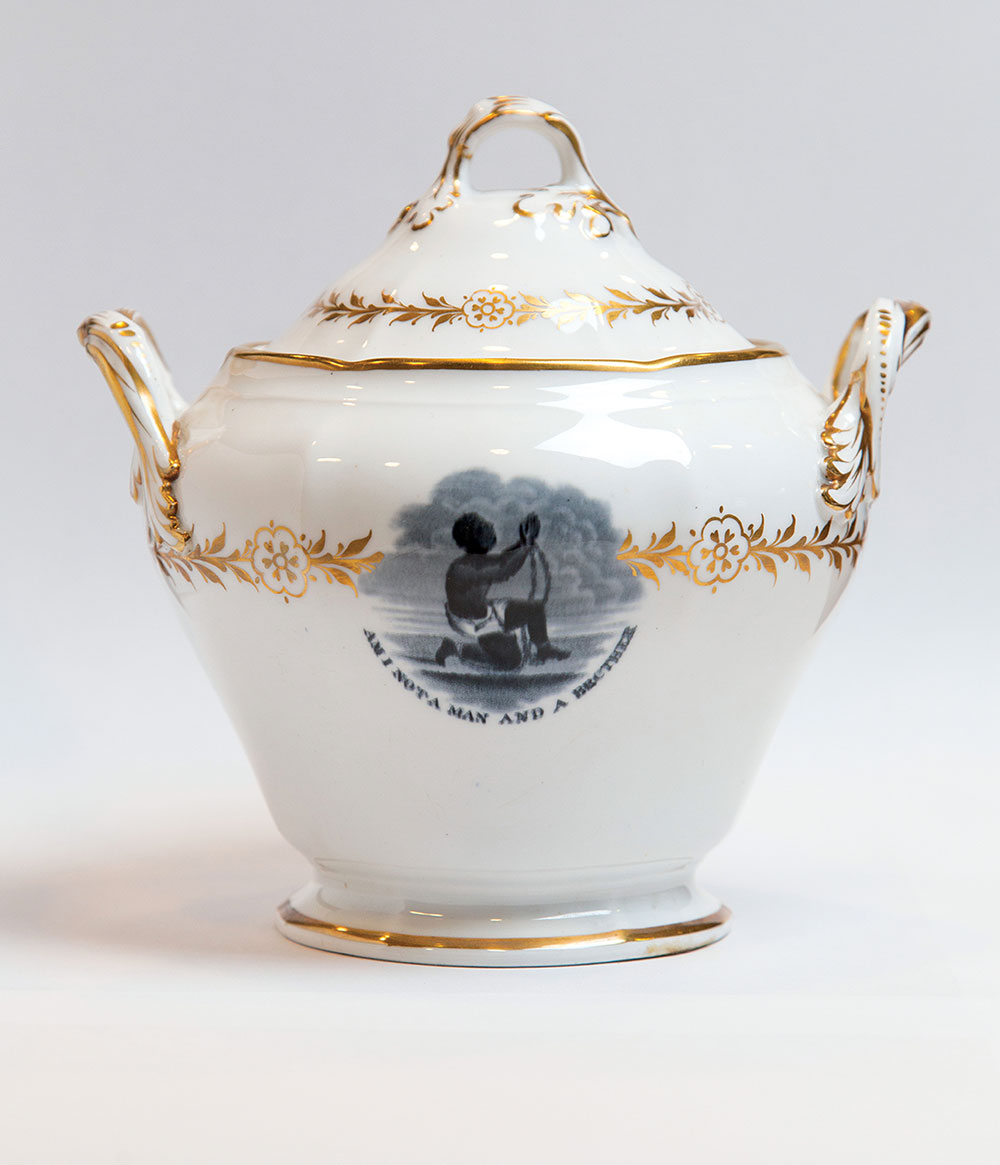
not only holding sugar
The Committee for the Abolition of Slavery, based in England, adopted English potter and entrepreneur Josiah Wedgwood’s design, which is featured on the body of this bowl. The phrase, “Am I not a man and a brother?” paired with an image of a Black person in chains became a central feature of many abolitionist objects after its coinage in 1787.
“For Quakers, consumption was political and often associated with the ethic of ‘plainness,’ but it was also deeply personal,” says Visiting Assistant Professor Art History Susan Eberhard ’09. Students in Object, Media, Matter: Introduction to Material Culture and Material Histories collaborated with the Friends Historical Library to research and curate an exhibition drawn from their objects collections. The sugar bowl is both a unique and common piece of abolitionist history that reveals how material and ideological circulation were functioning during the time of its production, 1847.
It was sent to a Philadelphia-based anti-slavery fair by Queen Victoria. It was then purchased by a Mrs. Thomas Jenkins. Anti-slavery fairs were very common in the U.S., being used by abolitionist communities as a way to disseminate political values and ideals.
Moving Through Meaning
nthropologist, dancer, and choreographer Pallabi Chakravorty has spent her career tracing how movement carries culture — across borders, histories, and identities. A professor of dance at Swarthmore, Chakravorty fuses scholarship and performance, drawing on her training in Kathak, a classical dance form from northern India, and her work in visual anthropology. She also founded Courtyard Dancers, a Philadelphia-based nonprofit that builds community through South Asian dance traditions. Here, Chakravorty reflects on the intersections of dance and anthropology, the role of movement in shaping identity and belonging, and ongoing sources of inspiration.
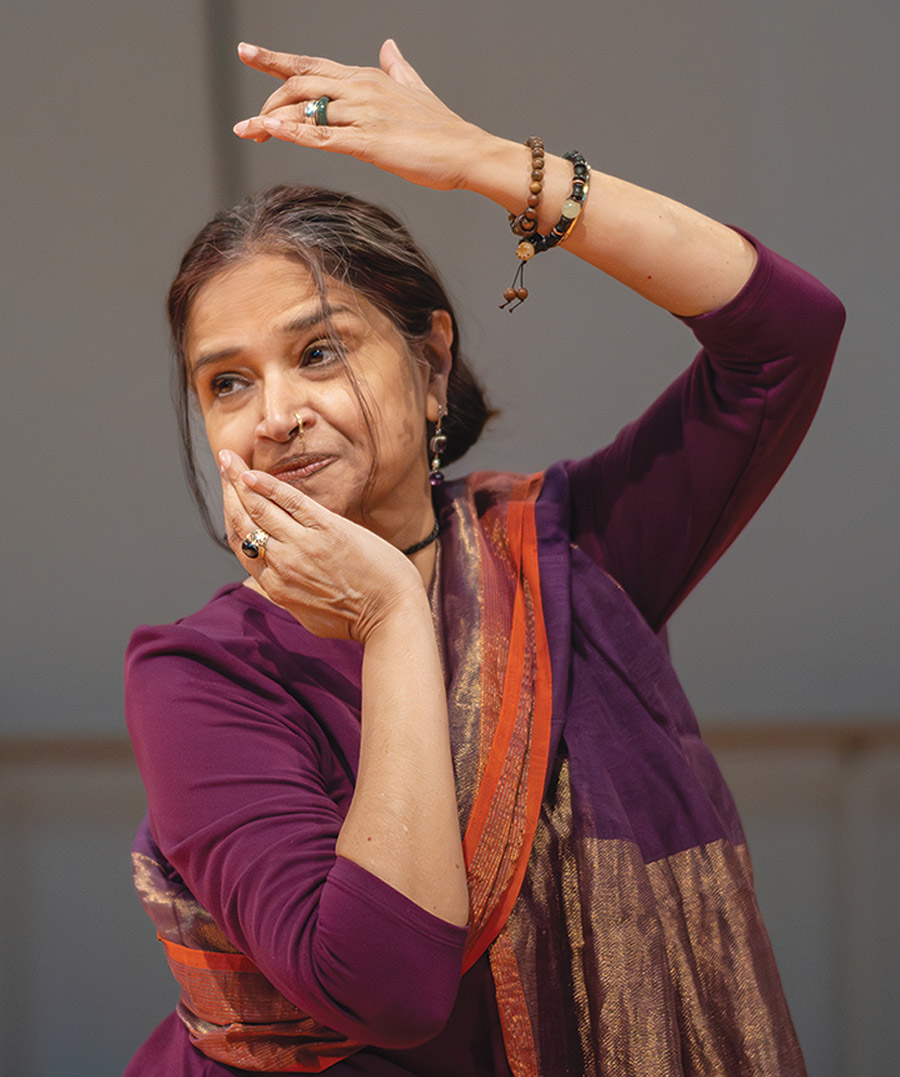
How did your interests in dance and anthropology intersect?
Dance has always been part of my life. I grew up in Kolkata and trained in different styles before specializing in Kathak. As I learned, I became aware of histories, especially women’s histories, that had been erased. Anthropology gave me a way to study dance critically, connecting movement, culture, and history. At a time when non-Western dance was rarely studied in universities, anthropology — and later visual anthropology at Temple University, where I finished my dissertation — offered the ideal interdisciplinary framework, allowing me to explore ritual, performance, and ethnographic film as vital expressions of culture.

Moment in Time

date for Swarthmore’s homecoming & family weekend
Oct. 30–31
