

Measuring is Believing: A Chance to Co-Author Biology Education Activity
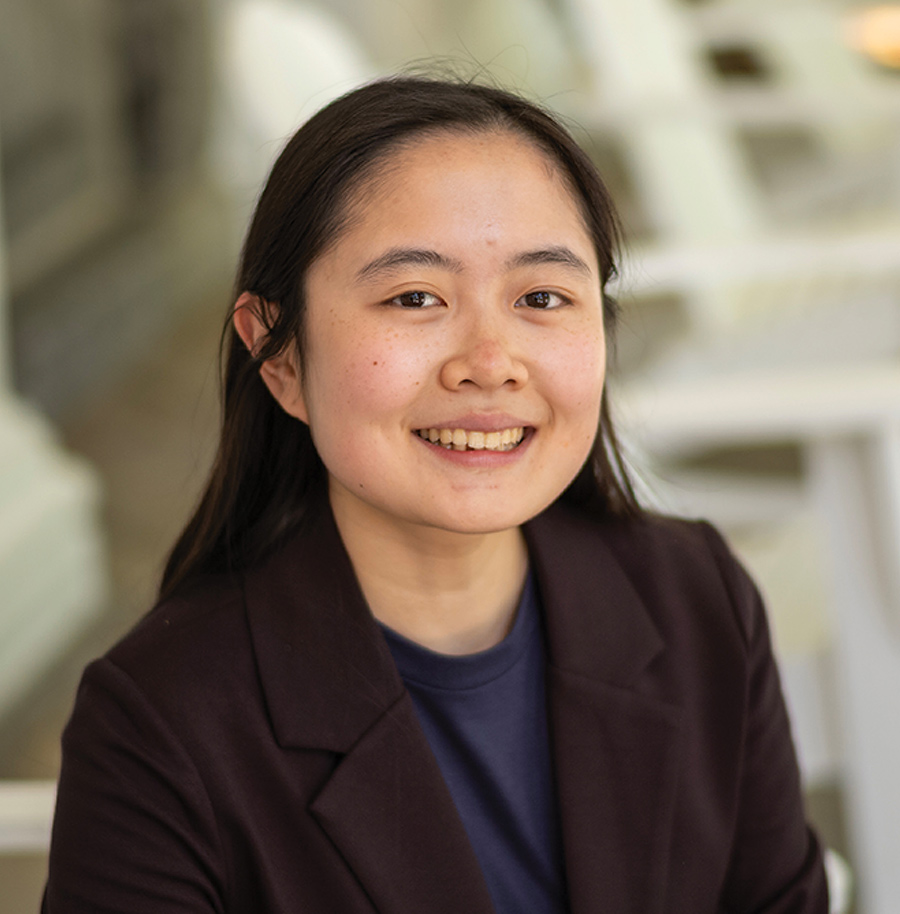
“We set out to design a hands-on science activity for middle and high school students to introduce core biology concepts and walk through the steps of scientific inquiry,” says Poon, of Houston, Tex.
The activity centers on Hydra’s adaptation response to simulated river currents and emphasizes the power of quantification for biological discovery.
In the wild, a Hydra contracts into a ball when it senses a sharp change in current, protecting itself from being swept away from the rock surface to which it adheres. Once the current steadies, it adapts — elongating its body and tentacles back to a resting state, even under higher-intensity flow.
Poon was drawn to the project for its elegance and accessibility. In the lab, Poon and Collins recreated river currents by rocking a portable, low-cost microscope. Students can observe and measure the Hydra’s contraction and elongation in real time, measuring a biological response that is both simple and profound.
Early prototypes involved popsicle-stick tappers to create vibrations for the Hydra before the team realized that moving the base of the microscope was the most manageable solution.
Collins found a scrap of felt that could be mounted on the microscope’s bottom and smoothed the rocking motion — a key aspect, as felt can be easily affixed and removed. Poon and Collins finalized their 24-page manuscript — complete with worksheets and supplemental fact sheets developed in tandem with the procedure — over the span of five months, and sent it off to the Science in School editors.
Poon loved the process of creating, exploring, and trying again. When the publication acceptance came, Poon drew satisfaction from imagining teachers around the world using the experiment to spark curiosity in their own classrooms. “I could not have done it without my mentor, Professor Collins, who very patiently walked me through the entire manuscript-writing process and made time in her busy schedule to troubleshoot with me,” she says.