





Teaching: An Urgent Obligation
Snow blankets Swarthmore College’s campus in a “tiny-world” aerial photo by Brandon Hodnett.
Masthead

Send address changes to records@swarthmore.edu
Please recycle after reading.
©2026 Swarthmore College
Printed in USA.

‘Never Give Up, Take Courage’
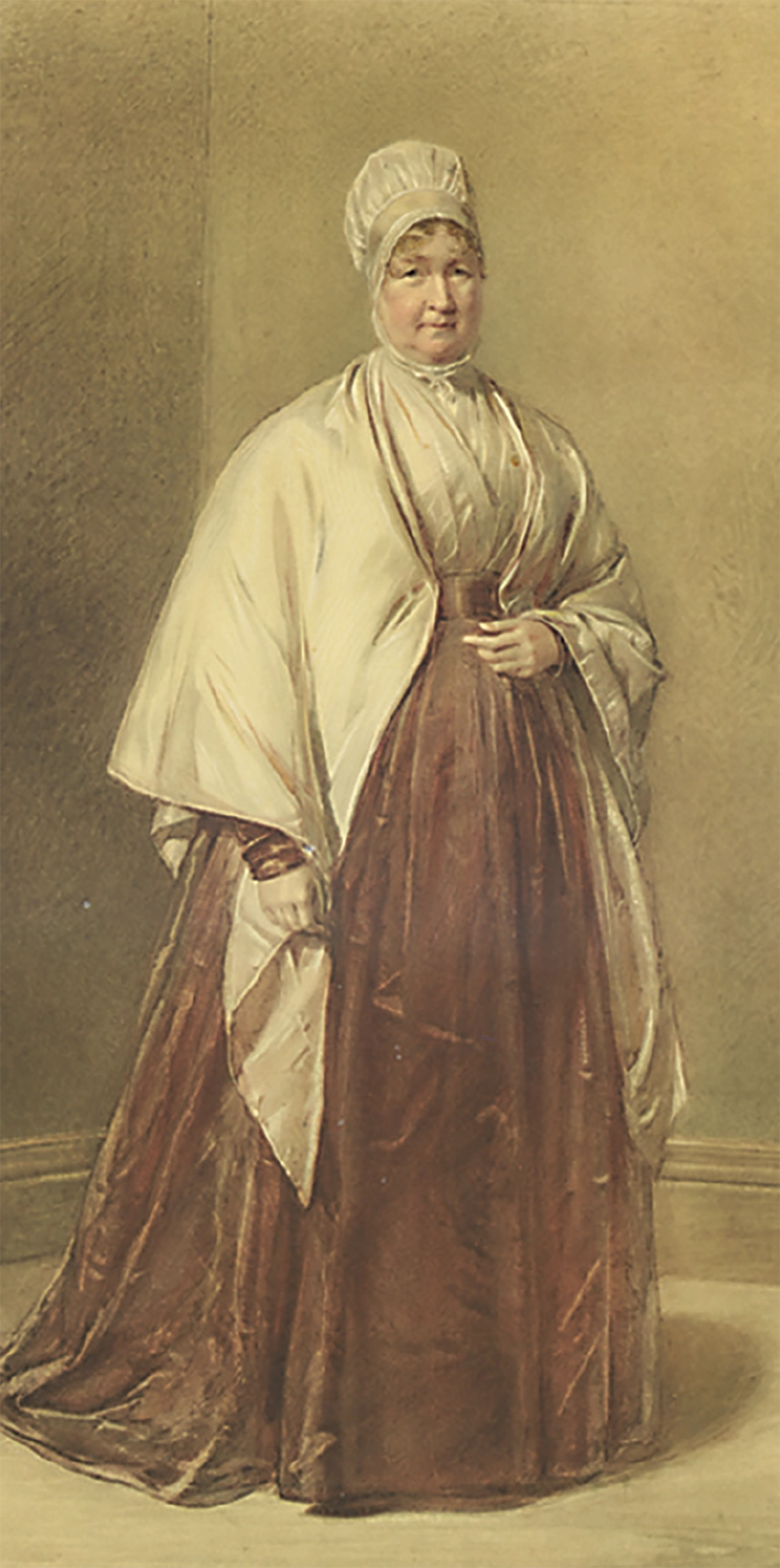
N A NOD TO the College’s Quaker history, note this prescient quote from Elizabeth Gurney Fry. “I believe there is something in the mind, or in the heart, that shows its approbation when we do right,” said Fry, a prison reformer specifically focused on the conditions women faced in prison. “I give myself this advice: Do not fear truth, let it be so contrary to inclination and feeling. Never give up the search after it: And let me take courage, and try from the bottom of my heart to do that which I believe truth dictates, if it leads me to be a Quaker or not.”

A Scholar’s Books and Boxes
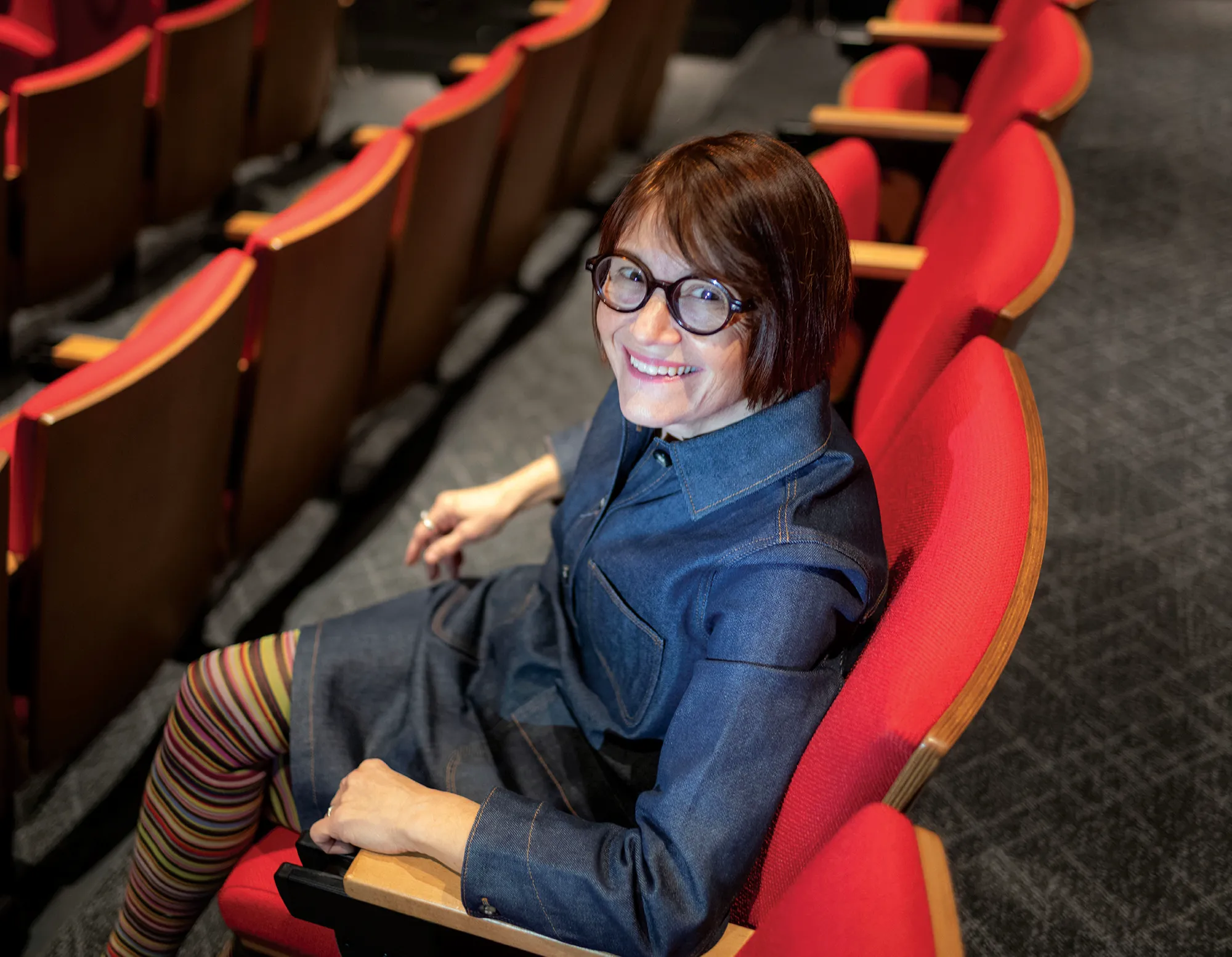
I have no excuse. I could have shredded the notes for each book, because my last four monographs were on totally different subjects. Each one generated the next by a kind of opposition. My book on five Irish cultural controversies (The Irish Art of Controversy), begun in 1991, was published in 2005; I did so much research that each controversy could have been a book. OK, I told myself, now I’m going to write about one brief event; I began work on the four-hour dinner that W. B. Yeats and Ezra Pound organized for the poet and anti-imperialist Wilfrid Scawen Blunt. It hadn’t occurred to me that a book on such a small event would require an awful lot of research. In 2014, when Poets and the Peacock Dinner: The Literary History of a Meal was published, I’d completed a book about an all-male dinner from which women were explicitly excluded, although the seven men had only met because of their romantic and professional associations with women. Now, I said to myself, I’m going to write a book with women in the center and men on the periphery.


Encore!
warthmore celebrated one of its most beloved musical traditions with FetterFest, a two-day event during Garnet Weekend honoring the 50th anniversary of the Elizabeth Pollard Fetter Chamber Music Program. What began in 1975 as a modest scholarship fund for string quartets has blossomed into a cornerstone of the College’s music program — and FetterFest captured that legacy in a joyful reunion of generations of musicians, faculty, and friends. The College welcomed the Brentano String Quartet, whose founding violinist Serena Canin ’88 is herself a Fetter alumna, for a day of music and mentorship. Other alumni spanning five decades gathered to play in small ensembles. Highlights included a participatory “Drop-In and Sing!” event and a performance by members of the Chroma Quartet (Class of 2022) with guest violinist David Kim, concertmaster of the Philadelphia Orchestra.
The festivities culminated with a celebratory concert in Lang Concert Hall. “We are so thrilled to celebrate the Elizabeth Pollard Fetter Chamber Music Program, one of the cornerstones of music making at Swarthmore for the past 50 years,” says Andrew Hauze ’04, senior lecturer in music, and co-coordinator of the program along with Jenny Honig, Director, Concert Programming, Production, and Publicity.
Hot Type


Sign Me Up!
arnet Day is a monthly celebration of community on campus, bringing friends and colleagues together to enjoy good food and company. December’s 2025 Garnet Day marked a significant milestone in the College’s energy plan, To Zero By Thirty-Five — the completion of drilling for the geoexchange wells on Parrish Lawn and by the Dining and Community Commons. To help mark the occasion, students, faculty, and staff (and Phineas!) were invited to sign their names on a 20-foot distribution pipe that will become part of the new geoexchange system.


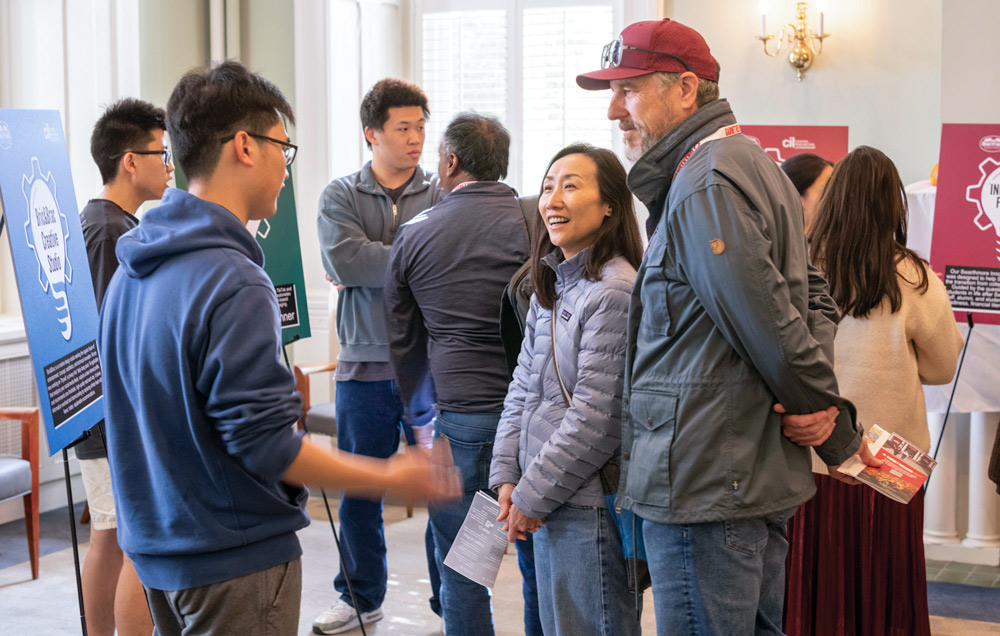
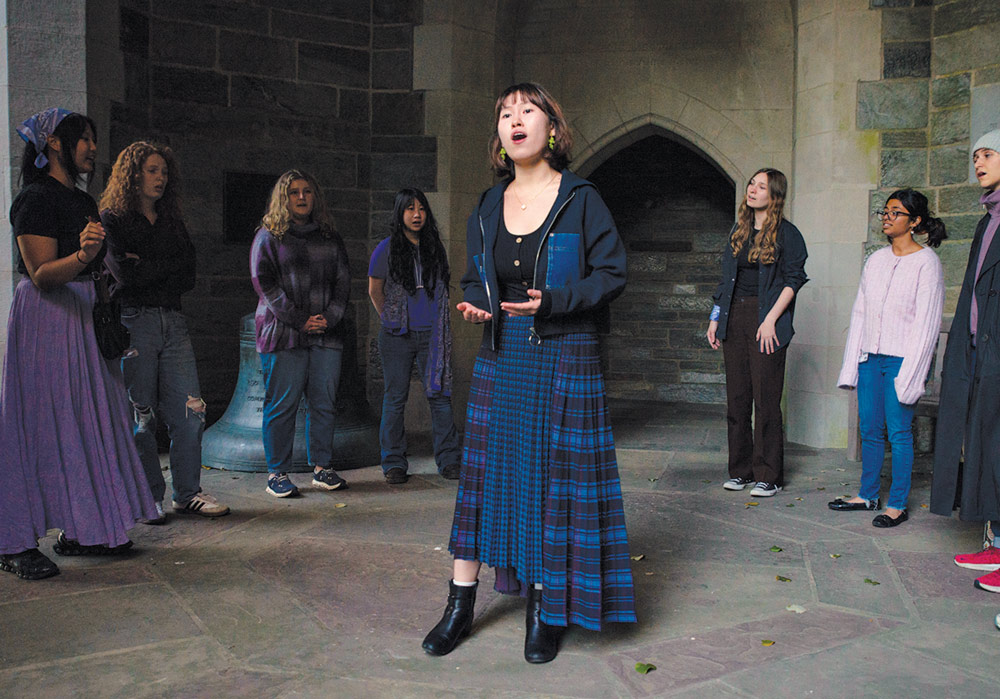
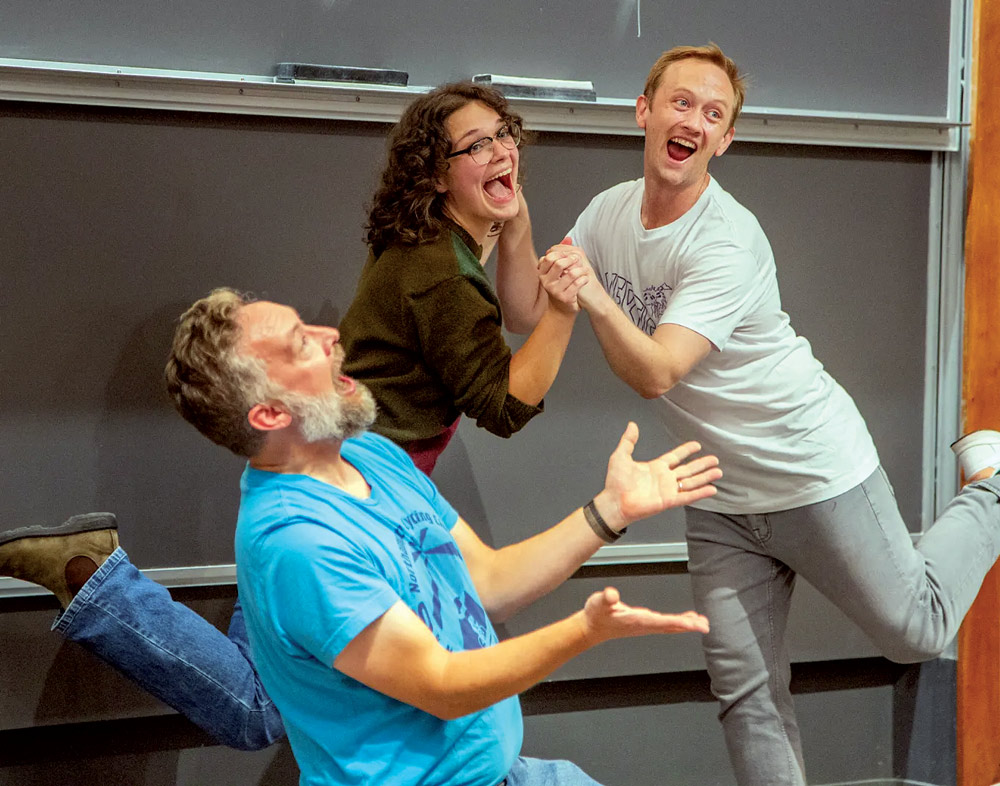
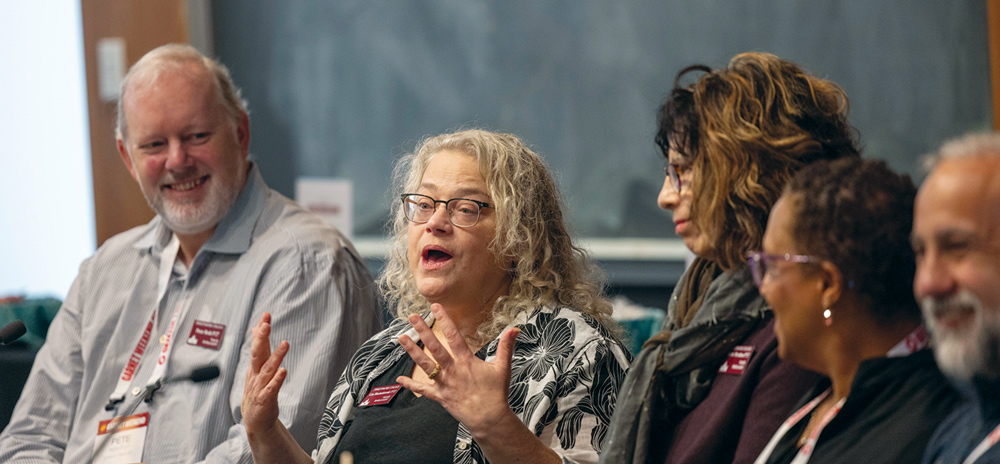
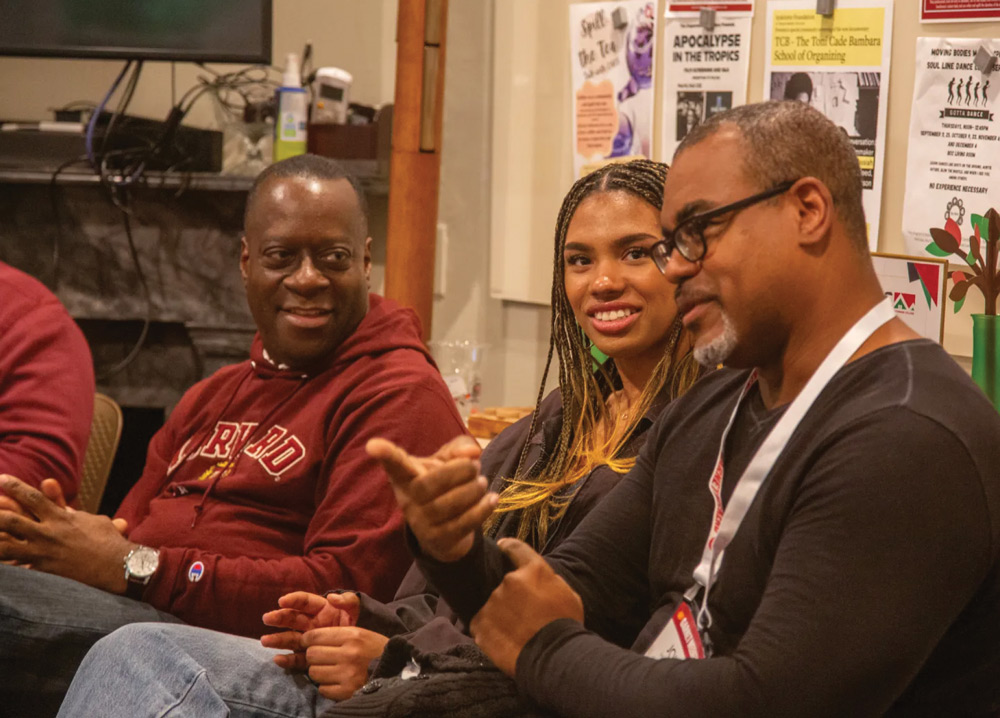
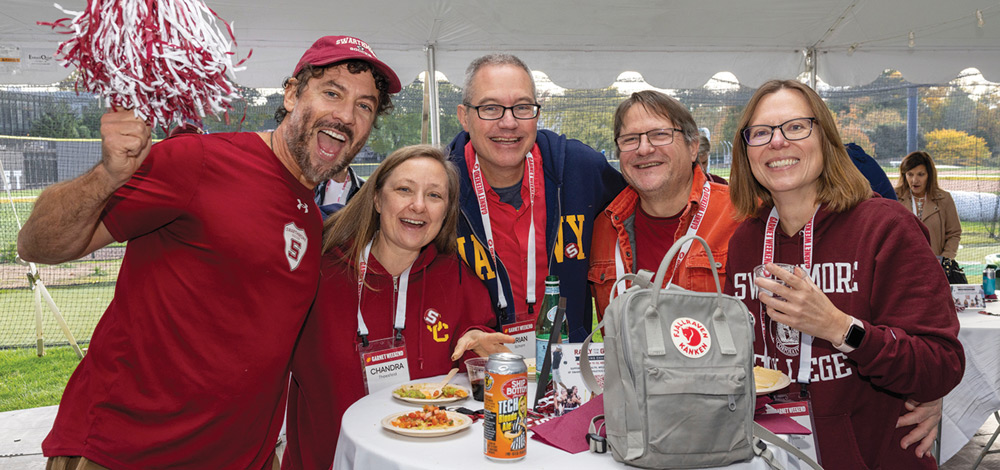
2025 Garnet Weekend

Making a Racket

he banners hanging in the Mullan Tennis Center tell the story of one of the most successful men’s programs in Division III history: four team national championships, two NCAA doubles championships, 53 All-Americans, and more.
Despite this long list of individual and team accolades, the Garnet were in a difficult position in the 2010s; Centennial Conference (CC) competitor Johns Hopkins had won 15 consecutive conference titles, topping Swarthmore in 10 of those and taking the CC’s automatic bid to the NCAA tournament. With at-large selections difficult to come by, the Garnet did not qualify for the postseason as a team between 2008 and 2022.
After the pandemic wiped out two seasons, the program faced the challenge of rebuilding team culture and finding a way to reach the pinnacle once again. Rising to the occasion were the six members of the Class of 2026: Michael Melnikov, Utham Koduri, Max Lindstrom, Andrés Fente, Lalith Suresh, and Aamish Pal.
News to know
Tariff Powers Case

Finding His Swing
Finding His Swing
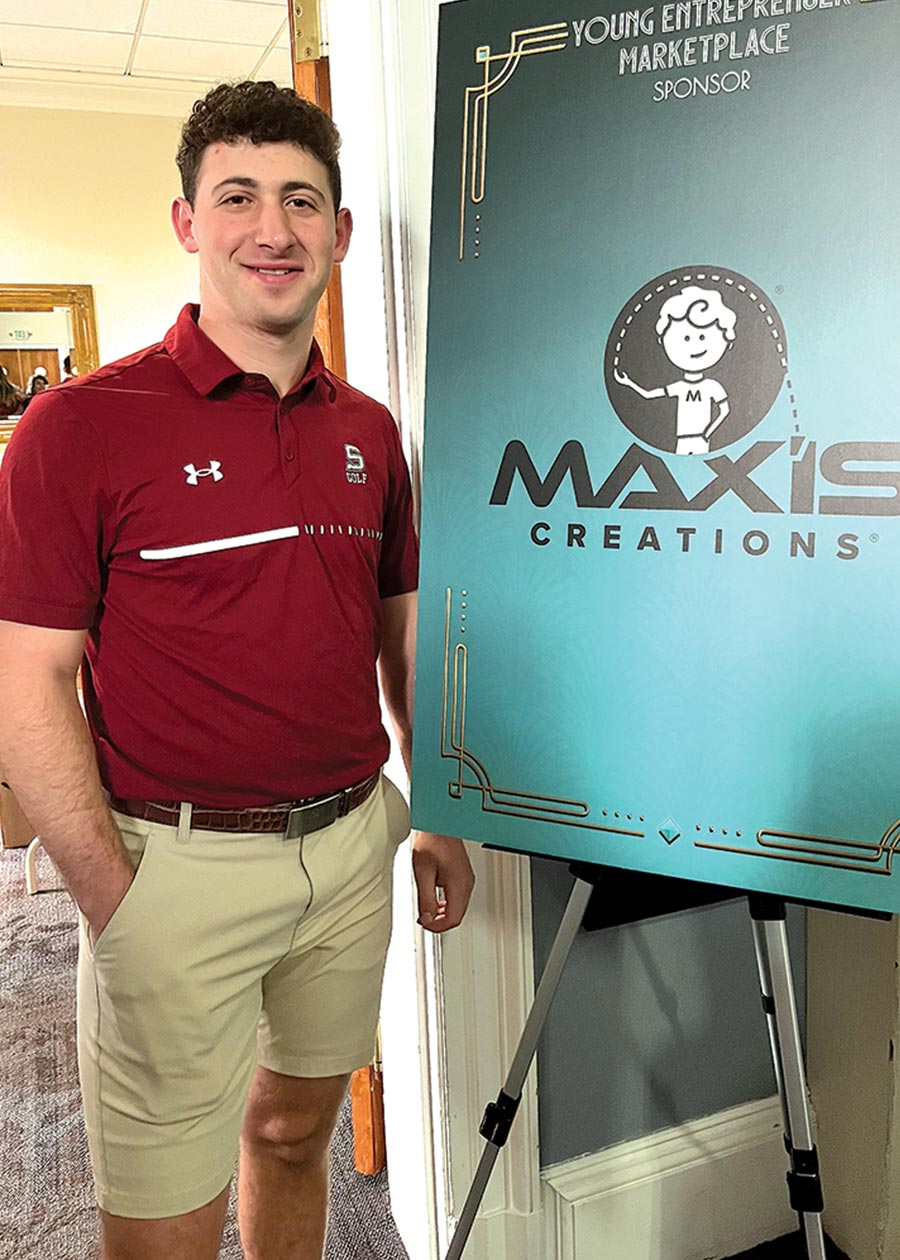
Ash, now a junior on Swarthmore’s men’s golf team, grew up with dyslexia and a language-based learning disability. Early on, his mother recognized the signs, and Ash attended the Carroll School and the Landmark School, institutions in Massachusetts devoted to supporting students who learn differently. That individualized education became a foundation not only for his confidence, but for a commitment to helping others have similar opportunities.
“By sharing my story and supporting educational charities,” he says, “I realized I could help those who didn’t have the same opportunities as I.”

Peace Corps Park
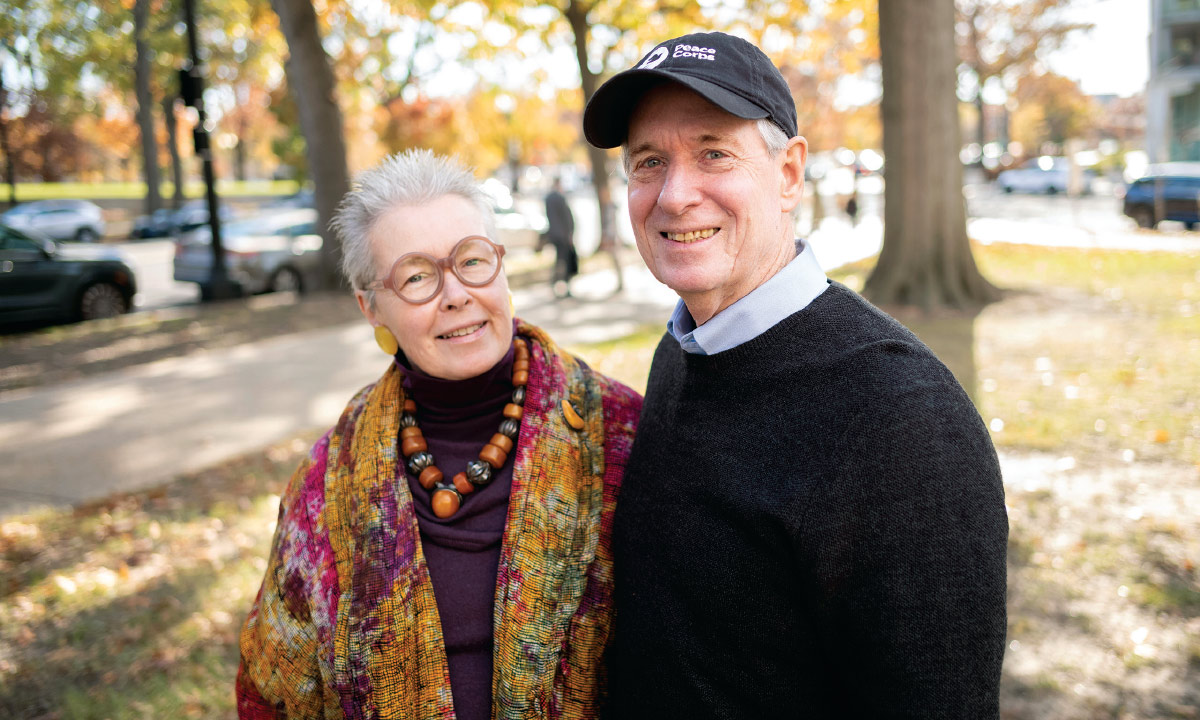
n Memorial Day 2001, Kevin Quigley ’74 and his wife Susan Flaherty were sitting on the Capitol steps enjoying a concert. Looking out over the National Mall, Flaherty thought, “We have a lot of stuff about war on this mall. We need something about peace.” Quigley agreed. For this purpose, in December of 2001, Flaherty, an attorney, created the Peace Corps Foundation, for which the couple served as founding directors.
Along with many others, the couple has now been working for 25 years to build a “commemorative” on the National Mall to honor the values of peace, understanding, and service represented by the Peace Corps.
Though both Quigley and Flaherty had lived and worked in D.C. for decades, they had no idea how many steps were involved in trying to get anything built on the National Mall.
Fortunately, Quigley had help from fellow alum, Alex Shakow ’58. The two originally met in one of the many D.C.-area Swarthmore book clubs. Shakow knew that the National Peace Corps Association was looking for a new CEO and recommended Quigley for the job.
Where Health, Policy, and Justice Collide
ridget Silveira ’20 remembers the moment her world cracked open. During her first year at Swarthmore, right after the 2016 election, a political science course collided with a campus in conversation and showed her that the world did not fit neatly into the categories she had long imagined. She had arrived intending to become a doctor — a path she’d envisioned since childhood — but Swarthmore’s liberal arts ethos kept nudging her toward deeper questions.
“I realized the world was so much more complex,” Silveira recalls. “There were all these areas of study I had never even known existed.”
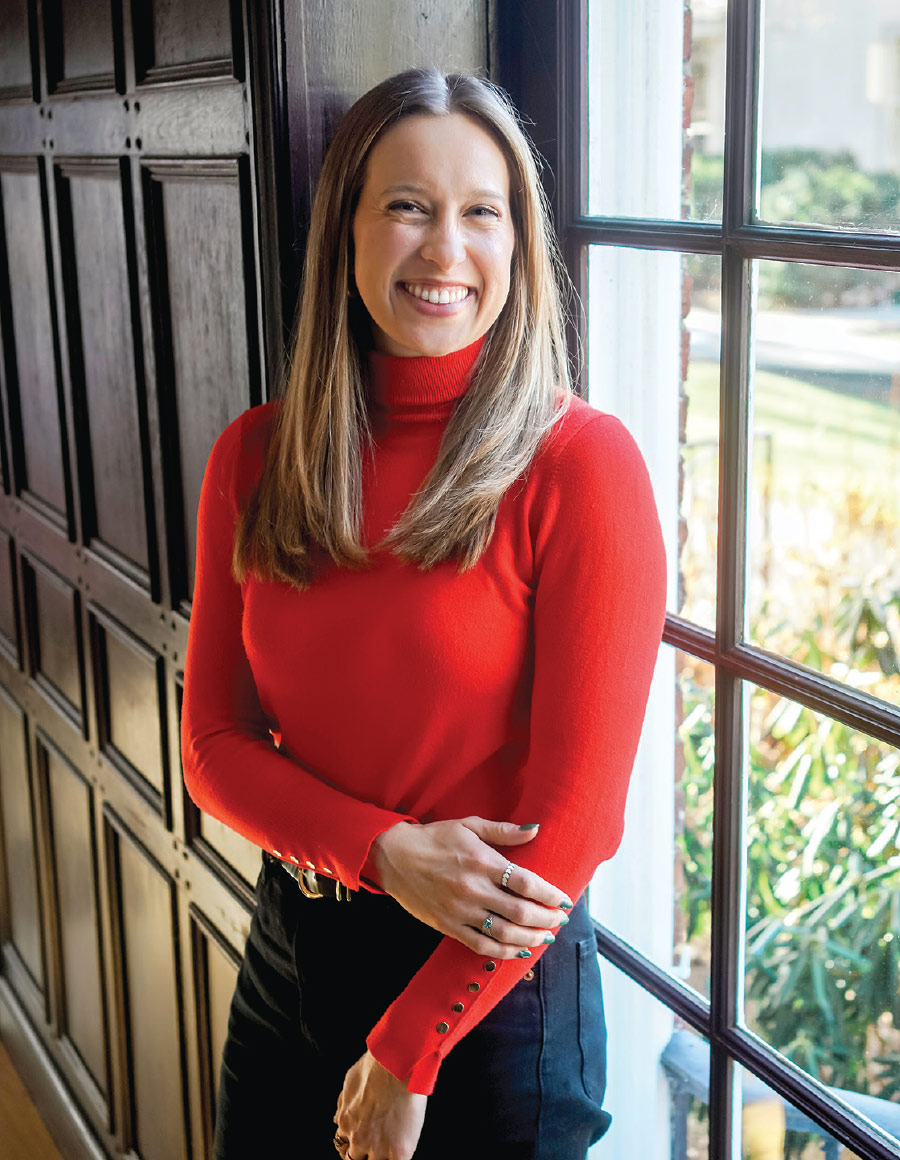
During a semester abroad at Trinity College Dublin, Silveira closely examined the European carceral system, puzzled by how different societies choose to punish, rehabilitate, or restore. She was struck by how different other nations’ concepts of justice were from the system she knew back home.
Understanding Alzheimer's
Understanding Alzheimer's


Understanding Alzheimer's

In his 30 years of treating patients, Frederick Marshall ’83, Professor of Neurology and Chief, Division of Geriatric Neurology at the University of Rochester Medical Center, where he cofounded the Memory Care Program, has cared for chess grandmasters, National Book Award winners, and his psychiatrist father — all of whom had the disease.
“Aging is the single biggest risk factor for the development of dementia, and Alzheimer’s disease is by far the most common form of dementia,” says Marshall.
About 7 million Americans have Alzheimer’s, a number that is expected to nearly double by 2050. Its hallmark is the buildup of the proteins amyloid and tau in the brain. While debate has raged as to whether they cause Alzheimer’s, their presence is accompanied by inflammation, which leads to neuron death and cognitive decline.
Bountiful Harvest

“Either of those two stances is fatal,” says Weinstein, Emeritus Alexander Griswold Cummins Professor of English Literature, whose book, Time’s Bounty (David R. Godine), was released in October.
“Everyone complains about getting old, but nobody wants a lot of organ recitals,” a list of complaints about one’s aging body, he says. “And a Hallmark card is even worse. That cheapens reality by bypassing it and pretending it’s not what it is. I thought the only worthwhile challenge was to go there and try and articulate what is interesting about it.”
The result is a profound, funny, and often poignant meditation on old age and death, in conversation with some of the world’s greatest literary figures. Weinstein, now 85, starts the book with the proposition that “old age could be a world less of depletion, than one of vital surprises.”

A Shared Mission to Develop the Craft of Teaching
t begins with a simple walk around the neighborhood. Each fall, school kids across Philadelphia venture out into their communities, looking critically at what they like and what they don’t.
“What are they proud of? What would they like to see change?” asks Janet Chance ’87, associate director of the nonprofit Need in Deed, which engages students through action-learning projects in their own neighborhoods.
Over the next few months, the students choose a topic of neighborhood concern, learning about the issue and ultimately developing a project to address it.
“It’s about making students agents of their own learning, beginning with gaining confidence in who they are as individuals and members of a community,” says Chance, who joined the organization eight years ago, seeing it as a natural outgrowth of the social justice-focused pedagogy she learned at Swarthmore.
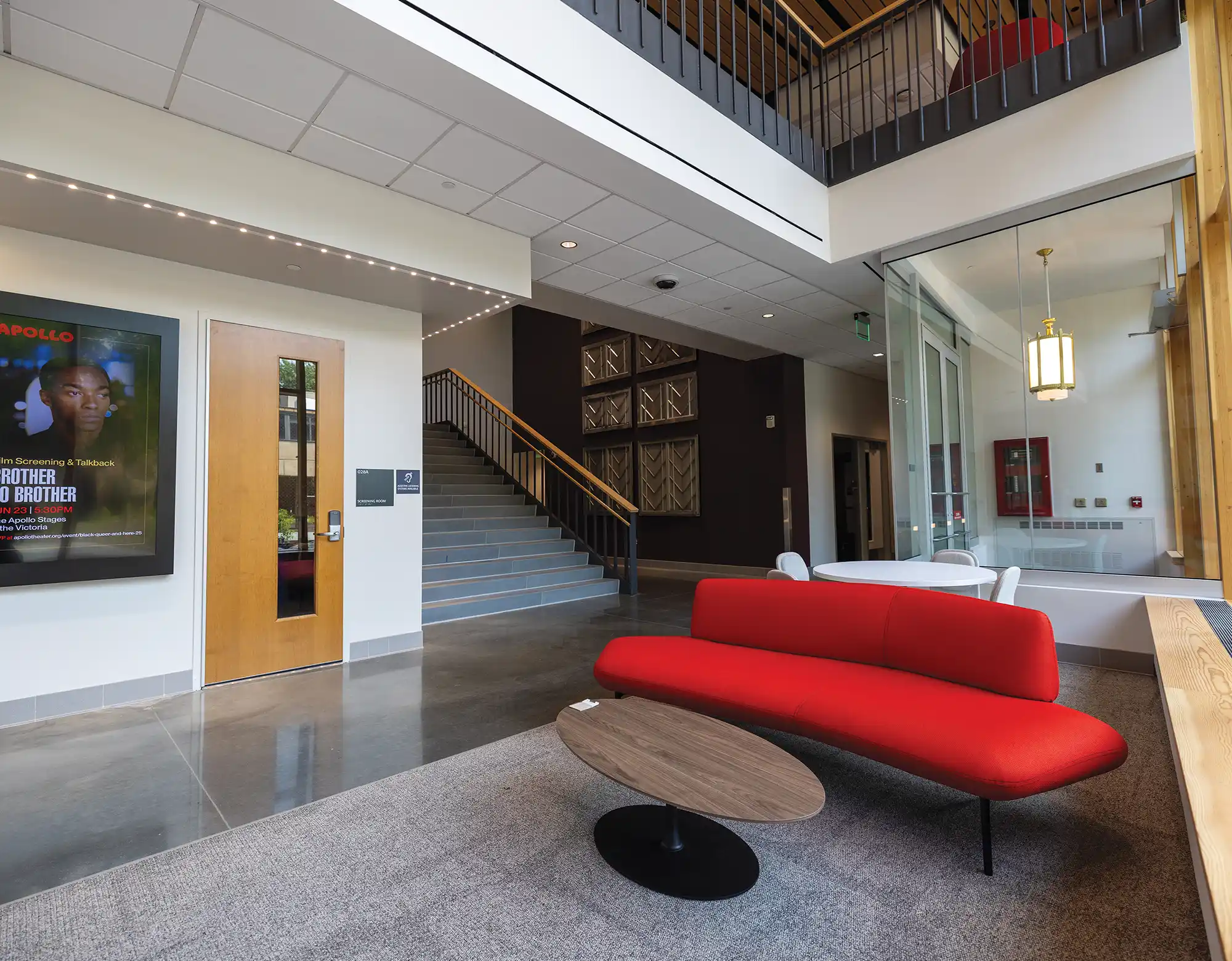
A bright and spacious seating area is one highlight in the updated Martin Hall study space.
Martin Hall Reimagined

artin Hall is back, and it’s nothing like you remember. After more than two years of construction, the building has been reborn as a bright and airy hub designed to spark connections between technology and the humanities.
The renovated building — now home to Computer Science, Film & Media Studies, and the Creative Media Commons — opened to students on Sept. 2 to start the fall semester.
“When we walked in, we gasped,” says Associate Professor of Film & Media Studies and Department Chair Bob Rehak, who helped guide Martin Hall’s renovation as a member of the Project Working Group. “The openness, the sunlight that washes through the building, the way it’s all come together — and it smells like a new car.”
It’s a sharp break from the building’s past. For decades, Martin Hall was home to the Martin Biological Laboratory. Built in the 1930s, it housed a greenhouse and an animal research laboratory. The building’s carved limestone art deco façade was a familiar and imposing presence on campus for decades.
Framing Feminism

Framing Feminism


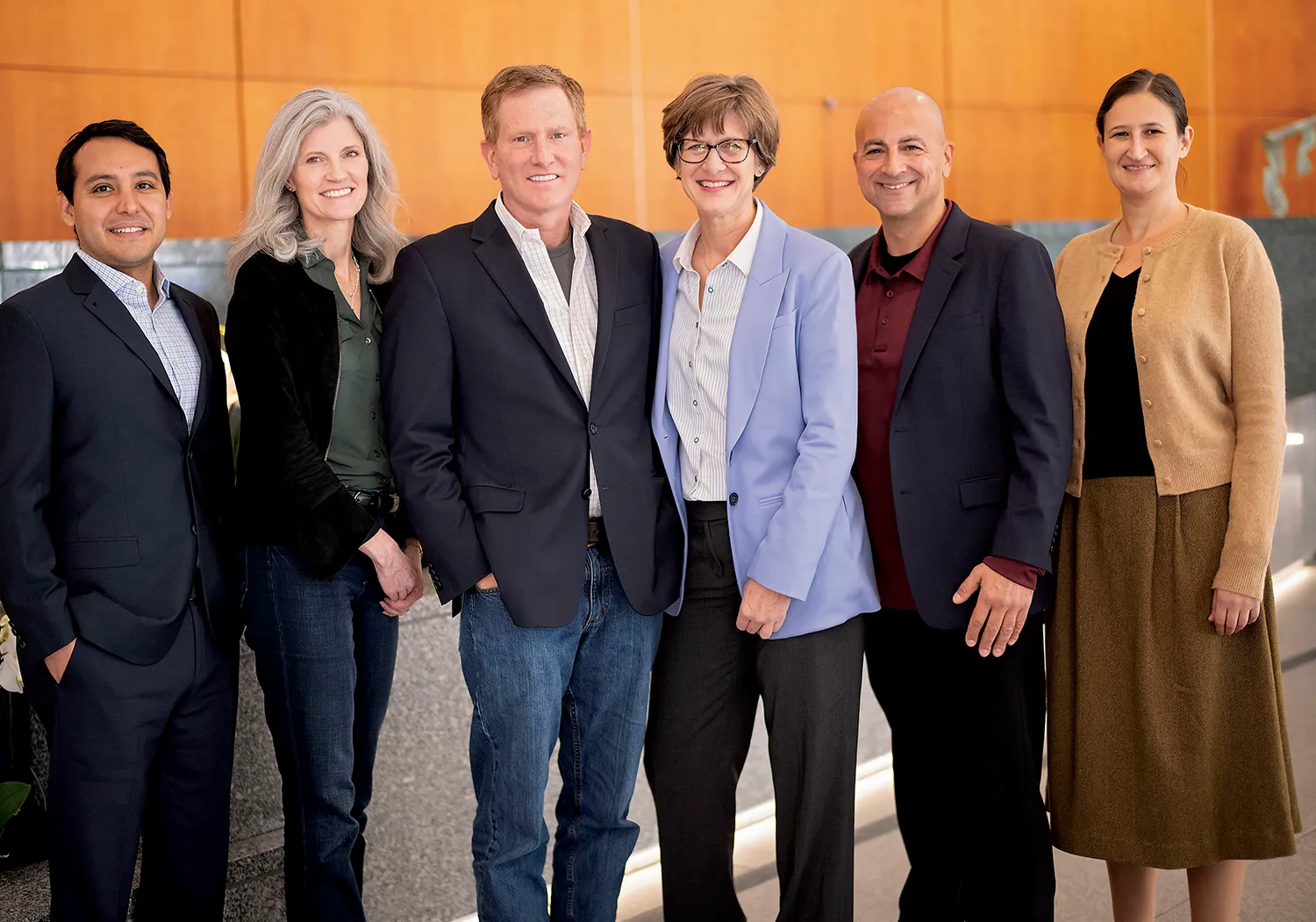
That’s the premise of Alfred Hitchcock’s Oscar-winning film Rebecca (1940). But to feminist film scholar Patricia White, the haunting classic is also an allegory for the unseen women who, though long sidelined, have quietly propped up the film business behind the scenes.
“Women have long been important to film history,” says White — and not just as on-screen icons. Rebecca is a case in point. The film, which captivated White as a teenager and sparked her love for cinema, was adapted from Daphne du Maurier’s novel by the English screenwriter, and later producer Joan Harrison and several collaborators, including the uncredited Alma Reville, Hitchcock’s wife.
Trying a New Model
hristine Lehman ’90 has an explanation for why her law firm, Reichman Jorgensen Lehman & Feldberg (RJLF), won a $236 million verdict in its very first trial: “Nobody saw us coming.”
With barely more than a dozen lawyers at the time, the scrappy boutique shop stunned the legal world in 2020 with one of the year’s largest jury awards, beating tech giant VMware in a patent infringement case.
The verdict put RJLF squarely on the legal map, but it shouldn’t have come as a surprise to anyone familiar with the firm’s founders.
Courtland Reichman ’90 and Sarah (Newland) Jorgensen ’90 met on their first day at Swarthmore, and went on to work together at the The American Lawyer-ranked litigation giant King & Spalding and litigation powerhouse McKool Smith, along with Reichman’s college roommate, Peter Mastroianni ’90.

Class Notes
alumni council
Alumni Council members Amanda Brown ’14 and Laura Damerville ’03 hosted the first SwatMeets in Brooklyn and D.C., and events are also being planned for Boston and Los Angeles. The Alumni Council hopes to establish SwatMeets as an alumni-driven tradition that strengthens bonds within our community and with the College, much like SwatTalks (the Alumni Council-hosted webinars that have been so popular). If you’re interested in helping to bring future SwatMeets to your region, please contact Donkey Dover at ddover1@swarthmore.edu.
Come join us at SwatMeets, and connect with Swatties you know and those you’re soon to know. We hope to see you there!
Finally, if you would like to nominate yourself or a classmate for the Alumni Council, please email the Nominating Committee at acnominations@swarthmore.edu.
Your support makes a Swarthmore education extraordinary and accessible.

Your support makes a Swarthmore education extraordinary and accessible.


Jan, a Latin major and Alumni Council member, died Sept. 22, 2025.
She earned a bachelor’s in Latin at the College and was married to the late William with whom she had three children. Jan also served on Alumni Council in the 1970s.
Mary, a librarian and community volunteer, died Aug. 16, 2025.

She earned a bachelor’s in chemistry at the College and a master’s in library science at Simmons College, which she used in the Bedford Library. Mary was named Citizen of the Year in 1988 by Bedford, Mass., in recognition of her work for the Job Lane House and the Bedford Historical Society. She also volunteered with the deCordova Museum and the Museum of Science. Mary led the Stewart family’s campaign to preserve the name of Stewart International Airport in Newburgh, N.Y., the land for which was donated by her family in 1930.
Nancy, a golfer with deep ties to the College, died Aug. 6, 2025.
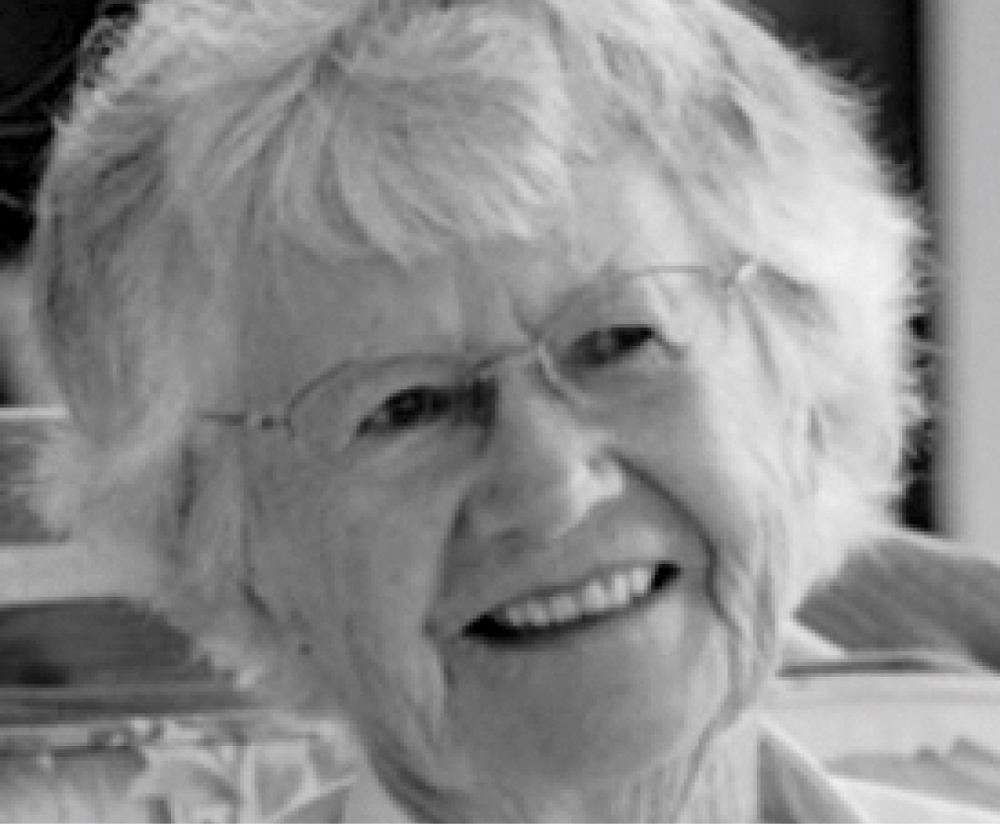
She earned a bachelor’s in economics from the College, where she met late husband Robert “Bob” ’47. Nancy was a member of Swarthmore Friends Meeting and the Providence Garden Club; was an avid golfer, with seven holes-in-one and shot her age at 95; and was a supporter of the Chester Children’s Chorus. She had many ties to the College including, among others, son Robert Jr. ’81; parents Claude C. 1914, H’67 and Mary Roberts Smith 1914; and late siblings, Carter Smith ’51, Richard Smith ’41, and Gene McCulloch ’42.
Ty, an attorney and photographer, died July 28, 2025.
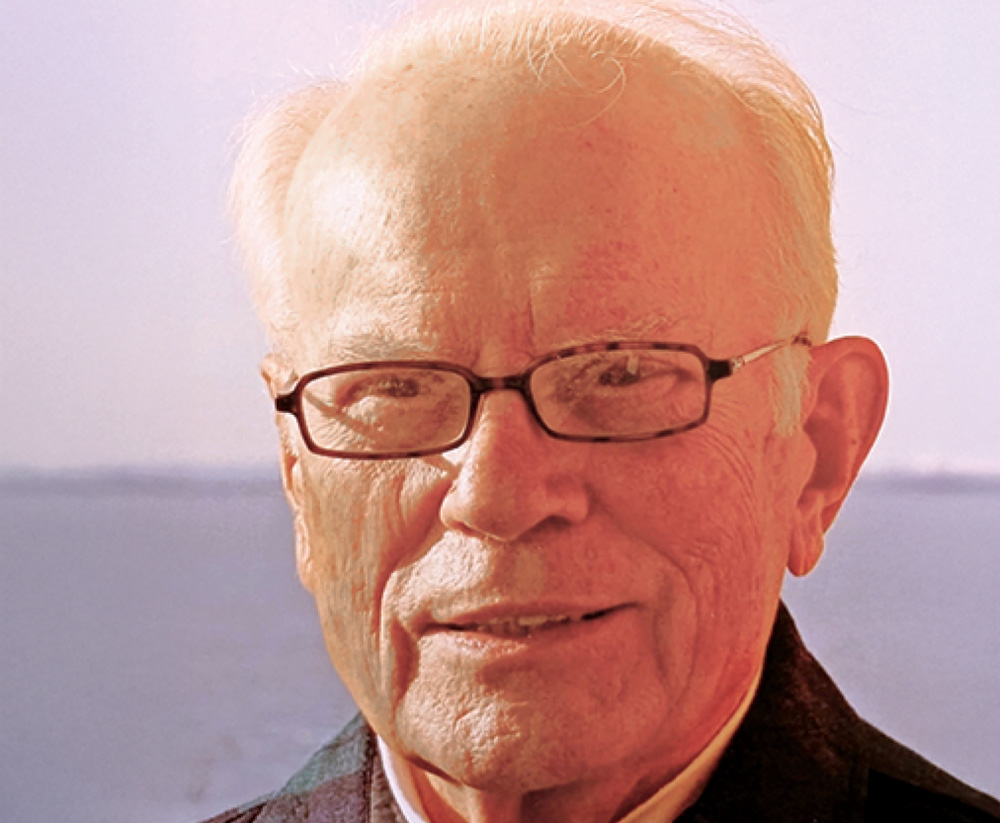
He earned his bachelor’s in political science/international relations at the College and a J.D. from the University of Colorado–Boulder. Ty, who was married to the late Martha “Penny” Penfield Brown ’51, specialized in labor law, serving a term at the National Labor Relations Board, acting as a union negotiator, and spending 25 years as executive vice president of the Midwest Industrial League in greater Chicago. An avid amateur photographer, he captured the beauty and artistry of the natural and manmade worlds, for which he received many national and international awards.
Penny, a swimmer, sailor, and artist, died Oct. 9, 2025.

She earned her bachelor’s with Honors in natural sciences at the College, where she set several records in swimming, and went on to study the role of trace metals in hypertension at a research laboratory in St. Louis, later becoming a paralegal and working in estate administration and tax preparation. Penny, married to the late Ty ’51, was a skilled sailor with numerous racing trophies, an artist who worked in both oils and watercolors, and a singer in school and church choirs.


Art for world peace
Maude Muller started the program with the help of a few other members of her local Women’s International League for Peace and Freedom (WILPF) chapter.
She attended a UNESCO conference as a representative for WILPF and was inspired by a speaker’s suggestion that artists of the world should exchange their work to facilitate international peace and understanding.
Art for World Friendship, which Muller ran out of her home, was the first organization to facilitate exchanges of children’s art across the globe. The organization partnered with schools across the world to facilitate the art exchanges.
Navigating Identity
ssociate Professor of Psychology Barbara Thelamour investigates how race, ethnicity, culture, and relationships shape the lives of Black immigrant adolescents and emerging adults. As primary investigator of Swarthmore’s Identity, Culture, Immigration (ICI) Lab, she works closely with students, colleagues, and Philadelphia community partners to explore how youth navigate school, identity, and belonging. As a child of Haitian immigrants, she brings deep personal understanding to questions she studies. Below, she shares what inspires her work, what students bring to it, and how that continues to evolve.
What drew you to Swarthmore?
All of my career since graduate school has been at liberal arts colleges, so Swarthmore already felt familiar. When the Psychology Department created this position — centering the psychological study of race, ethnicity, and culture that allowed me to infuse my educational psychology background — it felt like the perfect fit. I also loved the idea of working with such sharp students who are excited about research. And being just outside a major city mattered a lot: I wanted to continue my research with immigrant communities, and access to Philadelphia has made that possible.

I’m interested in how race, ethnicity, and culture shape the everyday lives of immigrants, especially Black immigrants from African and Caribbean countries. In psychology, this population is still pretty understudied. When they come to the U.S., they have to navigate what it means to be Black here, which often isn’t how they identified in their home countries. I study how that adjustment unfolds for adolescents and emerging adults and how it affects their development, their school experiences, and their relationships with peers, teachers, and parents. Those dynamics, in all their complexity, are what really drive my work.
Moment in Time

