

Understanding Alzheimer's
Understanding Alzheimer's


Understanding Alzheimer's

In his 30 years of treating patients, Frederick Marshall ’83, Professor of Neurology and Chief, Division of Geriatric Neurology at the University of Rochester Medical Center, where he cofounded the Memory Care Program, has cared for chess grandmasters, National Book Award winners, and his psychiatrist father — all of whom had the disease.
“Aging is the single biggest risk factor for the development of dementia, and Alzheimer’s disease is by far the most common form of dementia,” says Marshall.
About 7 million Americans have Alzheimer’s, a number that is expected to nearly double by 2050. Its hallmark is the buildup of the proteins amyloid and tau in the brain. While debate has raged as to whether they cause Alzheimer’s, their presence is accompanied by inflammation, which leads to neuron death and cognitive decline.
But there’s a hitch, according to Bruce Lamb ’85, the executive director of the Stark Neurosciences Research Institute at the Indiana University School of Medicine. “They’re only the first step because they only treat a select subpopulation of patients, people at a fairly early stage, and their clinical benefits are not super strong,” says Lamb.

Frederick Marshall ’83 Professor of Neurology and Chief, Division of Geriatric Neurology at the University of Rochester Medical Center, where he cofounded the Memory Care Program. He has cared for chess grandmasters, National Book Award winners, and his psychiatrist father—all of whom had Alzheimer’s.
Because amyloid can accumulate in the brain for up to 10 years without symptoms, clinical trials of these drugs are underway with people who have yet to show signs of the disease.
“If we could prevent or significantly delay cognitive symptoms, that would be gigantic in terms of beginning to see treatment for Alzheimer’s in primary care,” says Lamb, who serves on the Alzheimer’s Association’s board of directors.
The possibility of early intervention dovetails with another breakthrough. Last year, the FDA approved the first blood biomarker test for Alzheimer’s. What’s more, researchers are working to create memory tests patients could take on a doctor’s computer.
In the future, during routine annual checkups, if patients’ scores are worrisome, doctors might order Alzheimer’s blood tests just as they now routinely screen for diabetes and cardiovascular disease.
Today the National Institutes of Health spends $3.8 billion on Alzheimer’s research, focusing not just on the amyloid theory but also on the disease’s genetic, lifestyle, and environmental factors. Lamb sees a parallel between this all-out effort and recent developments regarding multiple sclerosis.
Unfortunately, the word Alzheimer’s gets used, even by some doctors, as a generic term for all cognitive diseases. Up to 40% of people diagnosed with Alzheimer’s actually have mixed dementia, the presence of coexisting neurological diseases such as Lewy body dementia, frontotemporal dementia, TDP-43 encephalopathy, and vascular dementia. Since amyloid buildup is not implicated in all cognitive diseases, advances in Alzheimer’s treatment would likely not benefit people with those disorders.

Bruce Lamb ’85 is the executive director of the Stark Neurosciences Research Institute at Indiana University School of Medicine.
The likelihood of developing Alzheimer’s or another cognitive disease rises with age. More than 40% of people over age 80 have dementia.
“From age 65 to 80, the annualized risk of developing dementia goes up twentyfold,” says Marshall. “The annualized risk of getting dementia the year a person turns 65 is approximately 1 per 200. The annualized risk of of getting dementia the year a person turns 80 is approximately 10 per 100.”
The good news is that it’s a myth that there is nothing a person can do to ward off Alzheimer’s or prevent its progression. (It is true, however, that having a close relative with the disease is a risk factor.) As with many other chronic illnesses, lifestyle can play a huge role in a person’s susceptibility.
“My fondest answer is to tell people what your mother told you to do — eat right, exercise, get enough sleep,” says Kawas, who teaches at the University of California-Irvine School of Medicine. “Healthy lifestyle has an impact, probably for resilience to all illnesses, and definitely brain ones.”
“If you have hearing loss in middle age or late in life, get your ears checked, and wear hearing aids,” he says.
Untreated deafness substantially increases Alzheimer’s risk. Researchers aren’t sure why, but it’s likely because the sensory loss causes the brain to become overtaxed or atrophy.

Claudia Kawas ’74 “My fondest answer is to tell people what your mother told you to do — eat right, exercise, get enough sleep,” says Kawas, who teaches at the University of California, Irvine School of Medicine. “Healthy lifestyle has an impact, probably for resilience to all illnesses, and definitely brain ones.”
Ballroom dancing, playing a musical instrument, being socially engaged — activities that combine multiple cognitive domains — do far more for brain health than solving crossword puzzles, she says. Research has also shown that people with more education have more cognitive resilience. That’s because over their lifetimes their brains have created more complex neural networks.
“It’s been very clear in my practice there are woeful inequities in the degree to which people access care,” says Marshall. “It’s clear that Alzheimer’s is an equal- opportunity disease, and people without the privilege of higher education may be more vulnerable.”
While stigma still surrounds an Alzheimer’s diagnosis, fear and anxiety about the disease is declining. As a result, early diagnoses are now far more commonplace. But this puts more stress on caregivers and the health care system. A “massive effort” to train family practices is needed, especially with the expected doubling of the number of cases, according to Marshall.
“So much has gone into the development of medications, but so little effort has gone into developing a workforce to contend with the burden of the problem,” says Marshall.

F. Harlan Flint Jr. ’52 Flint’s wife Chris began showing symptoms five years before their 60th wedding anniversary.
“It’s much more personal now,” says Lamb. “We live it every day.”
Alzheimer’s caregivers are unsung heroes. Whereas patients with some chronic illnesses such as cancer often live active, independent lives for many years, those with Alzheimer’s uniformly suffer gradual declines in their ability to carry out activities of daily living. With each passing month, the responsibility of care falls more and more heavily on primary caregivers, usually spouses and adult children.
Retired New Mexico attorney F. Harlan Flint Jr. ’52 and novelist Maya Shanbhag Lang ’00 both became full-time caregivers. Flint’s wife Chris began showing symptoms five years before their 60th wedding anniversary. Lang’s mother, a geriatric psychiatrist, developed early-onset Alzheimer’s in her 50s and diagnosed herself. Flint and Lang wrote about their experiences in their books From There to Eternity: Alzheimer’s and Beyond (2021, Sunstone) and What We Carry (2020, Dial), respectively.
“Being a caregiver is not a phenomenon on the edge of your consciousness,” writes Flint, 95, whose wife passed away in 2016. “It becomes a constant character on the stage of your life; almost an additional person at the breakfast table … and all the other stops along the track of the day. In all my life, there has never been an issue so front-and-center all my waking hours every day.”
For Lang, the hardest aspect of caregiving was “the invisible part. The uncertainty of not knowing how long this was going to last,” she says. “The toughest days were her good days. I would think, ‘How long can I keep doing this?’”
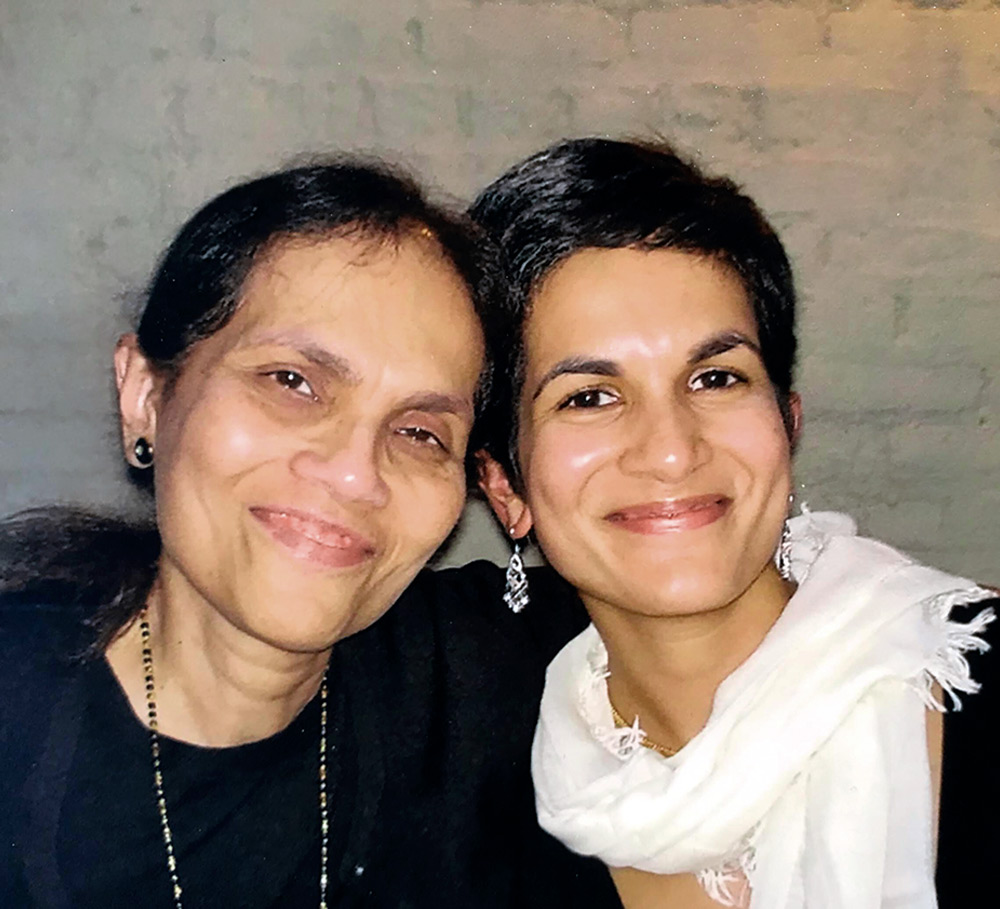
The time with her mother, she says, “brought strange gifts. Her old illusions fell away because she could no longer be that mythical version of herself. In many ways, for the first time, I learned who she really was.”
Both Flint and Lang eventually made the agonizing decision to place their loved ones in senior care homes. For Flint, then in his the 80s, the constant ordeal of caregiving became “almost unbearable.” “Wise men and women told me it would not be abandonment,” says Flint. “Chris still cast her shadow on the world, but she was no longer there as the person she was. All that remained was the ravaged container of who she was.”
For Lang, raising a young child, there was a sense of being split in too many directions. “I feared I wasn’t being there for my child because I was so preoccupied with my mother. Her illness became this force in the house, a subsuming presence.” Alzheimer’s caregiving can go on for so many years that loved ones become emotionally exhausted. Their reservoirs of grief run dry.
“Sometimes I now have this detachment that I didn’t ever expect myself to have,” Lang says. “You can’t be in a position of caregiving for this long without having that kick in. You get inured to certain things and become habituated to them.”
From her experience, she learned a vital lesson — “At the times in your life when you absolutely don’t have the space, time, or bandwidth to care for yourself, that’s when it is the most necessary.”
Caregivers without in-home help and social circles to ease their mental burden, are at higher risk for a variety of diseases and disorders, according to Lamb. “If you are a caregiver, it’s imperative you find support.”
“The patient is the patient, but it’s critically important that care teams be established around the principle that the family is also the patient,” says neurologist Marshall.
Developing Alzheimer’s is not inevitable, except in 1% of cases (or fewer) where the presence of the APOE4 gene virtually guarantees its onset. A commission of experts assembled by the British medical journal The Lancet in 2024 published a list of 14 Alzheimer’s risk factors which, if modified by lifestyle changes, could prevent or delay as many as 45% of Alzheimer’s cases.
Former Swarthmore President Rebecca Chopp, 73, knows what it is like to have Alzheimer’s disease — and to not have Alzheimer’s.
In 2019, while serving as Chancellor of the University of Denver, she got lost driving to an appointment. She had also long suffered from insomnia, which can be a symptom of the disease. After undergoing several sessions of multi-hour cognitive testing by several neurologists, as well as several brain scans, she was diagnosed with Alzheimer’s.
“It was a justifiable diagnosis at the time,” says Chopp, who had been president of Colgate University before leading Swarthmore from 2009 to 2014.
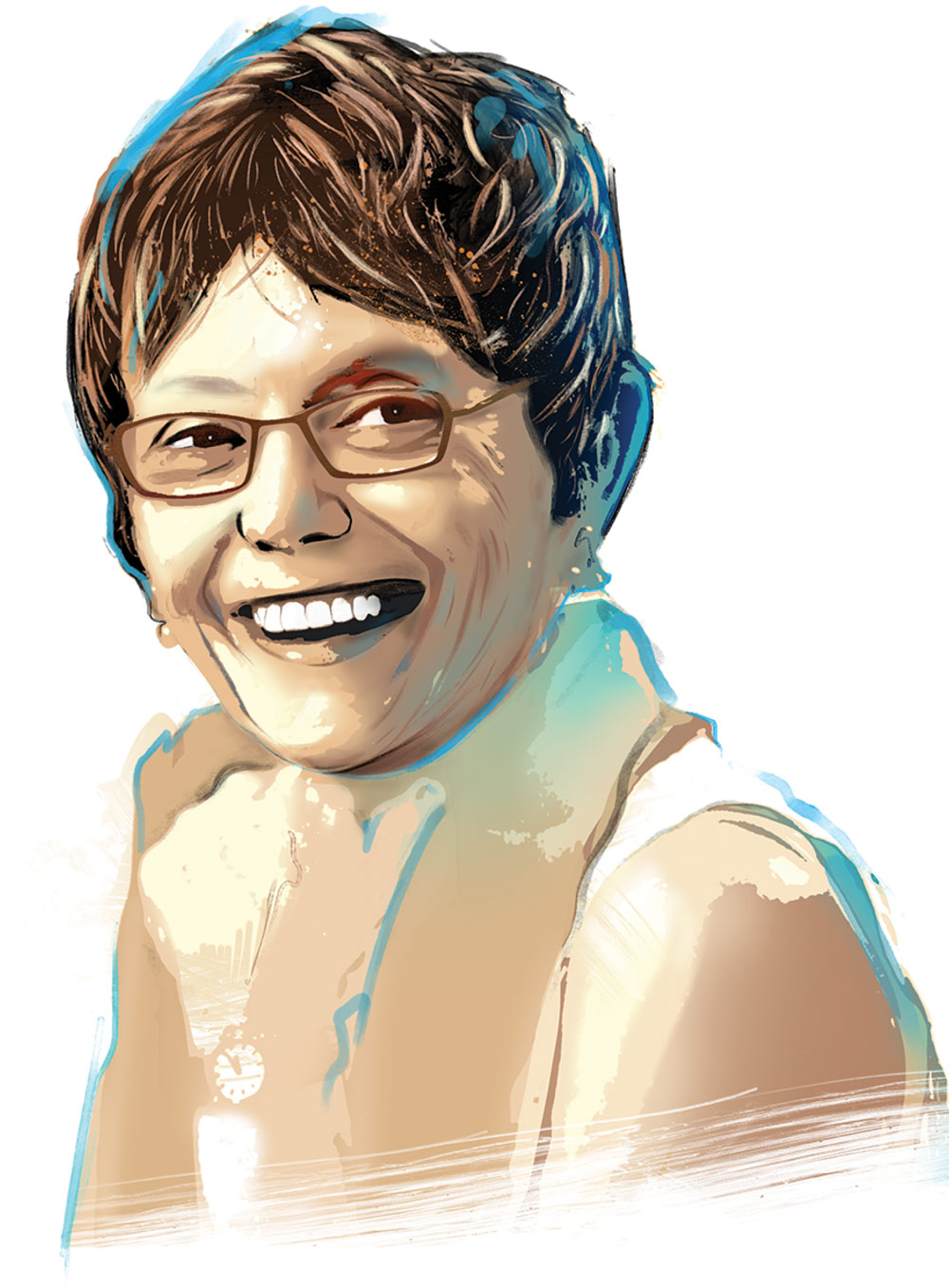
Rebecca Chopp “Courage is not about hiding, ignoring, or even minimizing our fears,” Chopp writes in her book. “Courage involves taking up life — daring to be grasped by all that we feel and experience, by what we do and are — even as we face that fundamental threat to our existence.”
Then, in August 2025, Chopp took the newly approved blood biomarker test for the presence of excess amyloid in the brain. Since her symptoms had not progressed, she had begun to suspect she did not have Alzheimer’s, something the test results confirmed.
Today, her neurologist reports that all signs of cognitive impairment are gone.
“I am functioning at normal or above normal capacity for my age,” says Chopp.
When she retired, Chopp took an amazing array of steps to slow her presumed disease’s progress: She adopted the Mediterranean diet, began painting portraits, deepened her spiritual practices (she is an ordained Methodist minister), got a puppy (a husky-Pomeranian mix), took ballet lessons and kickboxing, advocated for Alzheimer’s patients, and reformed her sleep habits. (Experts agree that all of the above can be beneficial.)
She lived a life based on the motto of Swarthmore’s first Dean of Women Elizabeth Powell Bond — “Use thy gumption,” — an aphorism Chopp praised in 2014 when she left Swarthmore.
“Courage is not about hiding, ignoring, or even minimizing our fears,” Chopp writes in her book. “Courage involves taking up life — daring to be grasped by all that we feel and experience, by what we do and are — even as we face that fundamental threat to our existence.”
lifestyle changes to reduce the risk of developing alzheimer’s
- Stop smoking
- Exercise regularly
- Avoid or limit alcohol use
- Wear a helmet when biking
- Be socially active
- Maximize learning to build neural networks
- Avoid air pollution
- Maintain a healthy weight
- Seek treatment for depression
- Use hearing aids
- Treat vision loss
- Address high blood pressure
- Lower high LDL cholesterol levels
- Manage diabetes

Can lifestyle changes protect cognitive function in older adults at risk for decline?

Results showed that the structured program led to greater improvements in thinking and memory over two years, effectively preventing the typical decline seen with aging. Participants in the structured group performed like people one to almost two years younger, suggesting these habits help the brain resist age-related changes. Both interventions improved cognition, but the structured approach had stronger effects.
The Alzheimer’s Association will follow participants for at least four more years to study long-term effects in the U.S. POINTER Alumni Extension. In this Alumni Extension, nearly all of the participants have agreed to engage in an annual clinical visit to evaluate their overall medical health, including cognitive assessments and blood collection.

Overall, the structured U.S. POINTER lifestyle intervention offers substantial health benefits beyond cognition, impacting areas known to lower the risk of cognitive decline and dementia. Closely following the structured program may multiply these positive effects. These results reinforce that healthy behaviors — especially when combined in a structured program — can have a powerful impact on brain health. Learn more about this work at www.alz.org/us-pointer/home.asp

Caregiving is All-Consuming — Take Time for Yourself
“Taking care of a loved one with Alzheimer’s is very isolating,” says Hasan, a psychiatrist who earned a degree in psychology from Swarthmore, an EdM from Harvard University, and an MD from the University of Maryland. She went on to complete a pediatric internship at the University of Maryland Medical Center and her psychiatry residency at Johns Hopkins Hospital. At Indiana, she provides direct clinical care to medical trainees at the nine IU School of Medicine campuses across the state. This role also includes the oversight and development of mental health services and wellness programs for medical learners statewide.

She advises caregivers to care for themselves to stay healthy.
“Exercise and maintain a strong social support network so you’re not lonely and isolated,” says Hasan, who arrived at the Indiana University School of Medicine in 2016 as an assistant professor and assumed her current role in 2017.
Even though some caregivers feel guilty about taking time for themselves, she insists: “Do something enjoyable, whether it’s traveling or going out to dinner or for a walk.”
It doesn’t have to be expensive, say Hasan and Lamb. Even a 10-15 minute walk in the outdoors or a brief yoga and meditation practice can make all the difference.
While challenging, caregiving also can also have moments of great reward, Hasan and Lamb say. “While each dementia patient is so different (many neurologists say that if you’ve seen one Alzheimer’s patient you’ve seen one Alzheimer’s patient), for Parvez (Hasan’s father), this was his occasional moments of clarity and humor,” says Lamb. “He had a great sense of humor and there were moments around the dinner table where the family would all end up laughing together. This is incredibly powerful emotionally during otherwise difficult times.”