

Common Good
The Life of Rachel
The Life of Rachel
n 1962, 10-year-old Isaac Stanley ’73 was riding with his father through the cornfield-lined backroads of Maryland’s Eastern Shore in a dark green Ford Fairlane. They pulled into a small cemetery in rural Dorchester County, home of Harriet Tubman and a stop on the Underground Railroad. At the back of the cemetery, an iron pipe jutted from the ground.
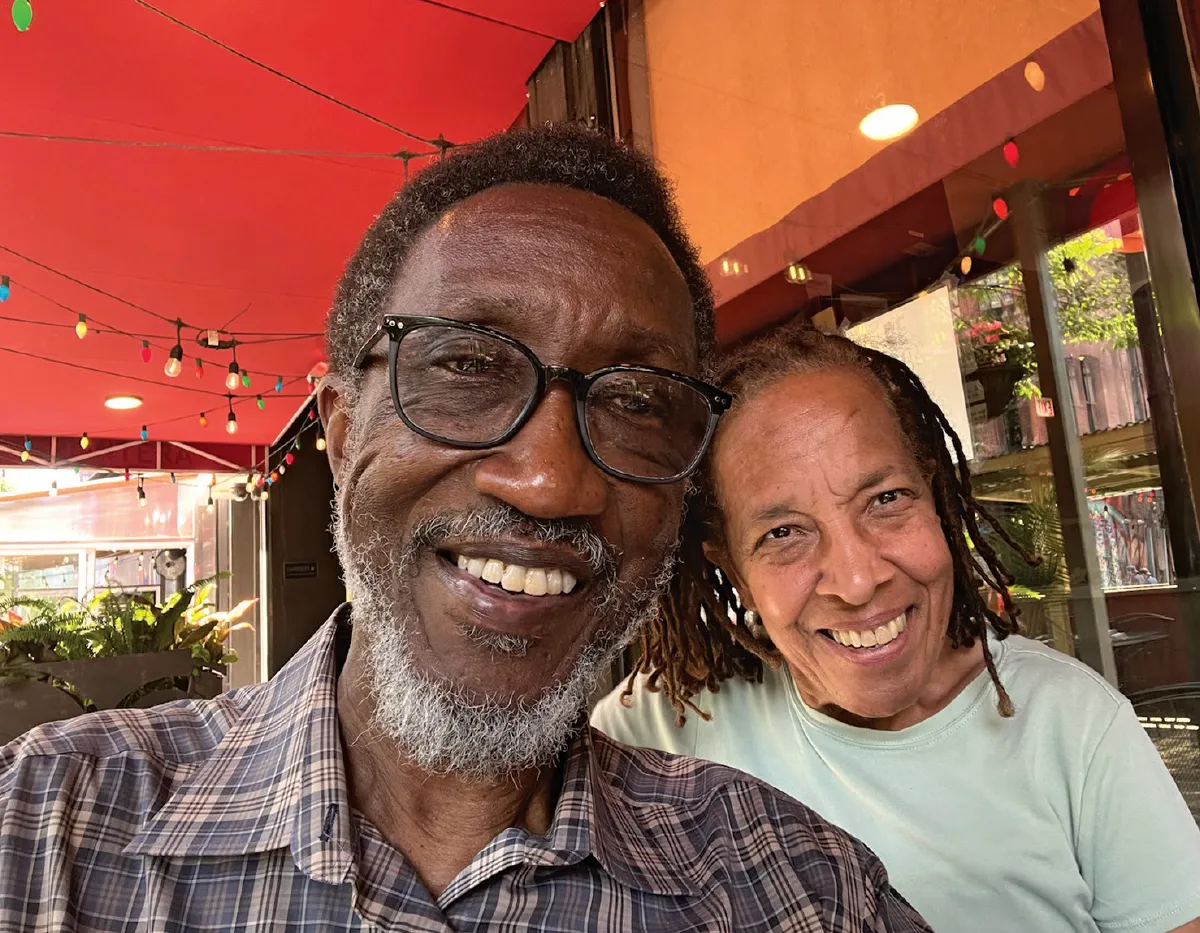
He didn’t dwell on it — until, years later at Swarthmore, he enrolled in a class with Kathryn Morgan, the College’s first African American professor, who retired in 1995 as the Sara Lawrence Lightfoot Professor Emerita of History and died in 2011. Morgan, a pioneering historian, taught African American folklore and urged her students to start with the stories closest to home.
“Her thing was that you can’t understand where you’re going unless you know where you’ve been and who you are,” says Stanley. “She insisted that students unearth their family history.”
Many decades later, Morgan’s lessons would eventually draw Stanley back to that rural cemetery. At the time, though, he simply made a mental note to ask his dad more about Rachel.
During winter break in Philadelphia, Stanley learned that Rachel Ann Stanley was born into slavery in 1827 and lived to an astonishing 112, dying in 1939 just months before her daughter, Elizabeth. Beyond that, the family knew little.
“It was a unique glimpse into the life of a farmer in Dorchester County during the early 20th century,” Stanley says.
After retiring in 2017, Stanley trained as a Bikram yoga teacher and dove into his family’s history.
“I wanted to document and pass on that heritage to my sons,” he says.
The internet opened new doors. Stanley discovered that Rachel helped found the Solomon African Union Methodist Protestant Church in Dorchester County. The denomination was established in 1813 to give Black Americans a place to worship freely. He also discovered the Stanley Institute, a one-room schoolhouse founded shortly after the Civil War to educate Black children, and is still investigating whether Rachel had a connection to it.
He suspects that in tiny Dorchester County, where Harriet Tubman was born in 1822 just five years before Rachel, the two likely crossed paths.
“I can’t imagine them not knowing each other, or at least hearing of one another,” he says.
But one mystery lingered: that iron pipe.
Stanley was overwhelmed.
“I felt a lot of emotion,” he says. “For all these years, Rachel and Elizabeth’s graves had been unmarked.”
In October, Stanley installed proper gravestones for both women. He’s also preserved their stories in his book, Legacy Unearthed, which chronicles Rachel’s and Elizabeth’s lives and his own journey to discover them. His nephew, filmmaker Earl Bolden Jr., has optioned the book for a mini-documentary series.
For Stanley, Rachel remains a powerful source of inspiration. Whenever life gets overwhelming, he thinks about what his great-great grandmother must have endured, as somebody born into slavery and a witness to the Civil War, Emancipation, World War I and the beginnings of the Great Depression.
“I look to her strength,” says Stanley. “To her resolve and her resilience.”
Up From the Ashes
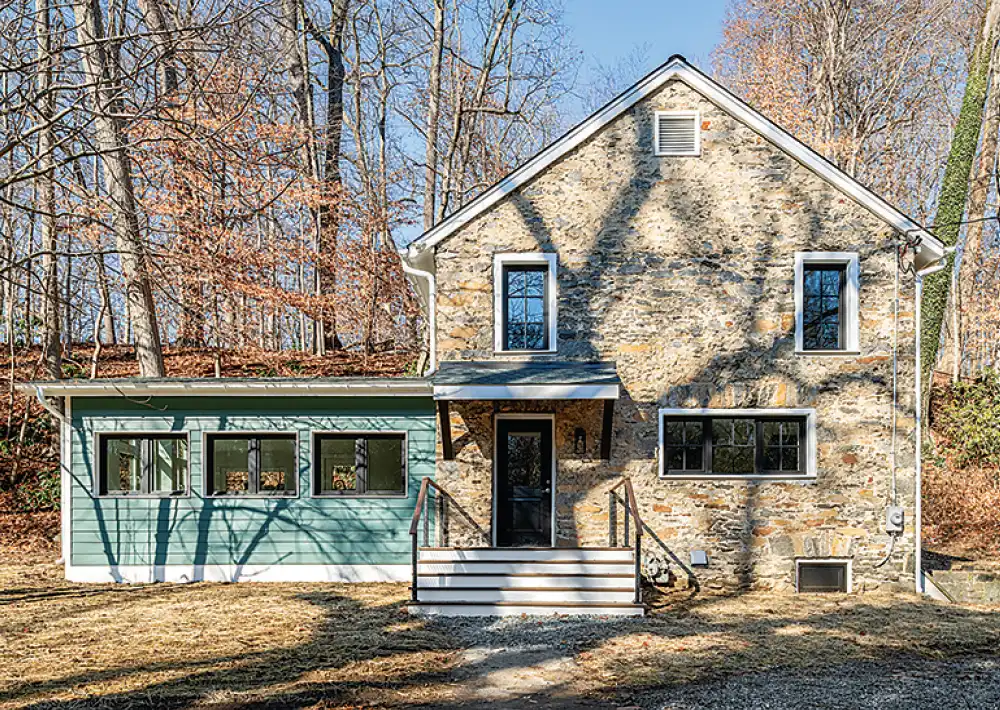
While Swarthmore has placed sustainability at the center of several recent large construction projects, including the Dining Center and renovation of Martin Hall, Dam Cottage was the first small residential building on campus to be designed with sustainability in mind. To make that vision a reality, the College hired local architect Samina Iqbal, an expert in energy-efficient design.
“Most houses are still operating on end-use fossil fuel combustion,” says Iqbal — meaning they burn natural gas or oil. “There’s no way to become fossil fuel-free with that kind of strategy.”
Iqbal worked with contractors to create a seal around the entire building, a mica schist stone structure dating from the 1820s, as well as an iron frame greenhouse that had been added to the side of the house — effectively doubling the living area.
Once the structure was sealed, Iqbal specified an electric heat pump, water heater, and energy-efficient induction stovetop, designed to save money by using less energy in the long run. To bring in fresh air, she designed a mechanical ventilation system, with a preheating element to avoid losing heat to the outside.
By completely electrifying the home, she says, it can ultimately take advantage of a renewable energy grid to become completely carbon-free, bringing the campus one step closer to its goal.
“Maybe in terms of numbers, this building has a tiny footprint,” says Iqbal, “but collectively changing buildings to electricity, when we have the opportunity, will reduce our dependence upon fossil fuels.”
The renovation sets an example of what’s possible, not just for Swarthmore, but for the outside world as well, she says.
Dam Cottage is the first instance of Swarthmore applying the high-efficiency standards of its ambitious To Zero By Thirty-Five (20X35) energy plan to a residential building, adds Wolfson.
In the future, he says, Swarthmore is working to connect more buildings to a campus heating system based on geothermal energy exchange, to further reduce reliance on fossil fuels.
“Many more buildings at the College, small and big, will have energy efficiency upgrades in the future along the lines successfully demonstrated by the Dam Cottage,” adds Wolfson.
Movements That Matter
ocial movements have changed the world as often and as profoundly as wars, natural disasters, and elections.
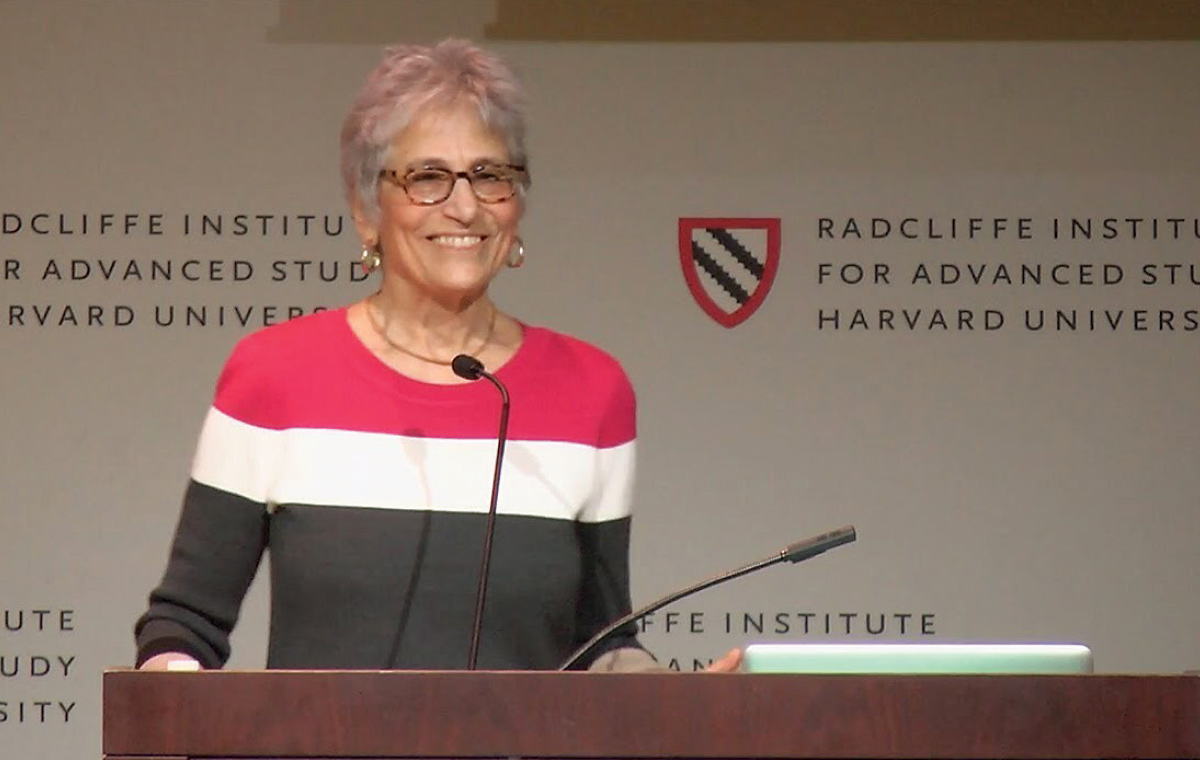
This argument is illustrated in the latest book by New York University history professor Linda Gordon ’61, and will resonate for anyone concerned with democracy and social change. Seven Social Movements That Changed America (Liveright, 2025) tells the stories of 20th-century social movements, not all of them admirable. These include unemployed activism during the Great Depression, the settlement house movement, the massive Northern KKK of the 1920s, the Montgomery bus boycott, the United Farm Workers union struggle, and the 1970s women’s liberation movement. “Many social movements do not produce a central organization, but consist of smaller and often local groups,” Gordon says. “But these local groups gain strength when their members feel part of a larger social movement environment.”
On what makes a movement successful, Gordon remarks that, “You can’t create a social movement simply by asking people to sign a petition or to show up for a demonstration. Social movements happen when people do something, and when their members participate in developing tactics and strategy.”
In addition to teaching — formerly at the University of Wisconsin, now at New York University — Gordon has written books on other topics in 20th-century U.S. history. She tackled the development of the welfare system, the politics of family violence, and the 1920s Ku Klux Klan. Two of her books won the Bancroft Prize for best book on American history: The Great Arizona Orphan Abduction and A Life Beyond Limits, a biography of the great photographer Dorothea Lange.
Gordon imbeds her arguments in narratives. “I never wanted to write only for scholars,” she says. “I think that stories can illuminate historical developments as well, if not better, than grand generalizations.”
Medicare Prescriptions for Less?
f you know someone on Medicare whose prescriptions will soon cost less, you can thank Dan Heider ’96. The federal government announced negotiated prices for 10 of the most expensive and commonly used prescription drugs in Medicare Part D will drop beginning in 2026, saving seniors an estimated $1.5 billion a year in out-of-pocket costs.
As chief negotiator for that outcome, Heider and his team earned a 2025 Samuel J. Heyman Service to America Medal, which honors excellence in the professional, nonpartisan federal workforce.

He didn’t set out to be either a “drug guy” or a negotiator. After studying philosophy at Swarthmore, he pursued graduate work at UC-Berkeley with plans to teach. Summer stints at a Bay Area tech company pulled him out of academia.
Back in Philadelphia with his wife, Rebecca Smith ’96, Heider joined pharmaceutical giant Merck & Co. Over 14 years, he worked in digital marketing, market research, and drug pricing, all while earning a master’s in applied economics at Johns Hopkins University. In 2020, he moved to Bristol Myers Squibb to help set global drug pricing strategy — guiding teams on what to charge government negotiators in dozens of countries.
Three years later, after conversations with Dylan Steinberg ’93, chief of the Civil Division at the U.S. Attorney’s Office in Delaware, Heider applied to a new federal initiative focused on lowering Medicare drug costs. The negotiation group met every deadline, and the first round of negotiated prices will take effect on schedule.
And despite originating under the previous administration, the initiative remains a priority for the current one. The team is now negotiating price reductions for 15 more prescription drugs, scheduled for 2027.
His current title is a mouthful: Acting Deputy Director for Policy, Medicare Drug Rebate and Negotiation Group, Center for Medicare, Centers for Medicare & Medicaid Services, U.S. Department of Health and Human Services.
So too are the stakeholders he represents: Medicare beneficiaries and families, pharmacies, manufacturers, hospitals, trade associations, patient advocates, and taxpayers.
For Heider, service has roots in his Quaker education. “I don’t remember anyone putting that message in a Commencement speech, but it was palpable; it rubbed off,” he reflects. “When there was a chance to put those values to work for the American people, I was inspired and grateful to do so.”

Capoeira and Community
Shaw started studying piano in elementary school and took up percussion in sixth grade. While continuing to play percussion through high school, he befriended a Colombian student who introduced him to Latin American music.
“He had a couple Brazilian albums and one of them just caught my ear, caught my heart, really,” says Shaw, recalling Sérgio Mendes’ 1992 Grammy Award-winning album, Brasileiro. “The opening track on that album, called ‘Fanfarra,’ featured an explosive hundred-piece percussion ensemble from Rio de Janeiro.”
“I was like, ‘What is this?! I love the way it makes me feel,” says Shaw. “I didn’t understand it, but I just knew I needed to get on the inside.’”
He spent the rest of his high school years collecting every Brazilian album he could get his hands on, immersing himself in the music, as well as the language.
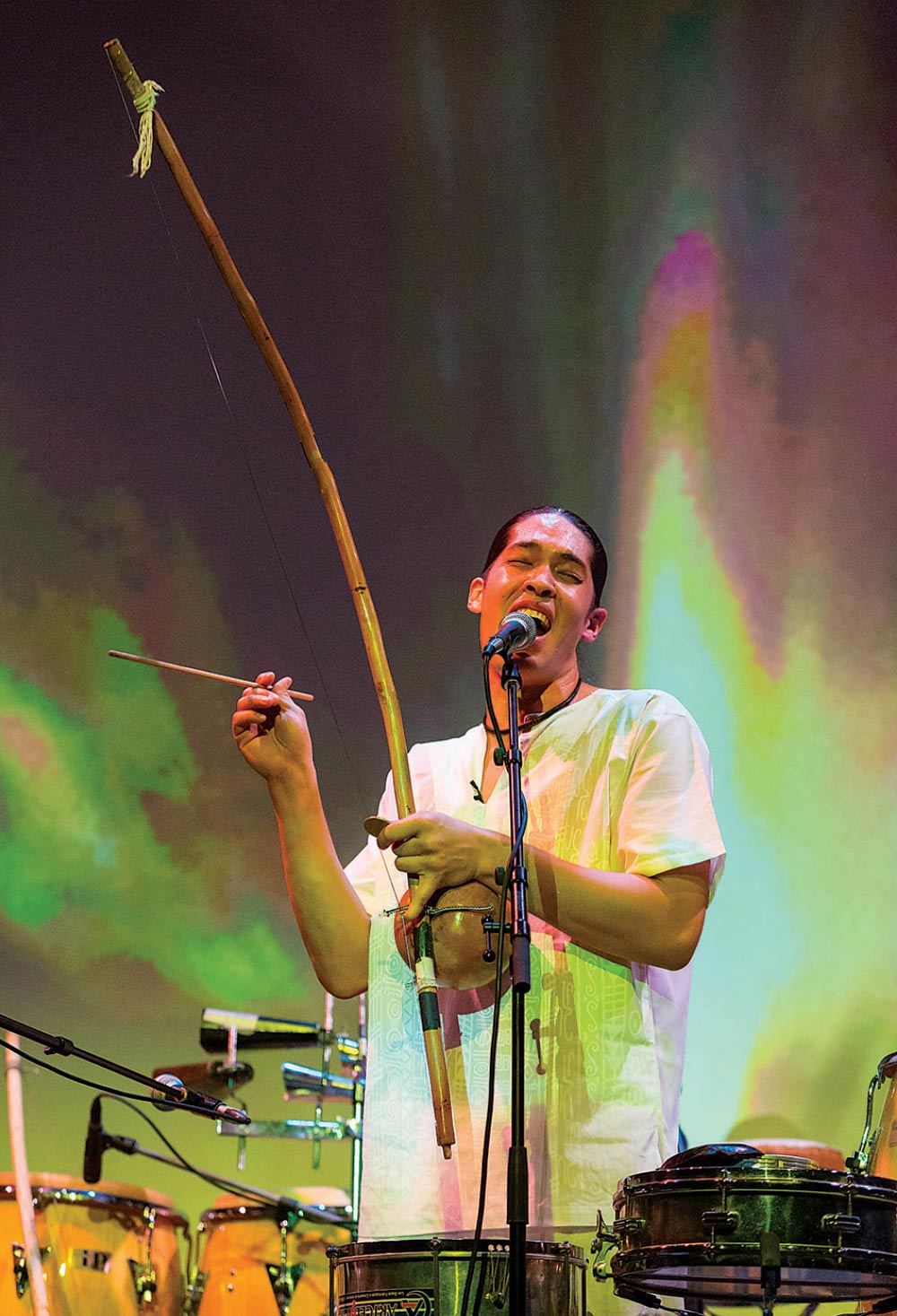
He started playing drums for African dance classes his freshman year. “The accompanist at the time was a West Indian brother named Charles, who became an early mentor,” says Shaw. “I later found out through Charles that there was a Brazilian dance class happening on Monday nights at the University of the Arts.” Shaw started traveling to Philadelphia to play for the class.
“In the spring of ’97, the Cooper Series presented a Capoeira Angola group in LPAC,” Shaw recalls. Capoeira Angola is a martial art and cultural resistance developed by enslaved Africans in Brazil during the colonial period. “I was just blown away by the embodied poetry of the movement and music, and that set me off on a lifelong journey.”
Shaw started attending Capoeira classes in Philadelphia and quickly got hooked. He got to deepen his Capoeira training when he traveled to Salvador, Bahia, Brazil to do sociology research his junior year.
The connections he made with Philadelphia musicians while at Swarthmore served him well. A year after graduating, he was invited to join the band Alô Brasil, of which he eventually became director. The following year, he was asked to join the 12-piece Spoken Hand Percussion Orchestra, with which he continued to play for over a decade.
His first performance with Spoken Hand Percussion Orchestra was “Flammable Contents,” a collaboration with the late tabla legend Zakir Hussein and Rennie Harris’ Puremovement hip-hop troupe, presented at Swarthmore College. In 2016, he performed again in LPAC, presenting his own project, “The Mandinga Experiment,” an interdisciplinary artistic tribute to Capoeira Angola, nearly 20 years after he first experienced Capoeira on that same stage.
Shaw has now been making a living as a musician and arts educator for 25 years, including several years playing and teaching in Swarthmore’s Dance Department, but it hasn’t always been easy. “I was out almost every night of the week,” says Shaw of those years following graduation. “I was rehearsing, teaching, and gigging all night and all day. It wasn’t the most sustainable livelihood, but I think it really grounded me in Philadelphia’s arts and culture scene.”
“Receiving this recognition alongside other BIPOC artists and culture bearers whom I deeply respect has been incredibly affirming for me,” says Shaw. “And for all of us whose creative practice is grounded in advancing social justice efforts, strengthening community relationships, and facilitating transformation at the intersection of artistry and intergenerational cultural knowledge.”