

The
Storytellers


The Storytellers

“Our family was the classic immigrant cliché. My parents worked hard to get us all educated, and I always felt I should do something practical that can make money. I thought I would go into business or Wall Street,” says Parlapanides. “But I always loved movies.”
Today, Parlapanides is the co-writer of Netflix’s Blood of Zeus, the smash-hit anime series with a fresh spin on ancient Greek mythology, now in its third season. But it took a while for Parlapanides to embrace his destiny as a storyteller.
At Swarthmore, he majored in economics. By his senior year, though, the pull of the movie business had become hard to resist. His parents, it turned out, were supportive. “They said, ‘Listen, you have one life. Go chase your dreams.’”
After graduation, Parlapanides moved back home and took up his old high school job at a fish market. His friends from college, he says, were interviewing at Goldman Sachs — but he was gutting cod. He used the money to pay for the bus ride to New York City, where he had secured an unpaid internship with a producer.
Several other internships led Parlapanides to a job as an assistant to producers. Then came a move to Los Angeles, where he worked for Paramount Pictures. Producing was exciting — but the ruthless politics of the studio environment soured the whole experience.
“Everyone’s trying to stab each other in the back,” he says. “It’s super cutthroat.”

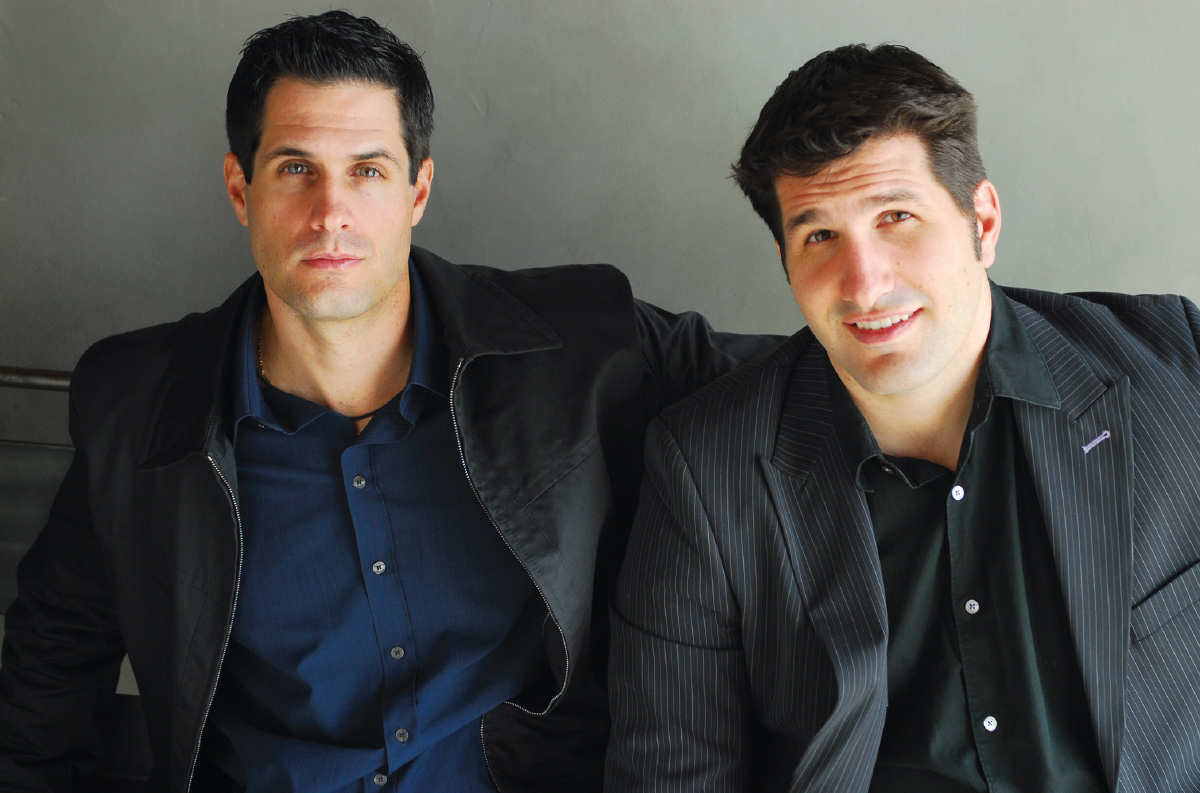
“I realized early I had an instinct for building toward the powerful kinds of filmic moments that I love,” says Vlas. “Think Terry Malloy’s monologue at the end of On the Waterfront, or George Bailey begging to live again in It’s a Wonderful Life.”
It was a gift, Vlas had concluded, that Charley shared, too. The siblings decided to team up.
“We are both drawn to telling stories which seek emotional truth,” says Vlas.
Early on in their joint screenwriting life, an old hand in Hollywood gave the brothers a stern word. “You have five years,” Charley recalls the veteran screenwriter saying, “to find out if you’re going to have any kind of career, or whether you’ll be a car salesman.”
But success did not come so quickly. After a few years, they sold a car-heist movie (still unmade) to Universal, followed by Immortals, the 2011 fantasy film starring Henry Cavill based on their longtime obsession: Greek mythology. And they’ve been writing about the myths ever since.
“Those stories have always been in our blood,” Charley says. “But the challenge is making them feel fresh.”
Their breakthrough was the idea of a lost Greek myth. The gods and heroes would be familiar, but the story would be new. They pitched it to Netflix.



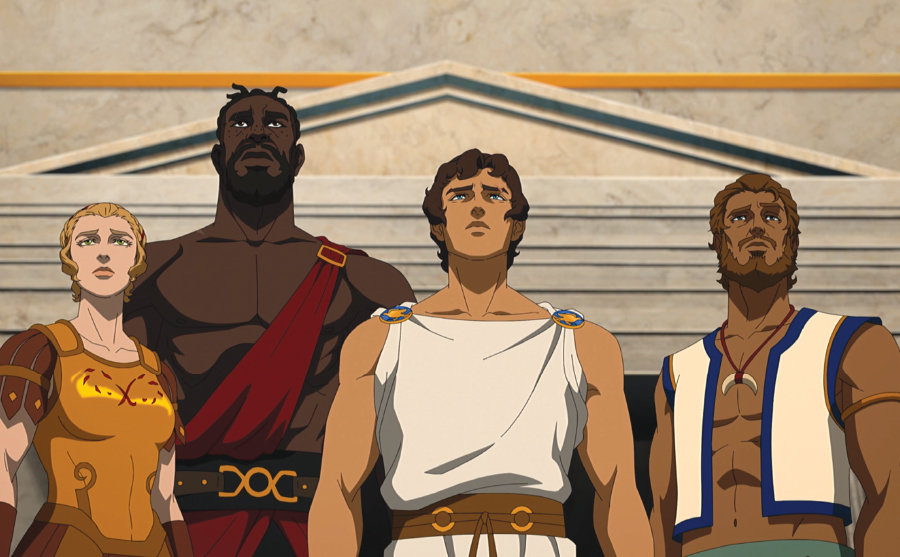
The result was Blood of Zeus. The show, which debuted in 2020 and rocketed into Netflix’s top 10 in 60 countries, follows a character called Heron, a half-divine, half-human son of Zeus who battles to save the world from the ire of Zeus’ wife Hera and Heron’s bloodthirsty brother, Seraphim. The New York Times called it “special and dazzling,” and likened the sprawling family drama to Game of Thrones.
Some of that epic soap opera is drawn from the tight-knit Parlapanides family.
“We speak very bluntly to each other, plus we’re Greek — so we’re loud,” Charley laughs. “But I always say, Vlas and I are the luckiest people in the world. I get paid to sit in a room with my brother and make stuff up.”
“There’s a level of trust, honesty, and shared purpose when I’m working with Charley that’s hard to replicate,” Vlas agrees. “He always approaches the work from a place of integrity, with the story and characters at the heart of every decision. I trust him completely, and I know he’ll always give it to me straight.”
“You never really feel like you’ve made it in this business,” says Charley.
Still, he says, compared with the intensity and intellectual rigor of his Swarthmore experience, pitching ideas to studio heads feels easy. Having to justify his thoughts on microeconomics to the late J. Archer and Helen C. Turner Professor Emeritus of Economics Larry Westphal — cigarette dangling from his mouth — is a recurring flashback.
“It was intimidating,” Charley says, “because he was so brilliant.”
Swarthmore, a “mental boot camp,” prepared him well for Hollywood’s relentless hustle.
“Swarthmore was where you did the mental push-ups to get ready to go out into the world and take a swing,” Charley says. “The grit it instilled helped me survive in this business. I’m so thankful for my amazing education.”