

Students Can Be Partners in Problem Solving
“I’ve always tried to think about how students could bring their full selves to school and not feel they have to leave parts of their identities at the door … how they can see their full selves in the curriculum, the activities, and in the school in general,” says Ventura, now assistant professor and coordinator of the Educational Studies Program at Marquette University in Milwaukee.
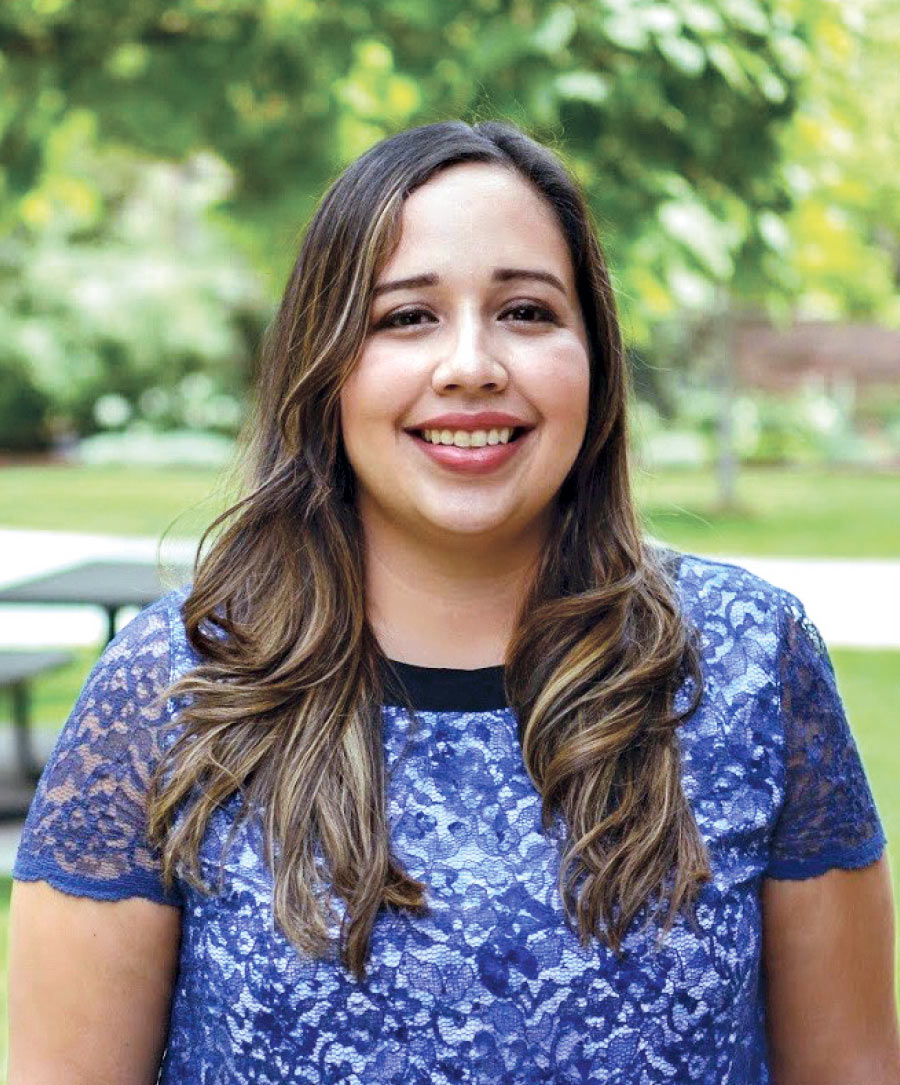
That desire to find connection in the classroom has propelled Ventura along her academic journey. She earned a bachelor’s degree in educational studies and political science from Swarthmore. She credits Henry C. and Charlotte Turner Professor Emerita of Educational Studies Lisa Smulyan ’76, Associate Professor of Political Science Ben Berger, and Associate Professor of Educational Studies Elaine Allard ’01 for putting her on the path to graduate school.
“[They] mentored me and put me on this track of academia that I didn’t really know existed,” she says. “I always thought I would be a high school history teacher. But I realized I really liked mentorship and the research side of being a professor.”
Ventura earned a Ph.D. in educational studies from the University of Wisconsin–Madison, forging connections with the Latinx community during her seven years there. She researched how community-based organizations in Madison supported Latinx immigrant students, and why they were able to connect with students in ways that schools couldn’t — exploring questions like “How do we nourish students’ cultural identities, who they are, and their voice so that they feel empowered in schools?”
During her Chancellor’s postdoctoral fellowship at the University of Colorado–Boulder, Ventura was mentored by Professor and Program Chair of Learning Sciences and Human Development Ben Kirshner, who introduced her to a practice called “transformative student voice” (TSV) that engages students by including them in decision-making processes at their schools.
In 2023, Ventura received a National Academy of Education/Spencer Postdoctoral Fellowship to continue her TSV work with Milwaukee community schools. The community school model requires each school to have a Youth Council made up of students. “The more we’ve worked on TSV, the more we’ve seen the Youth Councils not only engaged in the process of identifying a school issue, doing research, and proposing some solutions, but also for Youth Council students to be part of their Community School Leadership Team,” says Ventura.
In Community School Leadership Team meetings, students discuss changes they would like to see the school make directly with their teachers and principal.
Ventura describes having student input in those meetings as transformative, “because adults are genuinely listening to students and students are learning about their school data,” says Ventura. “They’re learning that they can have a say in what happens next.”